The Key to Your Success is Courage
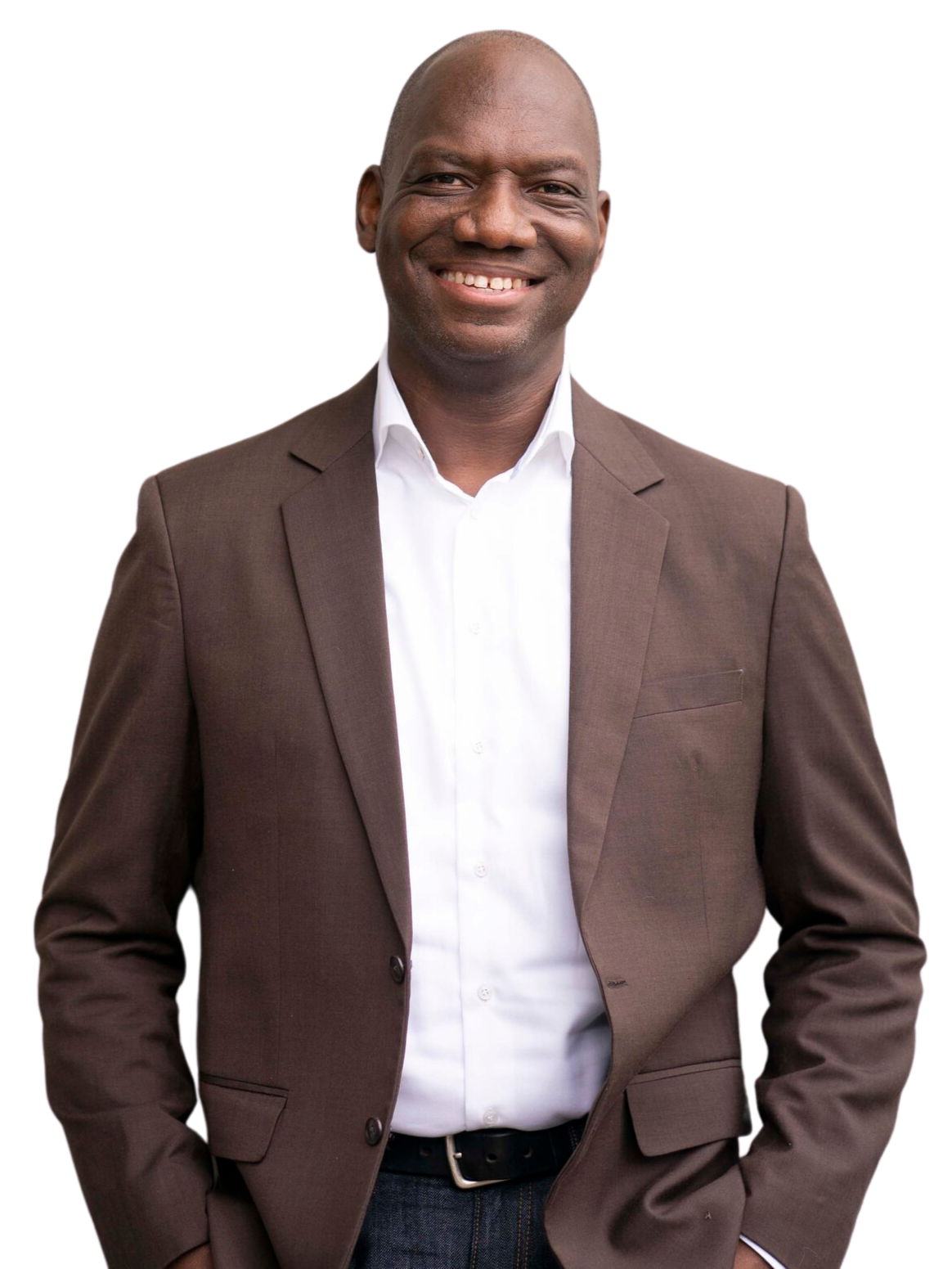
Christopher O. Williams
Christopher O. Williams is a business consultant, executive mentor, board director, and public speaker on strategy and transformation. His career has spanned four continents, with senior corporate leadership and management roles at Nike, adidas, Goldman Sachs, Gap, VF Corporation, and Lehman Brothers. Christopher specializes in helping teams drive and weather transformational change. He is author of the brand new book, “C.O.U.R.A.G.E. 7 Choices for Living a Life Without Regret.”
Courage. It’s needed now more than ever, at work and beyond. So, what are the seven choices that can lead us to courage? And what impact might this have?
In this exploratory conversation, Sally and Alexis sit down with Christopher O. Williams as he shares insights from his brand new book on courage: “C.O.U.R.A.G.E. 7 Choices for Living a Life Without Regret.” Christopher emphasizes that courage is a choice and a skill that can be developed. He discusses the importance of self-reflection, the impact of fear, and unpacks for us the seven choices that embody courage.
The conversation touches on personal stories of inspiration and the contagious nature of courage within communities. It will leave you inspired and empowered with the insight you need to more fully embrace a life of courage.
Key Takeaways:
Courage is a choice we can actively make.
It is essential to unmask our fears to understand them better.
Courage can be developed as a skill over time.
The journey to courage often involves discomfort and growth.
Failure should be viewed as a part of the growth process.
Joy can be a strategic approach to resilience.
Courage is not just for the extraordinary; it is accessible to everyone.
Watch right now on YouTube:
Chapters and Transcript
00:00 The Journey to Writing About Courage
03:33 Defining Courage: A Personal Exploration
08:49 Courage: More Than Just Bravery
09:33 Defining Courage: A Thoughtful Exploration
12:17 The Role of Humility in Courage
14:21 Navigating Complexity: Courage in Action
19:14 Courage as a Superpower
22:39 The Seven Choices of Courage
33:11 Rejecting Negative Voices: A Courageous Choice
44:19 Everyday Courage: Inspiration from Our Lives
Learn more about Christopher, his work and his incredible book at liveandworkmorehuman.com
Sally Clarke (she/her) (00:03.104)
Welcome Christopher. Thank you so much for being with us on the podcast today. We're so excited to discuss your new book with you. We'd love to start by asking what prompted you to write a book about courage?
Christopher (00:18.64)
Well, it's a long question, it's a long answer. well, I first and foremost have always enjoyed writing and I think growing up you have a sense that, well, one day I'm going to write a book, but not knowing what the book would be about if you ever came to write in it. And in my case, that was not the goal though. I had been working quite hard and I think I have been for much of my career.
Sally Clarke (she/her) (00:22.028)
Okay.
Christopher (00:45.644)
And in 2018, I was working in a large company. I was doing quite well and had a pretty good year in 2017, which had professionally and personally. And rather than have this sense of euphoria about taking on the world with more momentum, I had a sense of reflection. And the reflection was mostly around
Is this all? Is this what I can be doing with all my skills, all my strengths, all the talents I've amassed over all the years, especially in the context of a very long journey around the world. And in many countries, I grew up in Sierra Leone, and I was at the time in Germany. And along the way, I'd seen all sorts of, know, levels of success and wealth, and at the same time, know, deprivation and poverty. And I felt if I had to make a choice, why I spent my time going forward.
as I was closing in on turning 50, the question was, is this what I wanted to do? So those reflections got me thinking about what would be the new operating philosophy of my life going forward. And I discovered this conversation with myself about courage as something that had been a factor in everything I had done, even when I had been at my best and when I had been
not been, you know, I wouldn't say at my worst, but when I had been happy with my own performance at any point in my career, courage had been a factor, either the presence of it or the absence of it. So it's those reflections that got me thinking about my own life. And after a while I you know, this is something I can share with the rest of the world. I'm sure other people are probably wrestling with this question about what courage means and to what degree it could be useful to our lives.
Sally Clarke (she/her) (02:23.032)
Yeah.
Christopher (02:40.222)
And then it became almost a message to the world. And I said, OK, combine my love for writing, wanted to write a book, not sure what. This topic came up, then let's just go for it. So that's how it happened. Serendipity with a little bit of inclination towards writing, but not clear how and what.
book about courage.
Christopher (13:01.632)
Well, first and foremost, thanks for having me. I've listened to your podcast and I'm excited and honored to be on it as a guest. To answer the question, I have always enjoyed writing and it's something I've done throughout my life. I've written poems, I write letters, everyone thinks my Christmas cards are the nicest ones because I write a lot of interesting notes in them, but anyway. So I've always had that tendency and what happened...
Alexis Zahner (13:07.243)
Okay. Okay.
Christopher (13:29.42)
in 2018 was a little different. I had been working quite long in my corporate career and decided in 2018 after a very hectic year in 2017 that I wanted to take my life in a different direction. So what happened in 2017 was a great year professionally and personally, but one that made me start to reflect back on my life and all the experiences I had had and all the people I had encountered.
Alexis Zahner (13:37.163)
you
Christopher (13:58.093)
during that journey. was born in Sierra Leone, had moved to the US and at the time was living in Germany and there had been lots of travel in between. And I wondered what was my gift to all of these people, what was my gift to the world at large. And it didn't feel like it was continuing to make money for a large corporation. was something a little bit more fulfilling, at least for me personally. And so I decided I would make a change. I wasn't sure what that change would be.
Alexis Zahner (14:26.127)
Christopher (14:28.012)
So I asked myself what would be the sort of operating philosophy of my life going forward and started to reflect on my own past and what had worked and what hadn't worked. And I realized that even when I had, in both cases, when I had been at my best or when I had not been at my best, a decisive factor had been the absence or the presence of courage. And so I started to reflect more and more about courage as this pivot factor.
And as there's in many cases, this unlock to a different trajectory, a different life, a different path. And the more and more I felt that it had been instrumental in my life, the more and more I felt it was a story I should share with others. So it was that need to get that message out, plus the confidence and the conviction of my own thinking, plus the desire to write.
Alexis Zahner (14:55.655)
you
Christopher (15:22.024)
eventually and this felt like it was the right time and the right story that I could own and talk about in a very unique and passionate way. And then the book came out of that.
Alexis Zahner (15:34.772)
Beautiful, Christopher. And I imagine quite a courageous step as well. It's quite a vulnerable thing to put your story and your thoughts on paper for other people to read. Did you have that feeling with the book coming out as well?
Christopher (15:46.505)
Yes, absolutely. I think we're all sort of at the stage of civilization where we ascribe a lot of awe and importance and wonder to written words. I think more and more that's eroding, but we're still somewhat impressed by writers and people who've written.
So there's this question about, well, am I one of those people? Am I qualified? Am I credible? You know, that you have to deal with. And then there are other people who actually amplify that fear. yeah, but you're not a billionaire. You're not a big CEO. Like, why would you write? And for me, that was case in point number one. You know, this notion of how fear comes about.
and how self-doubt comes about as well. And even more so how the voices of other people can influence you. And these are all things I write as of, know, milestones to a calm on the journey to courage. So for me, all of those strengthen my resolve to write a book, so why not? Why do you have to be well known? Why do you have to be famous? What I tell people nowadays is if you can sit around the table at dinner and have a conversation with friends,
and they find your story is interesting and they want to hear more, multiply that small community up to eight billion people in the world. Trust me, there are enough people in the world who will be interested in that story as well, outside of your small group of friends. So, yeah, so everyone has a story in them, ultimately, and everyone, I think, has a opportunity and I think the right to tell that story in different ways, and this is how I choose to tell mine.
Alexis Zahner (17:45.246)
Thank you for sharing that Christopher and I want to dive into this word courage that you write about in your book. Can you tell us is courage a personality trait or is this a choice?
Christopher (17:56.845)
You know, it's interesting, we've always presented the idea of courage as something supernatural. You know, when you go back and watch all the superhero movies or all the, you know, the ancient classics, you know, like in Spartacus, you know, there are these people who seem to have these otherworldly abilities that many of us can just look at in awe and we don't have or we might never have access to. But I think that's not true. I think courage...
Some people have a predisposition to showing courage, maybe easier than others. But ultimately, we all have access to courage. And I think for those of us for whom it doesn't come naturally, we have to work on it. And that decision to work on it and then putting the time to refine our ability to be courageous, then that becomes a choice. And, you know, obviously, and even within that, it's not easy for everyone.
in the book I write, because I was listening to people as I was writing, I write about, depending on where you are, culturally and socially, I talked earlier about what I call the naysayers who will tell you what's courageous, they're sort of the culture police, they tell you, they know everything. But society journey tends to describe the ability to different people. sometimes depending on demographics and other.
know, tensions or dysfunctions in society where you are, your group or your person or your phenotype, your demographic might not be seen as worthy of college or able to practice college because maybe there's more challenges that you have to deal with. So those groups have to work harder. If you're a young girl in Afghanistan, you've got to figure it out a bit more. It's a different conversation. It's a different path. But that doesn't mean you cannot be courageous. Manala Youssef came out of the Pakistan region, you know.
and was able to become this towering global figure by persisting in a way that was threatening to her life. So there's a different path than if you were a young boy coming out of Sierra Leone or if you are someone who grew up in a different part of the world. So yes, that stretches the edges of tension in terms of esodifficulty.
Christopher (20:19.168)
doesn't still, you know, foreclose it to anyone. It's definitely not a brotherhood. I think it's an ability we all have, but it's a choice to go after that ability.
Sally Clarke (she/her) (20:29.806)
Such an important point, Christopher, to underscore also that there's perhaps different starting points that we have in terms of our journey to develop courage. And certainly, we all have different role models as well as we're growing up to sort of see what we might define courage as what that might look like. And I think it's important here for us to get granular for a moment to understand how we define courage, because I think it's often used sort of, you know, interchangeably with words like
boldness or bravery, but it does have a particular meaning and you've been drawn to this word for certain reasons. I'd love it if you could unpack, how do you define courage and how does it differ from those other sort of concepts that we might sort of use it interchangeably with?
Christopher (21:14.604)
Yes, and it's interesting. I tried to defragment it a little in the process by first going to dictionaries and trying to see how they all spoke about courage. And yes, you see this conflation of courage and boldness and bravery and on the extreme bravado, you know, and those are all sitting on a spectrum, you know, but in a nutshell, I define courage as, you know, the ability to act.
driven by a virtuous mission that is important to you and to act despite the risks to you in doing so. And there's a lot in there. it's, is not impulsive. We talked about that in another conversation. It's not impulsive. It's a product of deliberation. It's a product of thoughtfulness because it's attendant and responsive to
the elements of risk and fear, but then it pushes action in spite of them. And sometimes we talk about a man jumping into a river to save a child and we use courage and I think that's okay, but in reality that action may not have the wrong deliberation.
that courage lends itself to. It might be adrenaline, it might be impulsive, it might just be suspending fear and just doing what felt right at the moment. And those are all loyals. I'm not taking anything away from that. But when we started to talk about courage, it's a little bit more of a thoughtful process that really measures the risk, but counterbalances that with the sense of mission, the sense of virtue, maybe some more clarity.
something that says this is more important than that and I'm going to run the risk, I might get hurt, something might happen to me that I don't want to happen but this is much more important and I'm going to do this instead. So for me that element of impulsiveness is what I take as a massive sort of pivot in terms of one versus the other. And then there are the times when we get to the extreme and maybe the not so desirable parts of how we act sometimes which is you know overconfidence and
Christopher (23:28.608)
bravado and we rash and that has absolutely nothing to do with courage because ultimately that might be the response is to fear itself being massed as other things and that's a very different set of behaviors than what courage truly is. So yes, it's the idea that you act, you have the ability and you use that ability to act in service of a sense of mission, a sense of purpose despite the risks that you face in doing so.
Alexis Zahner (24:00.208)
Christopher, what's interesting when you were explaining that is something that felt like it was coming through for me is that courage has sort of this underlying element of humility as well in that the intentionality piece calls for you to actually consider risk and carefully consider risk before stepping forward to do something. And I wonder, is that something in your journey that you've had to experience as well, sort of the humility of
maybe even failing and then having to courageously still move through that towards that greater purpose that you mentioned as well.
Christopher (24:35.5)
Absolutely. So there's a sense of service and selflessness that comes with courage because in order to pursue this sense of clarity that compels you, you first have to, and do so in spite of risks, you are in effect not making yourself front and center to the conversation. It's a service-minded perspective.
And that automatically brings a sense of your own place, you know, and in being an instrument of change. And that humility is now very entrenched in that. And as you act, I think it's also important to understand as you're being courageous that you will not always succeed. But courage places things in this longer time frame, this long horizon of time.
what you end up really focused on is number one, am I being clear? Is my sense of proportion, my motivation, is it virtuous, is it clear? And that's important to you. And that's more important than am I solving the problem in the first step or immediately. So you're very comfortable with this.
Sally Clarke (she/her) (25:58.531)
Mm-hmm.
Christopher (26:04.444)
progressive move towards the goal. And it's very confusing for people because some people, I think, expect the moral clarity to ultimately and immediately result in some positive action or positive benefit. And with you perhaps knowing and acting like you know the answers and you have no questions about yourself, I mean, it's not true. It's actually quite messy.
how you sort of find that path, but you're guided by that North Star and stay on that path. A good example is Abraham Lincoln who oscillated and vacillated, vacillated, I don't know what the word is, but he oscillated back and forth. Then figure out what to do with the issue of slavery. And it was complex, but it was a period of time. And he knew all along what he wanted to do. He knew all along what the Risa, and he was trying to navigate the path to get there.
Sally Clarke (she/her) (26:32.878)
Mmm.
Christopher (27:02.796)
And you might say, well, it took too long and that's always you can criticize. But I think he was quite courageous in the process. And shortly after he succeeded in winning the war, he was killed. So it's the process. Another one gets killed, thankfully. But that humility is intrinsic in the conversation because you suspend your own sense of self and ego to serve this commission.
Sally Clarke (she/her) (27:28.268)
And I think it also speaks to this sort of very courageous honesty that we need to have with ourselves, Christopher, because as you're speaking to this sort of deeper motivation, I think often when we look at the surface, we think we're motivated by certain things, but perhaps when we dig a little deeper, it might actually be our ego. It might be the desire to be accepted by the group. And so we really need to have that sort of humility to be able to look at those questions and go deeper and ask very, you
difficult questions of ourselves often to surface those deeper motivations and to ensure that our motivation really is truly coming from the place of courage. And to that end, I'm not sure, I believe the word courage is also connected to the French or the, is it the Latin word for heart, core? Yeah, because I think that is also a really important component for me of kind of differentiating between the almost superficiality of bravado or bravery and this sort of deeper,
Christopher (28:14.496)
Yes.
Sally Clarke (she/her) (28:26.454)
resonance that courage has because it is inherently connected to our heart.
Christopher (28:30.836)
Absolutely. It's, you guys, it's a good point. It's not only a conversation about the depth in terms of where it comes from. It also is a conversation about the uniqueness of the contribution that courage allows us to make. Everyone's station in life and place in life is going to be different. And it is from where you are that you will have the ability.
to touch the world in a unique and special way. And that unique and special way that you touch the world, each of us, or eight billion of us is quite valid. And we will make a change, one way the other. It might be small, but we might set in motion our own change mechanism by being that honest and authentic. So the uniqueness of that conversation is really important.
I like in it, I think it might have written in the book to the parts of a watch, you these old fashioned watches, not like the smartwatches. If you opened up the back, which I used to do when I was a kid, I think I destroyed lots of my parents' watches. You take a bunch of things out and you try to put them back together again. If you leave one little spring or screw out, that whole...
watch isn't going to work, which I think reminds us how much each of those independent and small and tiny parts plays in terms of how the entire watch works. And I think that's how, if you think of the bigger, you know, conversation of the bigger marketplace of ideas or the big universe of humanity that we're all part of, we all play that role. And so you have to be courageous to tap into that unique mission and unique strength and unique gift that you have.
And to degree that you have to run that by someone and get their approval or allow them to dilute it and allow it then becomes not your contribution, it becomes someone else's. And so the idea of courage is really knowing how to stand and bring forth from your heart that authentic unique contribution that only you can make.
Alexis Zahner (30:52.136)
I love that Christopher and I wonder if you could tell us why do you think what makes courage the most important skill that we may ever develop?
Christopher (31:04.68)
For some of the reasons that I've mentioned earlier, number one, think if you're going back to this bigger idea of authenticity and how we feel, and I'm specifically thinking about when we are at our best, I think there's something to be said for being yourself that is related to your sense of wholesomeness and your sense of harmony.
And so to the degree if you find yourself or we find ourselves, I definitely have at least professionally and sometimes if you know the personal level, find ourselves in situations where I'm not feeling like I can be myself, then I'm not really functioning at my best. I'm not as productive as I can be. And if you're that situation for a prolonged period of time, you know, it's kind of, you can sort of do the math, how much of our own ability to make impact we lose.
So I think that's not one reason why. think it's a superpower in that it unleashes the inner you that is there, that will not unleash itself unless you put in the effort and you help coax it out of you. Because we have social structures and expectations and norms and values and tribes and all these complexity around us that forces us ultimately to conform. And I'm not saying that's
those constants or the ability or the impact of them is to minimize them. But you have to find the right balance where you are subscribing to structures and norms that ultimately smother your own true ability to be yourself. So that's one. I think the other reason why I think it's, and that's at a personal level, a societal level.
It is a growth process. Growth is painful. I have teenage kids and I've been told, I don't remember it happened to me, but I've been told that as you grow it actually is physically painful. But growth is painful. And not because it's bad, but it comes with some stress. Because you have to transition from a place where you're comfortable to a place where you're uncomfortable. And that always is going to need something to propel you, that escape velocity.
Christopher (33:26.496)
And that's what courage is, to get you to the point where you're growing or making an influence and impact on the world, even though it's uncomfortable.
Sally Clarke (she/her) (33:34.54)
And that's probably exactly the reason Christopher why many of us may almost without realizing it struggle with some of the choices that you unpack around the choices we need to make in order to be courageous, because I think they do inherently have some discomfort involved in them. It's kind of much easier perhaps to just sort of sail along and not ask these self-reflective questions and do this work. But it is so important to be able to then
Christopher (33:36.517)
you
Sally Clarke (she/her) (34:01.428)
live life with intentionality and with the impact that we want to have. You outline in the book seven choices that actually align with the seven letters that comprise the word courage. I'd love it you could just very briefly walk us through each of the seven choices and perhaps if there's one that you feel is particularly alive for you right now, if you'd like to share a little bit more deeply about what that particular choice involves and what it looks like.
Christopher (34:29.93)
Yeah, absolutely. going back to the early research around what courage was, I quickly discovered that it wasn't just this one phenomenon, this one moment in time that determined whether you were courageous or not. I quickly realized that there were a number of constituent elements that together, you know, built one's, you know, quality of courage. And
As I looked at them, I didn't also want to see the whole prescriptive where you need 10 % of each one that felt too contrived. But I felt and I discovered that they are all present in some way, or form in our lives. And part of the journey of courage is developing and working with some intentionality on all of them. then living...
serendipity and think and circumstance to really bring them together in ways that are powerful and impactful. And so the first one is just having moral compass. And I use moral here very intentionally because I don't want to justify every crazy person who does bad things that people don't like and put them in the whole conversation of courage. I think, know, I always thought we talked about morality being a big part of it.
I think it's also important part of it because of this element of selflessness that comes into play not all the time, but much of the time. So the one is just having a sense of purpose. And sometimes we get worried about what that means. It doesn't mean you have to go through this massive scripted exercise of finding a purpose. I think on the very basic level is just having something that you care about. Because ultimately you need something for courage to work for. You need something that counterbalances fear and all the other...
ways that we discover on our own to smother courage. So you need something that you truly believe in. So that's one. So that's the seeds of commit to a purpose. And then always on your potential. We can have a sense of what we want to do, but we still struggle with our own, with self-doubt. We still struggle with self-confidence.
Christopher (36:50.364)
And that is something that I wanted to cover specifically. Having purpose doesn't automatically mean that you have self-confidence. I think we have to work on self-confidence. I to work on a sense of, it's not a popular word now, but a sense of our own entitlement. I think we're entitled to our own potential. Hopefully not at the expense of others, but we're entitled to be the best people that we can be. And so we have to work on that and significantly focus time on building that.
sense of confidence. And you is unmask fear. this is where a lot of the opposition comes from. And fear comes from different places. Sometimes it comes from within us. Sometimes it comes from external to us. And it doesn't matter. I think it has to be interrogated. It could come from our own sense of self-doubt. It could come from our physiological predisposition to fearing things that are strange and new.
But the advice I give is to interrogate it, is to stop and really challenge it and understand where does the fear come from? Have you done this thing before? Have you seen other people do this thing before? What's the worst that could happen? And can you live with that? So even if the bad things happen, but is that the end of the world? So there are different ways that I try to coach readers to sort of unmask R is the idea of rejecting and rejecting
you know, distracting voices. You know, the first time I wrote the book, the first chapter, I think I call that chapter, ignore the mob, the mob, you know, so the voices, you know, all the, and some of them are well intentioned, quite honestly, but, and they are seeking your best interests and they are cautioning you, which is, again, you have to listen to them. I'm not saying ignore everyone. You got to listen and process, but sometimes you're ready for change. Maybe more so than people are going to think you're ready and you know that you're ready for
change and so they are asking to be cautious but you know that you need to make that move and I know we've seen that people who are not well-meaning who don't like the fact that you're growing and want you to be in the happy space that you guys cohabited before be stay with the tribe come on and hang out with us you know and you're like no I want to grow I want to go somewhere else and you should be able to walk away from those tribes too if that's what it takes and then A is acting because obviously matters if you don't act
Christopher (39:17.45)
You know, and the one advice I give is just take the first step. You know, just get in the game because sometimes we just take the first step and get into the fray. You know, you get pulled in now because now you committed and then all the things happen and then you become part of it. And then you realize that, wow, OK, I'm actually enjoying this journey or I can back out now. I have to keep on going. And so those decisive first steps are really helpful to.
Indicates to even yourself that you're actually making real moves to practice courage. And then growth and failure, we talked about earlier. Failure will happen. And the idea is not to think of failure as a death nail, as a death sentence. You have to see it as part of the growth process. I talk about kids who are learning to walk. They stumble and fall and get up and keep on going. And they don't have any shame about that. They just kind of walk.
So we have to be kid-like in that way. We have to be child-like in understanding that these mistakes and these small mishaps are just part of the process. then the last is endurance or resilience, embody resilience. And that's an interesting one because there's the idea of I'm just going to keep on striving, this idea of toxic resilience. And that's what this is about.
This is really about just, you know, understanding it's a long journey, pacing yourself, taking your time. Don't take every mishap as a major issue at the end of the world. Understand that to some degree it might be incremental and maintaining and preserving your own mental health, your mind, your space, your emotional health, and really just not feeling like every battle needs to be won.
sometimes you have to lose some battles because you prepare yourself for bigger ones ahead. And we have in my last write of a rewrite of the book, there are many rewrites, I added a body resilience and joy because what I found from meeting and speaking with different people is that this is not a heavy somber process. So Johnny, can be quite
Christopher (41:39.309)
fun and interesting. The promise of finding your own path in the world for me, it's an interesting adventure to go on that I think is very positive and could be and should be joyful. And the other thing I also found is that people who I thought were most courageous had this calm about them and they exuded a calm because they put everything in this time frame.
Sally Clarke (she/her) (42:00.878)
Hmm.
Christopher (42:09.034)
which they were in control of. Not in terms of them knowing what they would do each time, but they knew that it wasn't going to happen overnight and they're comfortable with that and they have this of this expansive horizon, you know, to work with. And so they can take things more easily and calmly. And that calm, you know, was infective. It was infectious with others. It made other people calm around them and it created a sense of, wow,
Sally Clarke (she/her) (42:35.502)
Mm.
Christopher (42:38.89)
I enjoy talking to Sally because when I leave, I'm always so inspired, you know, and she's so positive and, you know, and so this idea of really intentionally picking joy, the glass is half full and looking for positivity because it begets the same, it begets qualities in others that is helpful to you and helpful to them. And then it lowers the risk of failure.
Because if people are thinking of you in positive terms, they are helping and rooting for you to do well. So your risk or your sense of stress is lower. And you can take more risks.
Sally Clarke (she/her) (43:18.966)
I love joy as a strategy. think I'm going to write that on the wall. It's so powerful. And it's such an important reminder to us, Christopher, because I think we do often sort of think of this process as something that is, has to be taken very seriously, which is also why we're so scared to fail. I think, you know, really highlighting that there, that sort of levity that we can bring to it when we have the balance of confidence, knowing when to act.
Christopher (43:23.455)
Sally Clarke (she/her) (43:43.072)
is also a part of it, as I love these calm people who have that aura of calm around them. But it's not because they're inert or they're passive. It's because they're very intentional and very aware of sort of when they need to make shifts, when they need to be moving forward, when they need to be holding back, which are all acts or sort of practices of courage. I did just want to, for a moment, double click on, you know, rejecting some of those negative voices, because as you were speaking, I was thinking of...
my own experience after I went through a burnout and I decided to leave the legal profession and my dad was really upset with me. And we, it took me quite some months to sort of navigate the process of him recovering from his anger. And I realized that, you know, he grew up at a time where uncertainty was rife. And the one thing that everyone wanted was stability and security.
And so in me, rejecting this very stable and secure profession was unthinkable to him. So it was both this sort of compassion that I was able to see his position with, but also knowing that I had to stay true to what was right for my own journey, irrespective of the pressures that I might've felt for him. I think it's a really important one for all of us to be able to acknowledge. As you said, you're taking advice and mentoring and seeking our community, but also coming back to what truly is the right.
and often courageous choice for ourselves.
Christopher (45:05.292)
Yes, no, absolutely. And you had asked earlier which one was the one I was zillion on and it's that one. And it happens to be dead in the sense of the word are. Yeah, because that plays out in so many ways. It plays out in how we are pre-programmed for conformity. And again, there was a need for that as the world evolved. I'm not trying to flush history down the toilet. I'm just saying that that has impacted how we all.
show up. It shows up in the way we have relied on standards and systems and institutions to guide us. And more and more now, the Edelman Trust Barometer talks about how institutions are losing trust. And I think that's a bit of what we are all struggling with. But when you're on this journey, you need to be able to know
which of these things to walk away from. And it's not easy because again, like you said, we have parents who grew up in a different era and my kids probably will think the same thing about us, where you want the best for someone and it's all driven by fear. So that fear wants you and you want them to be excellent in the way that we think of excellence, which is again, it's part of this pre-programming.
And when they are not excellent, it makes us fearful for them. So again, it's well-meaning, but it plays into a bigger question about whose drum are you dancing to, whose music are you dancing to. So, and sometimes those periods of divergence are quite painful, you know. And then structurally, they're just things that are hard to do. You when I left my job, I had it as what I was in how do you want
mention anybody's name here but when I left my last corporate job it was interesting how the world itself reacts differently to you once you don't have the title or the company name and again that's all the pressure that you have to deal with. There were professional clubs that had been asking me to join and all of a sudden they didn't want me to join anymore because I was in current. I don't know what that means I'm still alive but I'm a current.
Christopher (47:32.306)
So there's all these ways you are going to struggle with the pressure and in some cases the fallout when you're going on this journey. So that's a big part of this college journey and that ties directly at the end of the conversation to resilience as well, which are two favorite ones for me.
Alexis Zahner (47:55.625)
Christopher, I love that insight so much and sort of to rewind even all the way back to Sally's, I deeply resonate with your experience, Sal. And it's interesting, I think, because for me, the unmasked fear piece is really quite intriguing because I think our fears are so multi-dimensional and they come in so many layers. And it's not until we start unpacking layer after layer after layer, we start to realize
how many layers there are on top of our own expectations for ourselves. And just listening to you speak there, Christopher, like this fear of not being relevant or the fear of no longer meeting the expectations of the mob or of parents or of friends or the fear of what people might think. And so often they're just these layers or bags that we carry around with us that actually stop us from.
tapping into our potential and we're so happy to stay in our comfort zone because it means we never have to pull off those layers and really sort of interrogate what's beneath them. And I know for me, I've done a lot of this work recently as well and terrifyingly my first book will be coming out next year and the scariest thing for me about that, yeah, the scariest thing for me though was actually having personal anecdote in that and thinking, well, I'm actually going to be seen for me.
Christopher (48:53.354)
Mm-hmm.
Christopher (49:03.948)
exciting.
Christopher (49:13.878)
Mm-hmm. Yes.
Alexis Zahner (49:15.722)
And that's actually really scary, I think. And for me, that was one of the biggest fears and one of the deepest fears as well is like to do this well, I actually have to allow myself to be seen. And I think that's so scary for us. Was that part of your journey as well?
Christopher (49:18.326)
Mm-hmm.
Christopher (49:25.533)
Absolutely.
Christopher (49:30.07)
yes, absolutely. I mean, you can sort of try to check the boxes on here are the things that I can do that are beneficial to me, but still keep me colouring, you know, between the lines and keep me somewhat neutral, you know, in terms of, you know, voicing my own individuality in any way. And I think we'll get really good at doing that. And so we all just bland.
I again, I'm being judgmental here. I'm just trying to describe the concept as best as I understand it. So that's something you have to step out of that in this conversation with yourself or if you're writing a book is that you're not doing this so that you can feel and be like everyone else. You're not doing this so that everyone else can feel happy. And you should be fine with people saying, well, I don't like
you don't hang out with me anymore, you don't come to the bar with me anymore. Say, well, sorry, I'm working on something else these days. Or, you know, I didn't like what you wrote in your book. Well, I appreciate that. And let's have a conversation about that because in that conversation, you and I can get cloudy about ourselves. And that is the point of the book. More so than you were right or you were wrong, or I like it or I hate it.
I don't care quite honestly if you like it or hate it. I mean, I'm telling myself, I don't want to be offensive to my readers. But that's the point. The point is, wow, that's interesting. I always thought about that differently and here's how I think about it. Or here's how I'm going to course correct. Or I might learn something and say, oh, wow, I missed that. OK, that's going to be something I talk more about when I'm giving speeches. And I even learned this after I
And all of those are part of the process because it's all about that discovery and the progression and not about I got it right or wrong because it's like how do I evolve as I live my life and to avoid what I write about early in the book, know, with Bronnie Ware who was a palliative caregiver, you know, had interviewed all those people close to end of life and, you know, the number one thing many of them said was I wish I'd had the courage to do
Sally Clarke (she/her) (51:42.029)
Mm.
Christopher (51:52.237)
to live a life that was true to myself, not what others expected of me. For me, that would be, that's what I'm trying to avoid at least for myself. I mean, I must say, won't have some you guys, I probably will have what you get, but I don't want to feel like, oh my God, I just missed the boat on this thing called life. Yeah, think, I think part of the idea was wake up call that we all get on that path.
Sally Clarke (she/her) (52:12.814)
It's such a powerful reminder. I actually coincidentally listened to a conversation with Bronnie just last week and really whenever she is, yeah, yeah. And whenever I connect with her story, it really does bring up a lot of emotion for me because it really is this incredibly potent reminder of the fragility and preciousness of life and the assumptions that we have about its length and how it might go often completely undermined. And I think I love
Christopher (52:19.244)
I think she was Australian, I think, if I remember correctly.
Sally Clarke (she/her) (52:40.31)
All of the practices that you share in the book and these seven different choices that we make, in part because I think there's this beautiful ongoing nature to them. This is not something that we take off and then we're done and then we move on to the next and then we're done with that. These are really practices that we can continually evolve in through our journey. And I think they all also contribute to the resilience factor that you underline as being so that's kind of the E embodying resilience and joy, very importantly.
because I think it's through these processes, through the experimentation with failure, through really checking in with our fears and developing the confidence, all these things really drive that sense of resilience. And as you beautifully articulated, it's not this toxic resilience where we're just wearing armor and we're impenetrable. It's just really that sort of trust in ourselves in the process and in the world at large that we can step into. And I think it's a really incredible framework that you've shaped there to help us all.
live that life where we're really shifting away from regrets to a life that is genuine, that is present, and that is connective.
Christopher (53:45.549)
Yes. Yeah, and I think what I'll add to that is that all of this is contagious. And I think I'm 50 something. I'm not going to be more specific than that. And I have my kids are 11 and 13. And quite honestly, part of the reflection as I got this book and as I even continue to work, live and grow with them is, wow, there's some things I would have done differently because
because there's so much that we do which is essentially passing on our fears, passing on some of these blockers onto other people and even most of the kids who are quite impressionable. So I'm always into myself, oh my God, have I done irreparable damage to them now or can I fix this? But again, that's part of the conversation. It's okay, now you start to do things differently. And you...
you want them to not be in a situation where they are locked in this sort of autopilot mode because they're so fearful of everything or because you've taught them and because they trust you they've internalized all of these stressors which quite honestly may not be helpful in the long term. So that infection is also there how contagious some of this is not just with everyone around us but even more especially with kids.
Alexis Zahner (55:10.227)
I love that Christopher and I get the sense it's probably bi-directional as well. I don't have children, but I imagine when you see your children doing courageous things, that's inspiring. And likewise for children with parents. I know with my parents, a lot of their courageous decisions, you know, I come from a very working class family. So there are no authors or surgeons or anything like that in my family. But the courage my parents had to raise us in the way they did is, you know, it has been remarkably
impactful in my life. So I definitely think it's this beautiful bi-directional thing, isn't it?
Christopher (55:43.233)
Yes, okay. And the full circle to the first question, and that's why I love the idea of everyday courage. And I tried to in the book, I mean, there are historical people I referred to, but I used models that I know that I met who are not well known, famous people and just ordinary people who sort of made some of the choices that your parents made. So, and I think that's important for us to realize that we all have access to this and that people around us, we embody courage all the time and we just have to be more attentive and more appreciative.
Alexis Zahner (55:49.608)
Yeah.
Alexis Zahner (56:09.396)
Yeah.
Alexis Zahner (56:13.477)
Yeah, I love that Christopher and perhaps that's a note we might end this conversation on. I wonder if you could share for our listeners one person or one something that's inspired you or a person that's inspired you courageously in your lifetime and we'll finish it there.
Christopher (56:31.744)
Yeah, I think I'm going to go with my mom who, you know, she's just on 80, so we've been quite reflective about her life. We were just celebrating with a bunch of family and friends in the last week. So I'm back home from that very exciting celebration. But I'm grateful that you can also celebrate someone when they're here, not posthumously. I think she's modeled everything that
I talked about and she wasn't amused but as I wrote and came to the end of the book and was reflecting on what all the seven churches were, I started to appreciate people that had met who again are these quiet heroes who don't live with a lot of fanfare but everyone tends to gravitate towards people like being around them, people walk away from conversations with them feeling like they were being empowered or inspired in some way.
And so she's a model of that. Her mom died when she was quite young and she had to be a mom to her siblings when she was still a teenager. And so she has that relationship with them where she's both sister and mom to some degree. And just her intense belief in positive outcomes. And it's not just hoping because for...
I'm very careful to say hope is not a strategy, but it's also coupled with the work, understanding again, having the wrong view and working on the small things and having faith that they will all conspire towards the goal that you have. she's thoughtful, she's not impulsive, but she acts. And so that's a really important part of it. So all the elements.
Sally Clarke (she/her) (58:24.622)
Mm.
Christopher (58:29.371)
of faith and optimism, of acting, of having this strong sense of what her agency is in the process to courage. And we can talk about it, we can think about it, but you have to believe in it yourself and make it happen in small ways. And I think it's played out in her life and she made sacrifices along the way. I mean, I think she'll look back and say, there are lots of things I could have done with my life. But again,
there's that element of service and humility which plays in and makes you somewhat self-lesson of service oriented. But it's not material wealth or material benefits as much as the universe, the community of people that you impacted. And so, yeah, I can go on and on about her, but I think she's a model of courage, which I was excited and fortunate to.
Sally Clarke (she/her) (59:19.416)
Yeah
Christopher (59:26.538)
be around growing up that I think quite honestly helped me as I was asking myself the questions feel connected to the work that I was doing because you know subliminally I had experienced someone like that around me so I was able to relate to these questions in an easier way I think.
Sally Clarke (she/her) (59:45.966)
Such a beautiful story to finish with Christopher, and I'm sure she's incredibly proud of the courageous son that she has for many, many reasons, including that you brought this beautiful book into the world to support others on this journey and to help us all, think, feel less alone in the journey as well, that we do have that sense of community and the incredible ripple effect that when combined together can be actually very profound. Christopher, thank you so much for being with us today. It's been a delight to speak with you.
Christopher (01:00:12.396)
Thank you. Thank you so much for having me. I enjoyed chatting about the book and getting to spend this beautiful morning with you guys. Well, morning my time.
Sally Clarke (she/her) (01:00:21.902)
Thanks Christopher.
Christopher (01:00:23.745)
Thank you.