Stop Having Pointless Meetings and Reclaim Your Time with Rebecca Hinds PhD
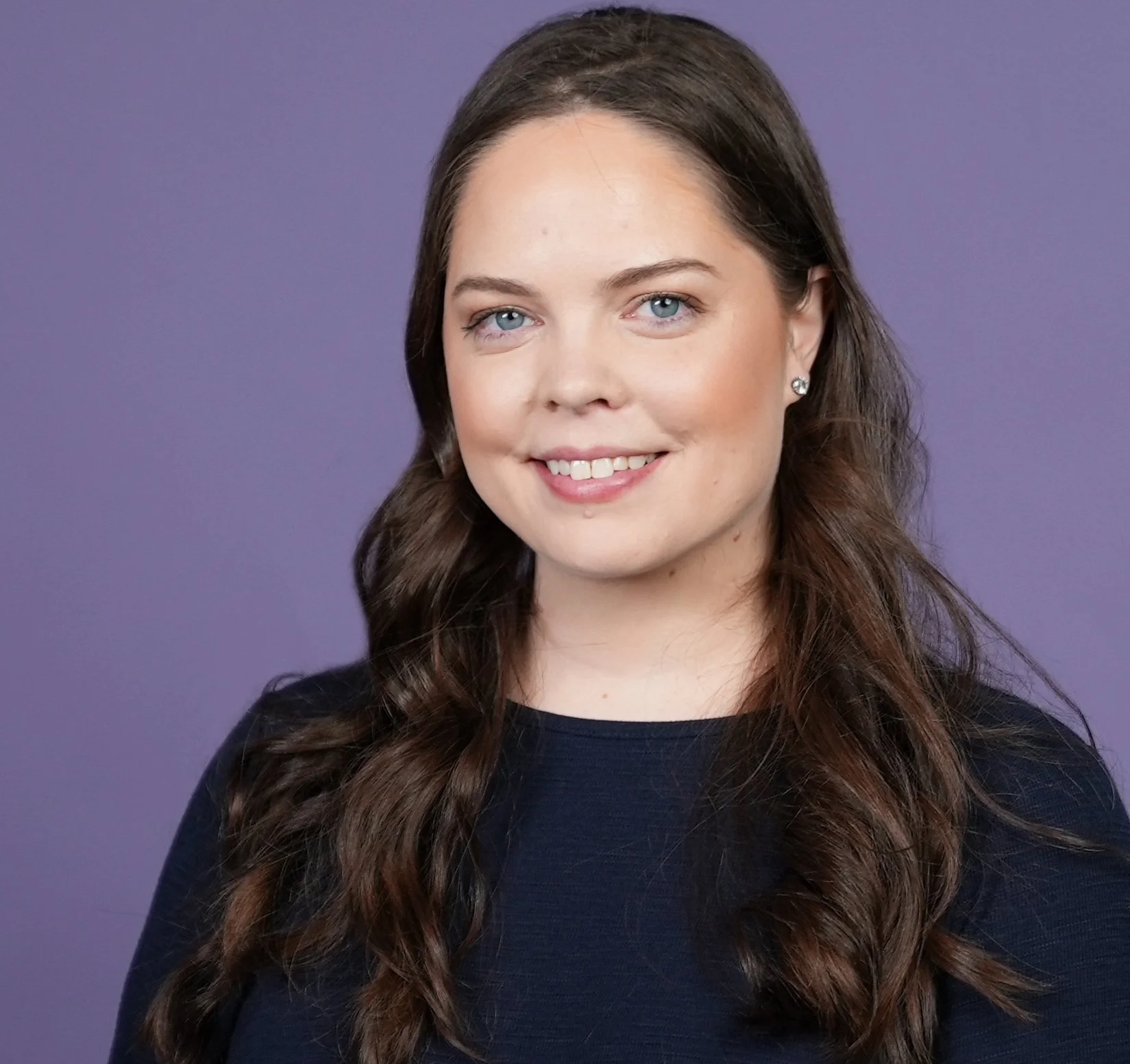
Rebecca Hinds PhD
Rebecca Hinds is a leading expert on organizational behavior and the future of work. She holds a BS, MS, and PhD from Stanford University. Rebecca founded the Work Innovation Lab at Asana and the Work AI Institute at Glean, first-of-their-kind corporate think tanks dedicated to conducting cutting-edge research on the future of work. She is the author of the brilliant new book, “Your Best Meeting Ever: 7 Principles for Designing Meetings That Get Things Done.”
It seems the more time we spend in meetings, the less effective we become. So how can we make meetings impactful, intentional and even something we look forward to (rather than flat out resent)?
In the latest episode of Live+Work More Human, your hosts Alexis and Sally sit down with Rebecca Hinds PhD, an expert in organizational behavior and author of the brilliant new "Your Best Meeting Ever." The conversation delves into the pervasive dysfunction of meetings in the workplace, exploring how they have become symbols of visibility and productivity, often leading to inefficiency and frustration.
Rebecca shares insights from her research, emphasizing the need for a paradigm shift in how meetings are designed and conducted. She introduces the concept of 'meeting doomsday,' a strategy that encourages teams to reassess their meeting schedules and eliminate unnecessary gatherings, fostering a culture of intentionality and clarity in communication.
Throughout the discussion, Rebecca outlines her seven principles for effective meeting design, advocating for a user-centric approach that prioritizes the needs of attendees. She highlights practical tips for both leaders and team members on how to navigate the complexities of meetings, ensuring they serve their intended purpose and contribute to a more human-centric workplace.
Key Takeaways
Meetings should achieve something that couldn't be done via email or Slack.
The importance of clarity in meeting objectives.
The role of technology in enhancing meeting effectiveness.
Why creating a positive atmosphere that encourages participation is key to outcomes.
A packed calendar is often mistaken for productivity and value.
How to get teams to reassess and redesign their meeting schedules.
Changes you can make to meeting culture irrespective of your role.
Learn more about Rebecca’s work right here.
Watch this incredible episode right now on YouTube!
Chapters and Transcript
00:00 Introduction to Meeting Challenges
07:51 Understanding Meeting Doomsday
11:19 The 4D CEO Test for Meetings
16:31 User-Centric Meeting Design
21:37 Creating Delightful Meetings
29:32 Strategies for Equal Airtime in Meetings
35:34 Empowering Employees to Decline Meetings
38:11 Conclusion: Making Meetings More Human
38:46 Creating Flourishing Workplaces
Sally Clarke (00:02.957)
Welcome to Live and Work More Human, Rebecca. We are so excited to have you with us today. Your book is so timely and so needed. And I can imagine you'd get a lot of people responding with this visceral kind of like, can meetings be good? It's definitely not. For a lot of us, our lived experience, we tend to spend our days in meetings that feel quite ineffective, inefficient, and sometimes even soul crushing, like really demotivating.
How did we get here? Can you tell us a little bit about the journey, the history of meetings in the context of work?
Rebecca Hinds (00:37.676)
Sure, and thank you so much for having me. I'm really looking forward to diving in here. I think there are multiple reasons why meetings have become so dysfunctional. I think much of it, and the reason meetings have largely remained unchanged for decades and decades is they're a symbol of visibility within our organizations. And we know that we as humans associate visibility with value and presence with.
productivity. And there are very few things, especially in our digital age today, that are more visible than a packed calendar. Often in our organizations, you can see everyone's calendar, you know when they're double booked, you can often see them in a meeting room. And because of that, we've come to associate a packed calendar with status and importance and busyness within the organization in a way that if
Alexis Zahner (01:11.366)
.
Rebecca Hinds (01:33.088)
especially if employees don't have clarity on how they're contributing to company goals. And if they're uncertain whether they're demonstrating enough progress and productivity, meetings become this natural default knee-jerk reaction such that we over schedule primarily to show we're busy and show we're productive within the organization.
Sally Clarke (01:58.299)
It's so interesting that conflation that we have of busyness with productivity and value. I think it's something that's sort of very pervasive and perhaps has even been heightened through COVID with the of the proliferation of online meetings. Is that something that you think has increased in recent years? Are we seeing more of a kind of a conflation there?
Rebecca Hinds (02:19.394)
not sure we're seeing more. What we are seeing is we've started to try to use other digital channels to communicate. And we saw this during the pandemic where the natural tendency was to invest in these new digital tools to collaborate, tools that should have allowed us to spend less time in meetings. But what we saw is the time we spend in
dysfunctional meetings in particular has increased and increased over the past five, six years. And that's because in so many cases, we've adopted new tools, but what we haven't given employees is clarity in terms of how to use these tools. And so when you don't know when to use Slack versus when to use email versus when to use a meeting, people default to meetings because they're highly visible and because they are a very reliable way to
get people's attention, whereas you can snooze an email, can snooze your notifications, you really do have to show up and be there in a meeting, at least physically.
Alexis Zahner (03:26.822)
It's a very interesting point, Rebecca, and Sally and I were speaking recently around, she sort of just mentioned this, idea of conflating things like urgency and busyness with productivity. And meetings just feel like such an easy way to create that visible cue that, look, I'm doing something, all these people need to connect with me and therefore I must hold some sort of value. And I've been a victim of really getting caught up in this myself. It's really easy to do, especially if some of your
Rebecca Hinds (03:36.044)
Yes.
Rebecca Hinds (03:49.166)
Yeah
Alexis Zahner (03:56.054)
know, KPIs in your job are around like I had a role where business development was part of it. So there was an expectation that we were having a certain volume of meetings with potential new clients a week. So even if I knew that that potential new client wasn't going to be a closer, I was just meeting an arbitrary KPI of having said meeting. So there is also this sort of interesting way where
we sometimes don't reflect on like the bigger concept of like, are we trying to achieve here? And are there KPIs that we're giving people even mapping onto what our objectives are? So I've certainly been in that position. And one of the things you speak about in your book, Rebecca, is this idea of the meeting doomsday. Can you tell us a little bit, what was your biggest learning from the experience of meeting doomsday?
Rebecca Hinds (04:39.278)
Hmm.
Rebecca Hinds (04:45.262)
So meeting doomsday is one of my favorite strategies because I've seen time and time again, it works and it works for several reasons. So meeting doomsday is essentially a 48 hour calendar cleanse. Ideally you do it as an organization, but if not, I've done it with teams as small as nine people. You delete recurring meetings for 48 hours and then employees rebuild their calendar from scratch. So they decide which meetings to bring back.
Alexis Zahner (05:10.449)
Mmmmm.
Rebecca Hinds (05:14.474)
even if they do bring back meetings, they're encouraged to redesign them. And in particular, think about the length, the cadence, the attendees and the agenda items in terms of how can I make this meeting most useful and valuable for the current state of work? So often we build up what I call meeting debt within our organizations where we have all of this legacy clutter on our calendars that perhaps made sense six months ago or a year ago, but
we need to be evolving our meetings as quickly as our businesses evolve. And part of the problem is there are so many social pressures associated with meetings where as soon as you put a meeting on the calendar, it establishes a type of social contract where you feel obligated to reciprocate that invitation. And even when we think about the words, you know,
It's a meeting invitation. You accept it or you reject it. They're very loaded words such that you decline a meeting and you feel like you're declining the person behind the meeting and not just the meeting. so meeting Tuesday, one of the big unlocks for teams is giving that explicit permission to, you know, it's okay to decline a meeting and it's expected as part of this organizational or team-wide intervention.
Alexis Zahner (06:22.275)
Mmm.
Alexis Zahner (06:39.88)
But it starts to happen because people start to think.
Rebecca Hinds (06:40.428)
What starts to happen is people start to rethink, is there an echo?
Sally Clarke (06:50.767)
Yeah, I'm suddenly getting an echo.
Alexis Zahner (06:51.275)
I'm suddenly getting an echo.
Sally Clarke (06:59.323)
Alex, can you just think as well? I'm not sure what's happening.
Alexis Zahner (07:01.567)
I'm not hearing any kind of echo on my end at all. was hearing like a loud like pinging or buzzing sound before though, a almost like a microwave sound. I'm not sure if that anyone else was getting that noise. Really? What if I mute myself?
Sally Clarke (07:15.519)
I did that in the background. Now, and it suddenly just like weirdly dropped almost mid-sentence when you were speaking, Rebecca. And now I can hear myself echoing badly. Yeah.
Rebecca Hinds (07:25.614)
I can hear.
Sally Clarke (07:28.975)
Let me see, so is that, yeah, that's, that's cleated it up, yeah.
Alexis Zahner (07:33.764)
That's so weird. It might maybe would be a setting on my end then because I'm not using headphones, which means my sound is echoing. Like it's meant to automatically not do that. Um, let me, I might just mute between then if I, if I can, if that is a, are you still getting an echo now? So strange. Yeah. think you don't. Okay. Cool.
Sally Clarke (07:53.295)
That's so clear right now. So maybe if, yeah, if there's any, okay, like if you just mute when you're not speaking, cause now again, we're getting the echo. Perfect. Cool.
Rebecca Hinds (07:54.932)
No, it's clear.
Alexis Zahner (08:02.335)
Sorry, Rebecca. Do you want to pick up? I'm trying to think where might be the best place to pick up.
Rebecca Hinds (08:09.176)
can pick up. think I was, I think I have a good sense of where I And so one of the biggest unlocks with meeting doomsday is giving people that explicit permission to decline meetings. And what we start to see happen is people don't just clear their calendar. They start to clear their assumptions about what actually deserves to be a meeting. And that's why when we do the comparison compared to a meeting audit,
Alexis Zahner (08:12.586)
Okay, beautiful.
Rebecca Hinds (08:38.754)
Whereas a meeting audit, the meetings are still on your calendar, you're defending them. Your mindset is how can I, you they matter, they're already on the calendar, they're still on the calendar. Whereas meeting Doomsday gives you that explicit permission to take things off the calendar and rethink how we design meetings.
Alexis Zahner (08:58.051)
I think that's a really important discernment, Rebecca. And something that I find really interesting in that as well, and I'd love to hear your thoughts on this, you know, there are certain meetings where we feel like they need to be there because of things like team progress check-ins or WIP meetings. We need to create that point of contact of bringing people together. And I do think with increasingly sort of disparate teams and people working across time zones, across geography,
it's increasingly difficult to create a sense of togetherness. So within that, there, you know, have you seen in your experience specific meetings that we really cling to that maybe don't give us a lot of bang for buck, you will, other whip meetings, progress meetings, what are the kinds of meetings that you see stealing the most time and energy from people?
Rebecca Hinds (09:43.982)
Okay.
Rebecca Hinds (09:47.788)
Sure. And in the book, I walk through a rule that I call the 4D CEO test, which is essentially a two part test to decide whether you need a meeting. And the first part of the test is the most important in terms of a meeting should only exist if the purpose is to decide, debate, discuss, or develop yourself or your team. And so a lot of things, a lot of meetings that are on our calendar don't
pass that first four D tests. Status updates are a big one. We have so many status update meetings in our organization where that's essentially information exchange. And it can happen much more effectively in an asynchronous format rather than an expensive live meeting. Broadcast meetings, boss updates, even brainstorm meetings, all of these things tend to happen.
most effectively, at least in part asynchronously. Now, what we know is critical is that team connection, team bonding, those developmental meetings are essential. And what we can't afford to do right now, and unfortunately what we're starting to see is this narrative around, we really need one-on-one meetings between the manager and the director reports? There's nothing more important that a manager can be doing than
establishing that consistent check-in. Now, we also know that there are several other more effective ways to develop connection when we think about team bonding than sitting in a meeting. And so depending on the geographic distribution, I encourage leaders and organizations to think about if you can be physically co-located, perhaps not every day, but perhaps once every four months or once every month, think about
What is, if the goal is to develop connection, what are other ways that are likely to strengthen connection more than sitting in a dry conference room, usually bonding over a shared interest, going out for a meal, bonding not just in a work setting, but also on a personal level, which we know is important for those work relationships and trust within the organization.
Rebecca Hinds (12:05.922)
think about the goal and then the mechanism. Sometimes a meeting is the most appropriate way to establish that connection, but often there are other more effective ways.
Sally Clarke (12:17.209)
You've raised so many interesting points, Rebecca, I think around this hesitancy that we can have around shifting our meeting behavior. And sometimes I think the psychological investment that we have in defending how things are and that sort of need to not want to like get rid of it. Like it has a purpose. And I love the kind of the metaphor I'm thinking of when we think of this in meeting doomsday is it's like shifting everything off the table. You just got an empty table and then you can start to sort of intentionally put things back in.
Rebecca Hinds (12:25.282)
I'm going to leave.
Rebecca Hinds (12:42.862)
Mm-hmm.
Sally Clarke (12:46.753)
rather than this is how it is and now I need to sort of hunker down and defend what I've got going on here. And I imagine it's also a really good way of kind of loosening that sense of productivity theater, which I think is so prevalent in so many of our organizations. How do you sort of help people? Because I can imagine there's this kind of resistance that we feel, and particularly as you said, like when we use the words like, know, reject.
Rebecca Hinds (13:03.863)
Hmm.
Sally Clarke (13:12.919)
accept, decline. It's almost like dating, you know, I don't want to be rejected. I don't want to turn down your invitation. It's this real sort of very sort of basic human sort of emotions that are elicited. How can we sort of past that and sort of sort of start to understand that we do really need to drop these meetings and drop these ideas about how effective they are?
Rebecca Hinds (13:16.312)
you
Rebecca Hinds (13:24.91)
you
Rebecca Hinds (13:35.222)
There are many different strategies that I think are effective. Often at the root of this is a lack of clarity within the organization, a lack of understanding how you as an individual are contributing to your organizational outcomes. And so the more we can be explicit about what are our organizational goals, what are our team goals and how do they connect to organizational goals and what are our individual
goals and how do those then ladder up to team and organizational goals? Alexis, as you were describing earlier, right? Often employees default to outcomes, output over outcomes, where if they do have clarity in terms of outcomes, they're responsible for driving relationships with customers or long-term customer value as opposed to number of meetings scheduled or number of touch points.
that starts to incentivize much healthier behavior than if we're anchoring on outputs. And if we don't have that clarity, we naturally as humans default to anchoring on those outputs. So that's a key. Another key is being explicit about what deserves to be a meeting in the organization. Often there's never this conversation around what is a meeting for? And if you ask five of your employees what deserves to be a meeting in our organization,
you should only get one answer. And it's such a simple thing that we can do to provide employees with so much clarity. And yet, again, we default to accepting these meetings as a non-negotiable and an inevitable cost of doing business when really, you know, we need to be intentionally designing them.
Sally Clarke (15:22.203)
It's almost like, think if you ask what, you know, what does a meeting need to do in our organisation? It's almost like this nebulous question of like, well, I don't, you know, where do I, how do I actually get clarity on that? What are we actually trying to achieve when we're meeting, particularly, you know, everyone's investing their time. And there's a lot of, you know, I think research done around the cost to organisations of, you know, wasted meetings, particularly if you've got 10 people in the room for an hour, that's obviously an enormous investment from the side of the company.
And yet we're still, and there's this of, this narrative around it, meeting that could have been an email, we know it's not effective somehow. And yet we're still some, slightly, almost addicted to this kind of showing up and feeling important because we're, you know, it's a difficult one, I think, us to let go of.
Rebecca Hinds (16:10.464)
It is, and often I find that executives, leaders, people in general know their meetings are bad. We all know, you know, a dysfunctional meeting when we see it and live it. But often the narrative is, you know, I know my meetings are bad, but they're not any worse than anyone else's. And so there's not a desire to improve when really holding an effective meeting or being able to steer an ineffective meeting back on course.
There are a few things that differentiate you more as a leader, regardless of your position within the org chart, than being able to lead a good meeting or show up as a co-designer of a better meeting. And yet we don't appreciate it, I think, because we have too few examples of it happening within our organizations. And so I think, you know, the more we recognize just how powerful, arguably more powerful than ever in our AI era, it is to lead a human-centric
meeting where you walk away knowing that you couldn't have achieved what you just achieved in that meeting in any other form. Like that's a hallmark of a great leader. And it sets you up to then, you know, the natural conclusion is, oh, wow, you can lead a good meeting. You can probably lead a project. You can probably lead a team. Whereas the reverse is also true. If you can't lead a meeting, you know, that doesn't instill much confidence that you can lead a project or a team or a department.
Alexis Zahner (17:39.709)
Rebecca, I really love something that you said there where you mentioned that leading a good meeting is something that you couldn't have done any other way. I think that's such an important differentiating point that we could only have achieved this outcome by coming together in this format and getting to where we got. I think that is such an important criteria for people to consider because if it could have been an email, if it could have been a status update, if it could have been an asynchronous ping on Slack, then let it be.
And I think you're so, we could not agree with you more in that it's such an underrated skill and yet it's something we do so often we forget that we could be doing it so much more effectively. And it leads me to my next question, Rebecca. In your book, you do have seven principles for meeting design. Can you help us unpack these? And if you have a favorite, I know as an author, it's hard to choose your favorite child, but if you happen to have a favorite of the seven,
Rebecca Hinds (18:09.718)
Bye.
Alexis Zahner (18:37.086)
Could you maybe unpack it even with an example that you've seen in some of your work as well?
Rebecca Hinds (18:41.972)
Sure. So the premise of the book is meetings are a product. They're the most expensive product in our entire organization, which is why, you know, the more we can use other channels of communication that are less expensive, the more we should. And so each of the seven chapters walks through a product design principle applied to meetings, because if we are to treat meetings like the expensive product they are,
we should be applying the same product design principles that we would use to develop a product or service for our customers. And so the first one is my favorite and we've talked about it a little bit, meeting debt, just as we have technical debt within our products, legacy code that builds up over time, we have these legacy meetings that accumulate over time in the form of meeting debt. And so the meeting doomsday is one strategy to overcome that.
There are lots of others, especially if your organization isn't ready for a full meeting doomsday. Another really important one is metrics. Just as we would evaluate our product with metrics and we often use return on investment to do so, I recommend a strategy that I call, and my colleague Elise Keith is one who originally introduced me to this concept around return on time investment, ROTI. So what we know is,
and we've talked about it, people have this knee-jerk negative reaction to meetings, this visceral negative reaction. And so because of that, you can't just ask people, are meetings effective in the organization? Are the meetings I run effective? Because you trigger this natural negativity bias. Return on time investment helps to dislodge some of those biases. So it's a zero to five scale.
After about 10 % of your meetings, I recommend asking, was this meeting worth the time you invested? And a second part, what would it take to boost that rating by one point? And having people reflect on time does something interesting in the sense of everyone has some intuitive sense of the value of their time and they know whether their time has been well.
Rebecca Hinds (21:05.014)
invested or wasted. And it's definitely a partial measure, but it's a really important one in helping you as the meeting organizer understand whether you're designing meetings for the users, which are the attendees. They're not you as the organizer. Often we'll leave meetings and the most satisfied person in the meeting will be the person who organized it because they were able to design it how they wanted without often input from the attendees.
ROTE helps to encourage this mindset of another principle, which is user-centric design. Designing our meetings so that they're in service of the people who are showing up and attending, because if we're not doing that, again, it can probably be an asynchronous update or some other form of communication that doesn't require live participation from the attendees.
Sally Clarke (21:58.893)
It's such a great point, Rebecca, I think, looking at this from a perspective of the value of our time. And I think often, particularly for junior employees, if they're invited to a meeting by someone more senior, they're going to assume that that person, you know, that leader has decided that their time is important, that they are valuable in that meeting. So they're going to accept sort of irrespective. So I love particularly the second question that you ask there, because it's sort of empowering people, I think, to really look at what
reflect a little on their own, the value of their own time and how that can be used more effectively to drive a more effective meeting. Because I think often we may have just sort of a general sense that, this meeting could have been more effective or perhaps even quite a subtle sense of, I don't know if I was really needed in this meeting, but starting to surface that information is so important to driving more effective meetings, I imagine.
Rebecca Hinds (22:52.908)
It's really important and people notice when you've been intentional about designing meetings and if you show up, you don't have an agenda. It's clear you've defaulted to the hour meeting because that's what our calendar has told us should be a meeting and you're not showing up prepared as the meeting organizer. It signals that your time is more valuable than everyone else's. Whereas if you show up,
with that feedback from employees in terms of how to improve that meeting, it shows you care, it shows you're committed, and people reciprocate that just like they do accepting the meeting invite. They show up prepared, ready to contribute in a way that's going to lead to a much more effective outcome. And it's simple things. It's simple things like deciding whether that 30-minute meeting should be 30 minutes or whether you can cut it down to 25 minutes.
even something as simple as that communicates that you're committed, you've been intentional about designing. Now it's not a full solution, but the more we can demonstrate that intentionality, the more people show up ready to contribute.
Sally Clarke (24:04.261)
Amazing. And you mentioned user centric design and sort of creating this meeting that really serves the user. So you're really thinking about the people that are showing up to your meeting. Can you tell us a little bit more about what that looks like? What a leader might be doing to really center the user, the other attendees in their meeting.
Rebecca Hinds (24:20.494)
Mm-hmm. So I often think about the four key dimensions of meetings. So the length, the attendees, the agenda items, and the cadence. In terms of length, being intentional about what is the right length for the meeting, not just defaulting to 30 to 60 minutes because that's what the calendar defaults to. Thinking very intentionally. I've studied individuals who've run 25 minute meetings, 15 minute meetings, 27 minute meetings.
And it all signals that intentionality in a way that's healthy. Cadence similarly, you know, not defaulting to the weekly meeting because that's the natural default of the calendar. Thinking very intentionally and maybe not having recurring meetings, but intentionally scheduling them as needed. Attendees, so only inviting those stakeholders, thinking really carefully about.
each person having a clear role in the meeting, not inviting the stakeholders, the spectators, only inviting the stakeholders and the people who are going to contribute and revalue from that live interaction. Agenda is another big one. There's actually no conclusive evidence that having an agenda improves our meetings. And that is because it's not just about having the agenda. It's again about how we design it.
So thinking about, I often think about each agenda item having a clear job to do in the meeting. And often a useful way to think about that is to frame every agenda item as a combination of a verb and a noun. So not just write, you know, budget discussion, very clearly outline, you know, debate this part of the budget or decide on this part or align on this part, making it very clear.
what you're trying to achieve in the meeting doesn't just give people clarity, it also gives you clarity in terms of what's being discussed or decided or debated, but also gives you clarity in terms of when it's okay and when you're ready to move on, because we also know that disproportionately we spend more time on the first agenda item in the meeting. And so the more we can structure our agendas, our meetings intentionally. And then another big important part is
Rebecca Hinds (26:39.092)
making meetings delightful. You often we talk a lot about efficiency and efficiency is important. But once we've decided that we're going to use a meeting as the most expensive form of communication, every meeting should have at least one moment of delight, a combination of surprise and joy. can be as simple as, you know, an unexpected shout out within the meeting. can be, you know, bringing food that has some
personal significance to you, something that's going to make the meeting memorable and drive people to be excited and look forward to the next one. I think that level of humanity for meetings, if we're intentional, and again, it can be five seconds, it can be two minutes, helps us create this culture of meetings are a positive part of our workday and not a negative one.
Alexis Zahner (27:36.537)
really appreciate that point, Rebecca, as well, because if we are presumably reducing the volume of meetings we're having, we can apply a little more reverence to the ones that we do and make them something that people can look forward to. And I think that I really like that point. And Rebecca, something that I've always had problems with in meetings is that there seems to be typical people every now and then that take up more air time than other people. And I've I've chaired meetings, everything from
you know, community volunteer meetings through to workplace meetings. And I have found it personally a struggle sometimes to keep meetings on track when you do sometimes have people who want to take up more air time than maybe they are qualified to or have the expertise to or are really adding value at that point too. So I just wonder, could you give us a little bit of advice if you've been in those shoes before and you're, you're trying to readjust your team's behaviors to really have these meetings that are more effective, make
clearer, better decisions and sort of all the beautiful design elements you've just discussed. Do you have one or two points for someone who's in that dilemma right now around how we can make sure the right people are speaking and adding the right value where we need them to in meetings?
Rebecca Hinds (28:44.174)
you
Rebecca Hinds (28:49.966)
Definitely. And I think the key to this is recognizing why this is so important. And it's so important because we know that equal airtime is one of the strongest predictors of team performance. It should be the case that it's never going to be fully balanced. But if you consistently have meetings where there's a significant imbalance of airtime,
That's not only a sign of an ineffective meeting, but probably a sign of a broken communication culture in a way that's not encouraging equal voice, which we know is important for driving team performance. We also know from the research that the more someone speaks in a meeting, it's sometimes called the Babel hypothesis, the more we perceive them to be a leader. And so often, you know, it'll distort our perception of who's in the room in a way that also negatively impacts the value.
we reap from the meeting. And so there are lots of strategies here. It depends so heavily on who you are and the level of psychological safety that is within your organization. If you're a powerful person, you can afford to be more explicit and assertive about calling out bad meeting behavior. But if you're a junior employee who
you know, doesn't have a lot of psychological safety, you need to be more strategic in how you do this. And so often, you know, leading with curiosity, using objective data and insights, those types of approaches can be effective at disarming the potential threat. So, you know, leading with curiosity, hey, I noticed that in this meeting, there's, you know, a lot of time spent on status updates. So making it less about
the person and more about what's happening. We don't get to the meaty discussion often. What if we redesign the meeting in this way? Instead of assertly calling out the bad behavior that can be effective, increasingly I'm working with organizations to use technology to help to call out this bad behavior or give more visibility. And so really exciting early research around
Rebecca Hinds (31:06.412)
you know, when AI in particular can help give attendees insight into how much they're contributing, whether that's, you know, off the charts or below average, that starts to nudge effective behavior in a way that is much less threatening than having that come from a human often. And often people aren't self-aware in the moment, but become much more self-aware when, you know,
you get a report saying you've contributed 80 % of the air time in this meeting, it starts to then encourage healthy behavior in a way that I think is much needed in many cases.
Sally Clarke (31:47.845)
love how you've elucidated a really beautiful way that we can actually be harnessing technology and AI to support more human centric meetings, Rebecca, because I think these are tools that can kind of perhaps help us get past the discomfort of having challenging conversations. And even in an organization experiencing high levels of psych safety, I think there often is that sort of nervousness around, you know, pushing back, particularly on a personal level. So that's such a great tool that we can be using to elucidate, sort of create this clarity on
how our meetings are going and how we can track to better meetings. You mentioned this skill of, or the characteristic of curiosity in leaders in starting to drive improved meetings. Are there other skills that you see as being very important or foundational for leaders who really are looking to, individuals in an organization who are looking to apply these design principles and improve meetings for their teams?
Rebecca Hinds (32:26.199)
Okay.
Rebecca Hinds (32:42.616)
There are several. One is, I think, that self-awareness of just how much influence you have as a leader. Even if you're not dominating the airwaves, even if you're not even speaking in meetings, people are very intently and acutely watching your actions. They're watching whether you smile or whether you look bored in the meeting as a symbol of how you're interpreting or celebrating or not their ideas.
So that amplification effect, know leaders, great leaders tend to be more aware of that and they'll take steps like speaking last in the meeting or intentionally inviting that feedback and participation from other leaders. A hallmark of a great leader, and I learned this very early on from several of my mentors, including Bob Sutton at Stanford, they treat others' time as more valuable than their own.
and they're a steward and protector of other people's time. And so you'll see the great leaders, they have the conversation around, if you're not getting value from this meeting or you're not contributing value, you don't have to sit in the meeting, giving that explicit permission, having those conversations where most leaders never have that conversation with their direct report in terms of protecting their time in and around meetings.
great leaders often do.
Alexis Zahner (34:14.27)
Rebecca, I really appreciate this point because I think as a leader, what it calls for us to do is really be consciously aware of our own ego and how that might be playing into our expectation of others and perhaps placing our own time and energy above those around us. And this really helps flip the script on that and say we really need to be valuing what other people are doing and giving that same reverence again to their time and energy. So I think that's so important. Now, Rebecca,
I love this and I think there's so much in this, especially if we are in a position of power or influence and maybe we are the person hosting meetings. But for many of our community, we're in a position where we are getting dragged to pain in the butt silly meetings that are very pointless all week long with teams and people we have no business in being meetings with. And certainly I've been in this position a lot in my career. What advice would you give for people in this position?
to create their own personal meeting, get in, as you put it. How do we go about that?
Rebecca Hinds (35:19.63)
And meeting doomsday by far, you know, it's going to be more effective if you do it at the team and organizational level, because we know meetings are so interdependent on other people by, you know, the definition of a meeting involves other people. And so we need to do everything we can to relentlessly protect our calendar. Sometimes that means explicitly blocking off, no meeting blocks, no meeting days.
setting yourself as out of office, to auto reject meetings that are scheduled, the more we can ruthlessly protect our calendar using technology again, the more people start to respect it, the more we can have those conversations with our manager and the more we can rally around explicit guidelines for what deserves to be a meeting because then you can point to the meeting and say,
help me understand how this meeting passes the 4D CEO test, or help me understand my role as a stakeholder in the meeting. The more we can point to these principles, which is why I framed the book around principles, the more we're grounding our pushback in objective or at least intentional meeting design, and people respect that. We all know that time is our most valuable asset and
the more we respect it, the more other people are going to respect it as well.
Sally Clarke (36:48.229)
Those are some great tips, I think, for sort of depersonalizing this kind of discussion, this narrative that we have around meetings, because as you alluded to, meetings are people, it's people coming together, but redesigning meetings is really about looking at all of the other aspects of how we spend this time together as humans. Thank you so much for your time today, Rebecca. It's been incredibly enlightening for us, incredibly empowering too.
Rebecca Hinds (36:58.648)
for that.
Sally Clarke (37:14.639)
Thank you so much and yeah, thank you for your book and for spending time with us today on Live and Work More Human.
Rebecca Hinds (37:20.45)
Thank you so much. And that should be the goal of meetings, right? It should be to make them more human. I think that's the core of all of this.
Sally Clarke (37:28.835)
We could not agree more. Absolutely agree. Thank you, Rebecca.