Age is Just a Number: Countering Ageism in Our Work Lives with Dr Corinne Auman
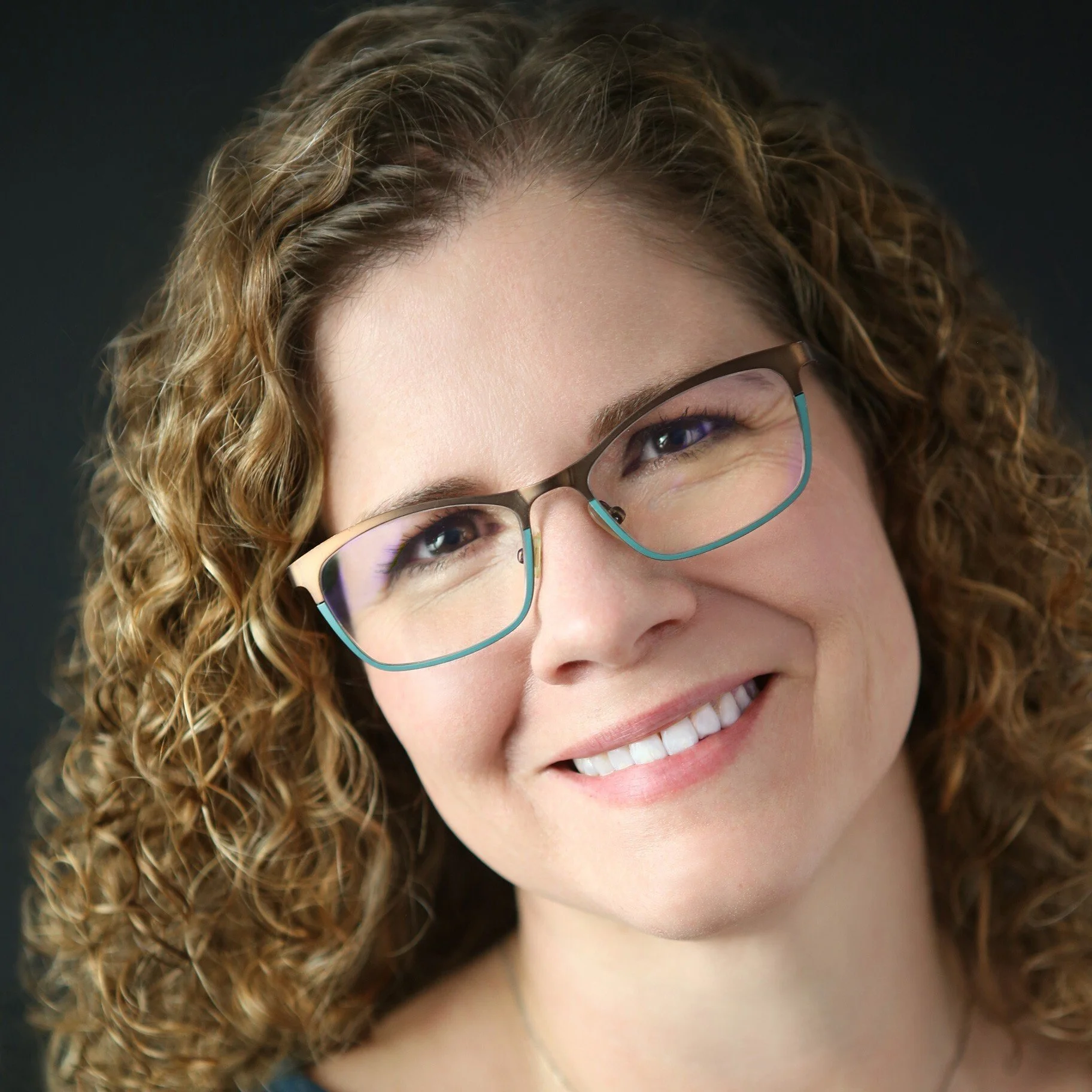
Dr. Corinne Auman
Corinne is a recognized gerontologist, author and the founder of Choice Care Navigators, a company dedicated to helping families navigate the aging process.
Corinne's passion lies in reshaping how we perceive older adulthood, a vision she beautifully encapsulates in her groundbreaking book, "Keenagers: Telling a New Story About Aging.”
We are all aging as we speak, and yet we resist it with all our might. Understandably, given the anti-aging industry commands US$500 billion each year. So, how can we age without losing our dignity or identity? And what can we do to counter agism where it is arguable most rife: in the workplace?
In this insightful and candid conversation, Alexis and Sally sit down with age expert and author Dr. Corinne Auman to candidly explore the realities of aging, challenging societal stereotypes and emphasizing the importance of a positive outlook.
Corinne discusses how language, workplace biases, and cultural narratives shape our perceptions of aging, and offers practical advice on embracing this life stage with purpose and agency.
Key themes we explore include:
The trouble with societal perceptions of aging
How capitalism impacts our conceptualization of aging
The impact of language and stereotypes on the aging process
Workplace ageism and diversity: and why diversity of age matters at work
The importance of cultivating a positive outlook on aging
Agency’s role in our aging (and its impact on longevity!)
Gender disparities in aging experiences
Practical starting points to counter your own agism
Learn more about Dr Auman’s work and her incredible book right here.
Watch this brilliant conversation now!
Chapters & Transcript
00:00 The Journey of Aging
08:56 The Power of Positive Aging
15:32 The Need for Intergenerational Workforces
21:23 Gender Disparities in Aging
30:39 Transforming Perspectives on Aging
40:06 Introduction to the Podcast and Guest
40:06 Exploring Human-Centric Work Environments
Alexis Zahner (00:02.624)
Welcome to live and work more human, Corinne. It is such a pleasure to have you here with us today. And we're going to begin this conversation with a rather big question, if we may. And that is, what has your relationship been with age or aging so far? And how do you see this unfolding in the future?
Sally Clarke (00:03.466)
to leave.
Sally Clarke (00:09.52)
today. We're going to begin this conversation rather than make questions.
Dr. Corinne Auman (00:25.048)
So, you know, I think aging is one of these things that we think everybody else is doing, or our grandparents are aging, those old people, they're aging, the rest of us, we're not doing that. And it has been such an interesting experience for me because I fall right into that category in the sense that my background is in aging, my degree is in developmental psychology, I've always worked with older adults throughout my career.
And yet somehow I didn't really think I was gonna ever fall into that category, right? It doesn't, it seems like it's something separate from us. And just this year, I'm 50 now, and just this year I got my invitation to participate in the senior games here in my city. Yeah, yeah, and it's one of those moments where you're like, I'm sorry, I'm sorry, what? That can't be.
Alexis Zahner (01:16.696)
It's a shocking one, right? Yeah.
Dr. Corinne Auman (01:23.692)
And I'm so, I think this is the experience we all have with it in the sense that it's like, that can't be possible, right? That's not happening to me. And I've had such wonderful experiences working with older people and I want to look forward to getting older. And yet at the same time, when that moment happens, I kind of go.
What do you mean? What do you mean? So I've really struggled with it myself. think this is, you know, it's a journey I want to help other people with, but it's my own journey too, in the sense that I had to pause and think, and now I'm signing up for the senior games. I'm picking my events because I'm like, okay, let's do it. If I'm going to fall into this category, let's go have fun.
Sally Clarke (01:47.348)
You
Alexis Zahner (02:11.096)
I love that, Corinne. And it's interesting though, isn't it? Because I think we hear phrases in popular culture like aging is a gift and it's a privilege. And yet we seem to be quite scared of that occurring to ourselves. As you've mentioned, what are some of the factors that make us a little afraid to get older?
Dr. Corinne Auman (02:32.622)
think the number one thing is kind of the marketing around it. mean, anti-aging products and services are a half a trillion dollar industry. I mean, just go look at any magazine or any beauty counter, any of these things. And so there's a lot of money being made by keeping people fearful of growing older. also things do change as we get older, right? We are more likely to have health conditions. Things are...
Sally Clarke (02:52.98)
Mm.
Dr. Corinne Auman (03:01.11)
The world reacts to us differently as we get older. And that is hard to deal with when you start realizing that people are treating you differently. there are reasons people don't want to appear older and that is valid because ageism is a real thing and the world is going to interact with you differently. But that doesn't mean that it's not worth fighting, right?
there is a reason to try to be more positive, to have a more positive message because there's lots of research that actually shows that if you have a positive outlook on aging, you walk faster, you're less likely to develop dementia, you're less likely to have cardiovascular disease, and there's all these positive benefits when you are looking forward to it rather than going, no, I'm not aging, that's something other people are doing or...
I'll make plans when it's time and stuff like that. It's like, no, you need to face it. If you face it and face it with a positive outlook, it actually goes a lot better.
Sally Clarke (04:03.358)
Can you unpack that for us for a little bit, Karin, because that positive approach to aging that we can sort of embrace that will have a vastly different impact on us as we go through those motions. Very curious what that actually looks like and how that differentiates from someone just sort of completely succumbing to the anti-aging rhetoric.
Dr. Corinne Auman (04:24.142)
Sure, so Becca Levy is a researcher out of the Yale School of Public Health and she has a whole book on this, just kind of chronicling her decades of research showing that people who have a positive outlook, a self-reported positive outlook on aging, growing older, live on average seven and a half years longer than people who have a negative outlook. And...
And that is cross-cultural. She has looked at that in multiple different countries. Like that's not just a one-time study. But the interesting thing about it is you can imagine it's probably because if you have a positive outlook, you are doing things to take care of yourself, right? I am staying active. I'm exercising. I'm eating well. I'm going to my doctor's visits versus somebody who has a really negative outlook who goes,
Oh yeah, I'm not going to the doctor. I'm just getting older. You know, this is going to happen. There's nothing I can do about it when they've got an ache or a pain or something like that. So that outlook changes behavior. And that's the thing that impacts all those other outcomes.
Sally Clarke (05:32.948)
It's a really powerful message for us, think, Corinne, to understand that there's actually quite a lot of agency we have here in how we move through this process. Obviously, there's some things that will simply happen to us, but that our outlook on it is so impactful. Now, I'd love to turn to your own book, Keen Ages, telling a new story about aging, because I think this is such an important story to be telling. Can you tell us a little bit about what we're getting wrong with how we talk about aging right now?
Dr. Corinne Auman (05:59.982)
What are we getting right? That's the hard thing. So language is powerful. The way you talk to yourself, the way you talk to others, you know, you're always hearing people say talk positively to yourself. If you go try to find positive words about older adults and aging in general, it is really, really difficult. You go do a Google search for older adult and it's things like crone, hag.
Sally Clarke (06:02.322)
Ha!
Alexis Zahner (06:02.904)
So the language is powerful, but when you turn
Dr. Corinne Auman (06:29.71)
you know, dirty old man. I mean, just all these things that are negative. So the book is called Keenagers with a K and I try to describe older adults as keenagers because I wanted a positive word. I wanted something that didn't have these negative connotations to it because how can we talk positively about growing older if all we have are negative words for it? And so the definition of keen is highly developed.
which I think older adults naturally fall into. But then it also means like having a strong interest in something. And a lot of older adults are still active and engaged and keen to keep active with life, not just withdraw from the world. So that's why I chose that word.
Alexis Zahner (07:18.432)
It is a great word, Corinne, we love it. And you know, it's interesting because I think your book and your work specifically obviously looks at older people, but something that I find really interesting, and it goes back to your comment around the sort of rhetoric we hear in popular culture. I've been watching a lot of sport recently. It's been the winter Olympic games and something I heard said a number of times during broadcast, looking at a specific team and the age demographic of professional athletes. And typically I think by mid thirties,
people are starting to age out of professional sport. Now I'm a 35 year olds and I felt quite a rude shock when I heard 35 year old professional hockey players being referred to as veterans and aging out of the sport. So I think this rhetoric is something that actually starts so much earlier, certainly in different contexts. And so I think almost from 35, we start to feel like, wow, once we're not youthful anymore,
Dr. Corinne Auman (08:01.004)
Mm-hmm
Sally Clarke (08:05.364)
think that actually starts so much earlier, and certainly in different contexts. so I think almost from 35, we start to feel like, once we're not youthful anymore, it feels to me as a world values almost already on the decline. Is that too drastic of an opinion to have, or is this something you kind of see even earlier in the process?
Alexis Zahner (08:15.69)
It feels to me as a way of values almost already on the decline. Is that too drastic of an opinion to have, or is this something you kind of see even earlier in the process?
Dr. Corinne Auman (08:26.956)
There's nothing that I will remember more than being pregnant at 35 and them talking to me about my geriatric pregnancy. Yeah, that makes you feel great. just, I do think it is very context specific, like you're talking about with sports and things like that. Although,
Sally Clarke (08:35.348)
Yum.
Alexis Zahner (08:35.68)
Right? Yes. Yeah.
Dr. Corinne Auman (08:48.376)
I'd have to find it. There was an article about somebody well into her 40s that was at the Olympics that I read during the game. So, you know, and her whole thing was you can do whatever you want. is just a number. So it is context specific, but it does start way earlier than we might think. Here in the US, age discrimination laws in the workplace start at age 40. And that's
Alexis Zahner (08:58.946)
Yeah.
Dr. Corinne Auman (09:14.848)
When I usually tell people that they're quite surprised, they're like 40 so young and it's like, well, not necessarily. It really depends on what field you're in, things like that. So yeah, it's a real issue for much sooner than they think it's going to be.
Alexis Zahner (09:21.709)
Yeah.
Alexis Zahner (09:27.584)
Yeah.
Alexis Zahner (09:31.316)
What are some of the negative repercussions of this? Obviously, we've just touched on a few there, but Corinne, the workplace is a really specific example that we speak a lot about on this podcast. What are some of the harmful repercussions of these negative stereotypes about aging that we face in Western culture?
Sally Clarke (09:40.916)
What are some of the harmful repercussions of these negative stereotypes about aging up the face of a certain culture?
Dr. Corinne Auman (09:48.654)
So I think the biggest thing in the workplace is having older workers be looked past in terms of training or promotion opportunities because people think, people have the stereotype, they're older, they won't want to learn something new, or they won't be able to learn something new, or this idea that, well, you're probably gonna retire soon anyway, so why invest in you anymore?
Really, that should be a conversation that an employer is having with an employee to say, hey, what are you thinking? What's the future in terms of retirement, things like that. But they don't. We make a lot of assumptions about people based on their age rather than having actual conversations. And there's a lot to lose there in terms of institutional knowledge and just skill sets that different generations have.
Younger generations have particular skill sets, older generations have particular skill sets. They're not better or worse. They're different because of life experiences. And really the power is in having an intergenerational workforce where you've got multiple different perspectives all working together. I had a really interesting experience at a conference last year where it was a,
on aging, it's the American Society on Aging, and they had this room full of probably 350 people from all different fields, all different backgrounds that work with older adults. And he went around and he said, how many people in here are in this field or that field? And people raised their hand. And then he said, how many people in here are in marketing? Not a single and went up. And he's like, okay, how much money do older people have to spend?
and not a single marketing person is in here thinking about what older adults need, what are the services, what are the places they want to spend their money, things like that because it's just totally overlooked. Like, you get to, we're so focused on the younger demographic that they don't even think, we need, we not only need to think about marketing to older people, we need older people in the marketing agency so that they can tell us what that generation.
Dr. Corinne Auman (12:07.638)
wants and needs, what kind of services.
Sally Clarke (12:10.31)
It's such an interesting point, Corinne, because I think there's been so much just thinking sort of at a macro level, there's been so many changes to our workplaces and to even life expectancy since I was, so I'm almost 50 myself. I mean, since I was a kid and I remember sort of thinking about older people and I thought of, you know, sort of my dad was quite a bit older. So my dad was 54 when I was born. So I grew up around sort of older people. And I remember the moment where I realized that my dad was much older than everyone else's dads, but.
Like this kind of this concept of age, I think at the time was like he retired at 60, he was old. That was the 1980s. Today with the life expectancy drastically changing in so many societies around the world, we're seeing that a lot of people not only have the energy, perhaps sometimes the need, but also the willingness to work for a longer time. And I feel like our kind of mentality around work hasn't really caught up to that and it isn't really capturing the value that exists there. Would you agree with that?
Dr. Corinne Auman (13:06.892)
yeah, 100%. You know, 60 today. I don't want to, we can get into the 60s, the new 50 or you know, those kinds of trends, but it really is different. You know, if you retire at 60, you don't just have a few years left. You have a few decades left.
Sally Clarke (13:23.668)
My dad died at 97, so that was 37 years of retirement.
Dr. Corinne Auman (13:27.31)
37 years. I mean, think about that. That's like as long as a full career. And the thing that people I don't think realize is leisure is really nice when it's short term. When you have unlimited leisure without a lot of structure, that can lead to kind of feeling lost and maybe even depressed because people don't need me. And so the need to...
Alexis Zahner (13:32.12)
And the thing that people think
Dr. Corinne Auman (13:53.142)
It doesn't, you don't have to keep working. Don't come for me and say, you want everybody to work until they die. That is not what I'm saying. But I am saying that people need purpose. And if you retire at 60 and you've got three plus decades ahead of you, you have to have some sort of reason to get out of bed on Wednesday, a reason to think other people need you and want you around. And that can be volunteering. That can be working part time. It can be going back to work. It can be a million different things.
Alexis Zahner (14:12.226)
Yeah.
Dr. Corinne Auman (14:23.272)
what really scares me when somebody is approaching retirement and they're like, my job is going to be to lay on the beach. And I'm like, that's not going to be fun for long. Yeah.
Sally Clarke (14:35.7)
think the word that stands out to me there is purpose, Corinne, because I think it is something that we forget that we derive so much of from our working lives. And I think particularly because so many of us, perhaps when we get to retirement age are in quite a senior role and we do have a lot of responsibility and we're actually giving a lot back potentially to have that sort of disappear overnight. I think it's very understandable sort of impact on our identity. So we need to be sort of planning for that.
Dr. Corinne Auman (14:56.632)
Mm-hmm.
Sally Clarke (15:03.902)
Can you tell us a little bit more about why, you know, sort of the impact of ageism in the workplace? What other sort of signals do we see at work that age is being construed sort of in an unhelpful way?
Dr. Corinne Auman (15:17.016)
The main thing I hear from people is that they feel like their ideas are being overlooked, right? So if I'm an older person and I've suggest something at work that everybody just kind of pooh-poos it or ignores it, or even like the idea that you could say something and you're the older worker and everybody ignores it, but then a younger counterpart says the same thing and everybody goes, that's a great idea, right? That sort of just being ignored or feeling invisible.
is the number one thing I hear from people. The other thing is not, again, not having access to training or just kind of being pushed out in terms of being ignored, right? Being ignored for promotions and just that sort of, I'll say subtle signaling. The other thing that happens, I have a friend who is still working. He is 70 and he is still working. And the thing that he says is being kind of message to him
every time he sees someone that maybe he hasn't seen recently at work, they look at him and they go, haven't you retired yet? And he kind of, was like, are they trying to give me a message, right? Why is everybody asking me that? Obviously I haven't retired yet. Here I am at work, right? But that sort of, the narrative is there and I don't think people know what to say otherwise because they are surprised that he's 70 and still at work. But...
Alexis Zahner (16:24.298)
and
Dr. Corinne Auman (16:46.38)
Why not? Right? He enjoys his job. He likes what he does. He's like, what would I do with my time if I retire? But people don't know what to say other than why haven't you retired yet? All the time.
Alexis Zahner (16:59.67)
Yeah. And it doesn't seem necessarily like, I guess, a negative question to that person at that point in time without them understanding the repercussions of how that might actually land and feel and trying to explain that. I guess it's sort of like asking myself with 35 year old, why I haven't got kids yet. Well, there could be a lot of answers to that question. So it's something you might want to think about just treading lightly for different folks, depending on their scenario. Corinne, one thing I do find interesting
Sally Clarke (17:26.278)
think I do find it interesting and I'd like to ask if you've seen this in your book, but is there some gender disparity in how ageing...
Alexis Zahner (17:28.056)
And I'd like to ask if you've seen this in your work, but is there some gender disparity in how aging or ageism affects men and women? Because what I find interesting as a 35 year old, I feel like until the last probably three or four years, I haven't been taken seriously at the youthful end of my career. And now I feel like I've probably got a 10 to 15 year window where I will be taken seriously before I'll be started.
Sally Clarke (17:50.964)
and the 15th year of the program. We did it seriously. Before we started, you know, seeing the ages of people at the other end.
Alexis Zahner (17:55.778)
to seeing the ages and treatment at the other end of life. Is this different for men and women? Is this just my personal experience? Can you help us explain this for them a little bit more as well?
Dr. Corinne Auman (18:01.506)
Mm-hmm.
Sally Clarke (18:02.804)
different for men and women is just my personal experience. Can you help us explain this? We know we have a lot of it going on as well.
Dr. Corinne Auman (18:09.058)
You know, I can't speak for all men, but I definitely think there is a difference. There's certainly a difference between men and women as we get older in the sense that men become more distinguished and all this and women. That is not how we look at women, right? We tell women very clearly that you need to do everything you can to stay looking youthful or you're not going to take you seriously. A friend of mine, a colleague has let her hair go completely gray and it is gorgeous.
Sally Clarke (18:19.348)
Thank
Dr. Corinne Auman (18:37.388)
But one of the things she said was, I suddenly became invisible, right? Like it's like people don't even see me anymore. I do think to your point though, that women have it on both ends in the sense that it's like you're too young, you know, to be taken seriously. You have a little window where it's like, okay, you're old enough to be taken seriously and you're still looking young and fertile. And then you're too old and we don't want to see you anymore, right? Like it is...
Sally Clarke (18:53.692)
Seriously.
Dr. Corinne Auman (19:06.062)
women really get the raw end of the deal here for sure. And you know, I don't blame anyone who obviously I still color my hair, right? Color your hair, do the things you want to do to make yourself feel beautiful. And you can't, I can't be mad at anybody for doing any of those things because we are in an ageist world. And if you do want to be taken seriously, you know, that's part of how people perceive you and how people look at you in the world.
I would love for it to be the case that it didn't matter at all. And I don't want anybody to be judged based on letting their hair go gray or whatever they do. But the reality is we are still in a world where it matters. And it matters particularly for women in terms of how seriously they are taken.
Sally Clarke (19:53.726)
For me, Corinne, I think one of the important things that I'm noticing as I move through to start to experience invisibility and sort of this change in how I'm perceived as well due to my age, one of the things I find really helpful, and this is just purely anecdotal, but being able to talk to my friends and my peers about it, because I feel like when my mother was going, know, aging when I was growing up and it was just not spoken about. It was something that was experienced by women, by all people, but there wasn't this real
to be able to discuss what's going on. And I think there's a real power in us being able to have these conversations to talk about plastic surgery, to talk about what we're doing, to what extent we feel that pressure to remain forever young and how that impacts us. And I think that in itself is a really important shift. And I think the publication of your book and your study is so important to this as well, to be able to drive that discussion and to give us a framework for talking about.
what is something that is happening to every single one of us as we speak.
Dr. Corinne Auman (20:54.924)
Yep, absolutely. And I think that's so true. mean, just the amount of talk there is now around perimenopause and menopause that I know never happened when my mom was going through those stages. And so there's so much more discussion about just aging and what's happening in general that just never happened before.
Alexis Zahner (21:17.112)
Which is a really positive thing and what we still see obviously and the reason this conversation is so important is that ageism is still quite a pervasive issue and it does impact especially workplaces. Corinne, if you're someone listening to this right now and you'd like to do something about this in your workplace, make the workplace better and really confront ageism head on, do you have any suggestions around where we might start for some of those sorts of things?
Dr. Corinne Auman (21:45.932)
I mean, I think it depends on the workplace. the first thing is one of the big things I've been reading about recently is ageism and AI and how any workplace that is using AI to like screen resumes or candidates for jobs. AI is only as good as the humans who have programmed it, right? It has learned all our same biases. So.
Alexis Zahner (21:46.508)
I I think it's.
Sally Clarke (21:55.924)
Mmm.
Alexis Zahner (21:56.14)
Mmm.
Alexis Zahner (22:07.436)
Yeah.
Sally Clarke (22:10.484)
Mm-hmm.
Dr. Corinne Auman (22:11.254)
It's automatically screening out experienced candidates based on their age. so thinking about what are we doing that are kind of these built-in processes that maybe we've automated and it's actually impacting our older workers differentially than our younger ones. I think that's one place to start. And then just in general, thinking about having a diverse work team, diverse ages.
in terms of all the different perspectives and skills that they can bring. A lot of older workers have very good people skills, very good social skills, and that tends to be something that some of our younger people, because we spend so much time on our phones and computers and things like that, maybe don't have. And so thinking about your workers in terms of diversity and all the different skill sets.
that they can bring to the table rather than thinking, oh, I got to have somebody under 35 because they're going to be on top of all the trends or what they're going to know the newest programming or whatever it is. I mean, you laugh, but that's true.
Sally Clarke (23:17.126)
No, we'd literally, we just had this conversation before we started talking to you.
Alexis Zahner (23:17.846)
No, the reason, the reason this is so funny, Corinne, the reason this is so funny and the reason I'm laughing is because I said to Sally before this conversation right now in a specific role that I'm in, I'm doubling as the token Gen Z as well as the millennial because there's an assumption that because I'm the youngest person on the team, I will know pop culture TikTok trends, which I've never opened TikTok.
So unfortunately I've shot myself in the foot there because I have no idea. But it is interesting because I do think there are these perceptions of them, Gen Z, millennials, Gen X, boomers that we really kind of feel pigeonholed into. And in a way, you know, I do use my phone a lot and my comms with friends is about sending each other memes rather than calling, which my mom tends to do a lot of the time. But I do think we then feel sometimes trapped and stuck.
those pigeonholes as well and that there's an expectation put on us as a result of that. And it's just that that was the reason we were giggling at that comment because this has been my experience in the last week.
Dr. Corinne Auman (24:21.07)
Yes. And it, I mean, I do think that's what we do in workplaces. We had a guy who worked with us for a while and he was 35 at the time and we're like, you're our token young guy. Okay, great. You know everything about social media, right? And he didn't, knew nothing. But yeah, it's that same sort of, and we were joking, but that's the expectation. And we need to think about it as
Alexis Zahner (24:25.559)
Yeah.
Dr. Corinne Auman (24:46.422)
You know, we want diversity in individuals, but not necessarily all one group.
Alexis Zahner (24:51.882)
It's yeah, I think it speaks to this idea as well that it's diversity of thought as well. That's really important at a table. And I think when we're talking about uncovering and overcoming biases, we do need those perspectives in the decision making process, in the hiring process, in the policy process to help shed some of the light on that.
Dr. Corinne Auman (24:57.23)
Thank
Alexis Zahner (25:11.586)
But I do think it's also equally as important that we don't have the one 25 year old or the one 65 year old being the voice of an entire generation when there's so much disparity within those generations as well.
Dr. Corinne Auman (25:24.014)
Yeah, I mean, if you've met one 65 year old, you've met one 65 year old. They are very, very diverse, just like 25 year olds are. Absolutely.
Sally Clarke (25:32.612)
And I think our assumptions about younger people tend to be more generous than our assumptions about older people. We will assume that our younger people are more savvy, perhaps more culturally aware, whatever it is, have more skills. Whereas I think often our subconscious assumptions about older people tend to be more, and correct me if I'm wrong, but particularly at almost a subconscious level, that they're not relevant anymore.
that there's not, that they are sort of like, the starting point is there's like a relevance and they can prove me wrong. But I think that's kind of a little bit of an uncomfortable truth under there as well.
Dr. Corinne Auman (26:08.822)
Yeah, and I think there's an assumption too that if a young person doesn't know something, they can learn it and figure it out. And versus an older person who doesn't know something, there's an assumption that they can't learn it or that there will be an unwilling to learn it. And that's not true. mean, older people are just as able to learn. Now, will they want to put forth the effort? That's going to be an individual thing, right? But just like it would be with anybody else.
Sally Clarke (26:35.892)
My mom graduated from her last degree at 77, so she's still going strong. Now you mentioned in the book, I love this term that really resonated for us, which was transformational assets. And so shifting through these transitions that we have in life and being able to use transformational assets as we go, can you tell us a little bit about what these are and why we should be developing transformational assets?
Dr. Corinne Auman (26:40.322)
Yeah.
Dr. Corinne Auman (27:02.51)
Okay, you're gonna have to edit this out. I don't remember using that term in my book. Did I really say that? I did write it like two years ago. Give me some context for where I said that.
Sally Clarke (27:06.876)
yeah.
I'm so sorry. Okay. Let's, so I think it's towards the end and it's really, let's me, let me reframe the question around transitions. Cause I think that's probably.
Dr. Corinne Auman (27:20.268)
That sounds terrible. I'm like, that's a great term.
Sally Clarke (27:25.172)
And this is very asked to kind of like go deep into a couple of pages and be like, this term is rad. Let's like double click on this. Apologies. we can totally edit that out. cool. I'm going to ask the question again. So Corinne, what I'm hearing from you as well is that there's a lot of transitions that we go through in life and these will, they're not necessarily attached to a particular age either. I think we make a lot of assumptions about how things will be the age at which things happen.
Dr. Corinne Auman (27:38.222)
Okay.
Sally Clarke (27:52.968)
We're all sort of on our own journeys, but I think there's a lot of transitions that we navigate as we age. There's kind of two questions that I have here. One is how can we show up in our work lives in a way that will perhaps minimize the extent to which we might experience ageism? The second part is as leaders, what can we do to be minimizing ageism in our teams and our organizations?
Dr. Corinne Auman (28:18.286)
Okay, I want to start with the second question first in terms of being the leaders. I think the big thing for any leader is to pause and think about their own internalized ageism. Think about what is going on in your own head about, you know, the assumptions you're making about your team and your workforce, just like we were talking about. Are you assuming that you have a token millennial or a token Gen Z and they know this and that?
Are you assuming that your older worker is getting ready to retire and has one foot out the door? Are you assuming that they don't want to learn things? Because I think the biggest step towards fighting ageism in general actually does start with each of us. know, there could be big ageism campaigns and marketing and we can talk about trying to get the message out. But until you really stop and have a self-reflective moment and go,
Okay, what kinds of things do I actually think about older, getting older, about my own aging, right? How am I, this is my thing with the senior games, right? Like I had that sort of automatic reaction and then I went, wait, like I want this to be fun and positive. I'm gonna go do the senior games. But my immediate reaction was the ageism reaction. Like I can't be old enough to do that. This is, I'm insulted in some way, right?
And we all have those moments, you know, with care management, which is part of my day job, I really want to stop any time I'm interacting with a family, I want to stop and think about what am I assuming about the individuals in this family based on their age, right? Am I assuming that this older client is going to be stubborn and not want to make any changes? Am I assuming that they don't want to learn?
or that they aren't going to welcome Karen to their home, you know, all these different things. if you are a leader, I beseech you to stop and pause and think about what you are just assuming about your workplace, your team, and yourself about aging. That is the number one thing. On your own journey as a worker,
Dr. Corinne Auman (30:36.972)
I think it's the same message, honestly. What are you kind of doing or thinking about your own career in terms of your age? Are you thinking, well, I'm supposed to retire at 65, so that's what I'm gonna do. Is that really what you want to do? If it's not, then why do it? Because there are people I've met who are like, well, I was just supposed to retire.
at 65 so that's what I didn't really want to and now I'm bored now I got to find something else to do and it's like don't just assume that your career is going to take a particular path based on your age don't assume you're going to get the promotion just because of your age and also don't assume you're going to get passed over like thinking about it in terms of what do I actually want
kind of regardless of my age, do I wanna go start a new business? Do I wanna retire? Do I wanna go part time? Do I want a whole different role? Like trying to break out of the sort of age scripted boxes would be my message.
Alexis Zahner (31:45.985)
It's a really important one, Corinne, because I think what that does is empowers us to step into our own agency at any age and see that the decisions we get to make are ours alone to make. And there's stereotypes and there's ageism and there is very real systemic barriers that we may face at certain ages. However,
Sally Clarke (31:47.988)
think what that does is empowers us to step into our own agency at any age and see that the decisions we make...
stereotypes and there's pages and there's very real systemic barriers that we may face as pages. we still have an opportunity to choose how to...
Alexis Zahner (32:07.092)
we still have an opportunity to choose how and when that looks for us as an individual. And I think that's a really important and powerful message.
Dr. Corinne Auman (32:14.274)
Yeah. Some of the most interesting older people I've met are people who are on like their second or third careers. There's a lady that works at the university here near where I am. And she was originally a musician. She had a whole musical career. And then she actually went and taught at school, was a school teacher for a number of years. And now she is the computer information technology person at a university. So in her older adulthood, she went back
Sally Clarke (32:21.576)
Totally.
Dr. Corinne Auman (32:43.552)
and learned IT, information technology, and took over all the computers at a university as her third career. And I'm like, cool, cool, cool. I love that. Yes.
Sally Clarke (32:55.55)
think that really reflects for us, like that speaks to our sort of values of like the curiosity, the constant learning and the kind of not giving up. And I think there's that, that takes some courage sometimes not to just sort of succumb to the stereotypes that society places on us and to sort of become almost a victim, I think in this situation of like, this is just how it is, but actually seeing that as like referred to as much as there are these sort of systemic barriers, there's ways that we can show up for ourselves and there's ways that we can shift our own outlook that actually have a drastically
you know, impactful, impact on, on how we move through life. And I think for me, there's this kind of, this kind of paradox almost of like thinking about the external and the pressure and my Instagram feed full of, my goodness, like at 48, I get like so many like things that I did not get 10 years ago. I in terms of things being pushed to me around age. So there's that, but just being able to navigate it almost from the inside out and staying true to who I am and seeing that actually there's a lot of.
Dr. Corinne Auman (33:45.612)
Okay?
Sally Clarke (33:54.644)
There's a lot of agency that I have. also know a lot of people. I'm quite an active person and I see a lot of friends of mine who are in their 60s and 70s who live incredibly active lives. And I see that for me as a kind of that role model of they're very active, they're intellectually active, they're engaged. They're going to, you know, they're doing the things that I want to be able to keep doing. And I think that's really great to be able to see people around us and sort of lean into those role models too.
Dr. Corinne Auman (34:18.638)
actually just did a social media post this morning. We haven't put it up yet, but it was a, somebody asked me on like Instagram to do a video about how do you have a positive outlook? Like how do you even develop this? And my response to that is look for your role models, right? Look for the people who are older than you, who are modeling.
what the kind of older adulthood you would like to have. Like follow and follow them, find out what they're doing and do those things. I mean, that's what I think about all the time is, you know, who do I want to be like when I get to that age?
Alexis Zahner (34:48.108)
do those things. I mean that's why I came.
Yeah.
I that. And I think it's especially important if you haven't grown up with role models necessarily, or you haven't been role modeled the kind of person you want to become. And I know my experience, you know, similar to Sally's dissimilar in some ways, but I didn't grow up in a household where parents were super active as they got older and weren't necessarily challenging stereotypes in any way. But that's something that I really value. And they're the kind of people that I'm incredibly inspired by.
Now, Corinne, this has been a really lovely conversation and we could speak to you for much longer on this topic, I'm very sure, but I'd love if you could leave us with perhaps I'll change the question that we'd had originally put down. What I'd love to know if there is one misconception about aging that you wish would just disappear forever, what would it be and why?
Dr. Corinne Auman (35:51.694)
want to say two things. One is simply this notion that it's all downhill, right? That all the jokes, all the stereotypes, that it's all downhill. There are so many things that actually improve as you get older, that you are more self-confident, you know more about yourself, you have better interpersonal skills, you have so much more knowledge. mean, there's just all these things that are positive as we get older. So that would be my first one. My second one would be
Sally Clarke (35:56.948)
Mm.
Dr. Corinne Auman (36:20.972)
The thing that I wish would go away is the way the media talks about aging and especially right now where we kind of have a large population of older people coming, right? And the media talks about it like it's a silver tsunami and it's the age, gray wave and they talk about it like it's gonna destroy us all. And if we could reframe that to talk about the asset.
that that generation can be if we just give them the opportunity. I mean, I have older adults who would love to go volunteer and they can't find things to do or they feel like the groups don't want them. The groups want younger people, right? Things like that. And so if we could reframe that to go, oh, we have a tremendous asset here in terms of knowledge and skills and abilities and time. If they're retired, what can we use that for?
Alexis Zahner (36:55.245)
Hmm.
Dr. Corinne Auman (37:14.602)
What is the benefit of having so many older people now? And that is not the way it is talked about at all and it drives me crazy.
Sally Clarke (37:24.304)
It's honestly a mic drop moment for me, Corinne, because I do suddenly had this sort of conceptualization of like all of these, all of this time and energy that is going untapped. And if we can see that not as something potentially destructive, but actually potentially creative and positively impactful, we stand to gain so much. Thank you so much for being with us today on Live and Work More Human. It's been such a delight to speak with you.