Why Knowing Your Strengths Changes Everything with Fiona Vale
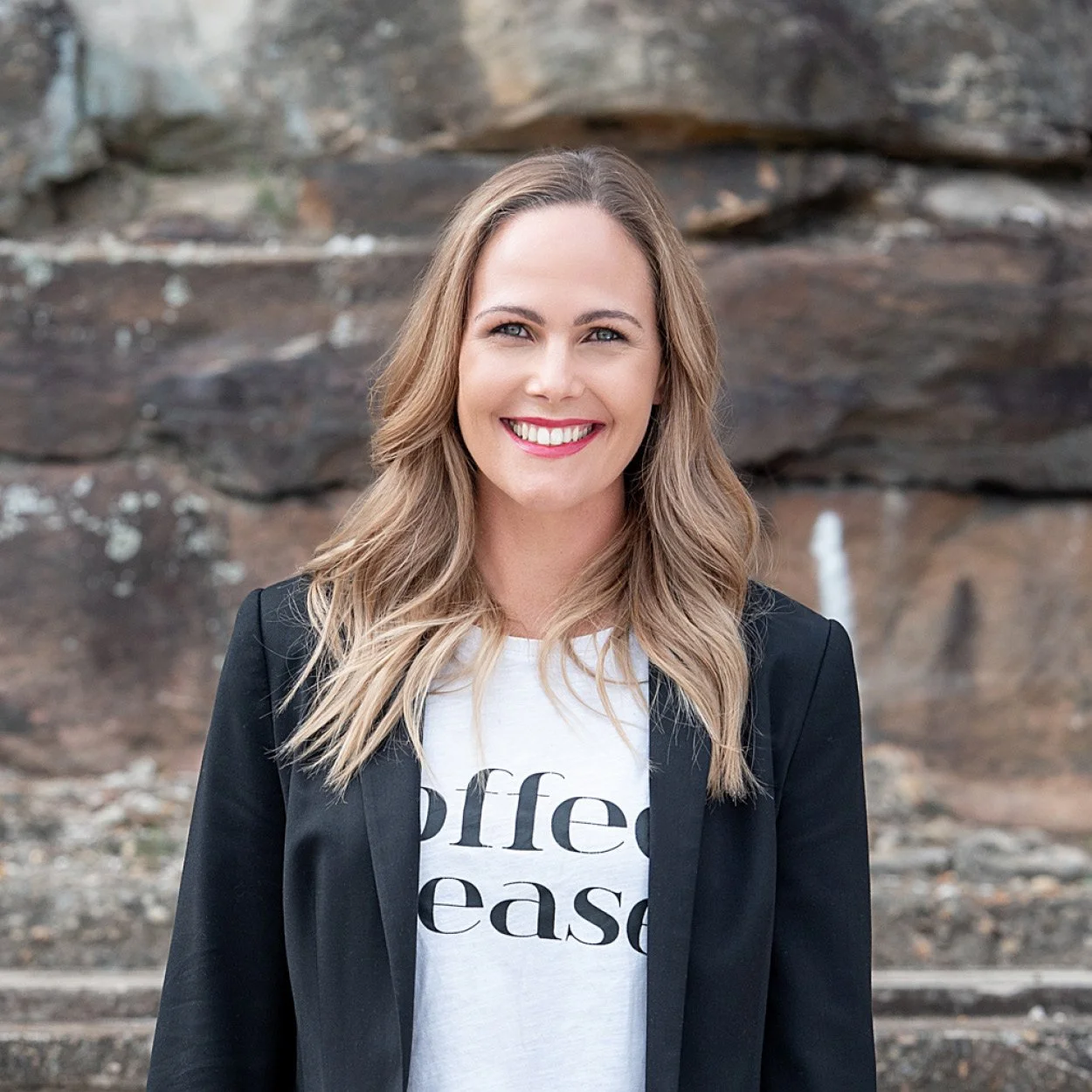
Fiona Vale
Fiona Vale is Co-Founder & Chief Experience Officer at Humanico: the world’s first workforce intelligence solution combining capability, engagement and context in one platform.
Fiona led teams to design, develop and execute over 150 world-class incentives and global events over 15 years, before her passion for strengths-based development led her to become a qualified coach in the space. Curious by nature and entrepreneurial in spirit, Fiona is a passionate advocate in helping people unlock and understand their true potential.
Knowing deeply who we are, and embracing what makes us unique, is an essential part of the personal growth that fuels great leadership and a fulfilling life. That’s where bringing sharp focus to our strengths can be transformative. This conversation unpacks how – and what you stand to gain by identifying and acting on your strengths, too.
In this open-hearted episode, Alexis and Sally engage with Fiona Vale, co-founder of Humanico, to explore the transformative power of strengths-based living. They delve into how understanding and leveraging your unique strengths can lead to greater self-awareness, enhance leadership capabilities, and foster deeper, more meaningful relationships. Fiona shares her journey from diverse career paths to founding Humanico, emphasizing the importance of recognizing and acting on your innate talents to thrive in today's AI-driven world.
This conversation is a must-listen for anyone looking to unlock their full potential and navigate the complexities of modern life (at work, in relationships… everywhere!) with confidence and clarity.
Key takeaways from this episode:
The personal impact of Gallup CliftonStrengths
Moving beyond roles to core human traits
The unique and rare composition of individual talent profiles
Practical applications in work, relationships, and community
Self-awareness as a tool to prevent burnout
Balancing tension among different strengths themes
The irreplaceable nature of human skills in AI era
Tools like the strengths wheel for team problem-solving
Learn more about Humanico at www.humanico.co.
Sally’s Top 5 Strengths: Ideation, Strategic, Connectedness, Learner, Intellection.
Alexis Top 5 Strengths: Achiever, Learner, Stragetic, Activator, Command.
Watch the episode right now, right here:
Timestamp Highlights and Transcript
(00:00) - Intro to strengths’ role in living more human
(03:19) - Fiona’s founder story & Humanico’s mission
(08:20) - Significance of strengths at work and beyond
(12:38) - Fiona’s personal leadership insights
(17:14) - Real examples of leveraging strengths in teams
(22:30) - The uniqueness of strength configurations (1 in 34 million)
(30:44) - The importance of dedicated thinking time
(48:23) - Human skills that AI can't replicate
Alexis Zahner (00:02.517)
Welcome to the live and work more human podcast. Vale. is so lovely to have you here with us today. And we'd like to start at the beginning. Can you give us some backstory into your founder's journey, founding your company, humanico.
Fiona Vale (00:19.971)
Yeah, I'd love to and thank you for having me on. Huge fan of the show. It's lovely to be here. My backstory. Wow. Okay. So it's totally nonlinear, which I kind of love, but it's also hopefully relatable to a lot of your audience as well. I spent my first 14 years in my first career, which was all around human experience, a very unusual job in a boutique agency. So what does that mean? It was my job essentially to travel the world and to unearth and design
programs for the best of the best financial advisors through the lens of what money couldn't buy. So if you take away the notion of role, title and status, what does it actually mean to be human? So thinking through those experiences as incentives minute by minute. Loved it. Traveled the world.
But then as a lot of other women do, I made the decision to start a family, which was fantastic, took some time out, retrained in graphic design, which led me into brand and brand strategy, which was an itch that I always needed to scratch. But when the time came to go back to proper work, I swiftly realized that that career, the only real career that I had known didn't have space for me anymore.
So with two young kids and a shift working husband, it really needed 24 seven approach to it. And I was lost. I was completely lost. And it was a really pivotal point for me. It was, I didn't know who I was. I was applying for jobs and getting knocked back. I lost my identity and it took a little while. And I knew that I wanted to work with humans. have a deeply curious passion about people.
And as part of that journey, I had to pivot to an entirely new career. And I took a number of notches down the ladder, landing in a completely new world. And through that process, I landed in a new environment, a completely new industry, but it felt like it was so foreign and there was just no way to share with people. I would be asked to do things and I'm like, well, I've done that before. And they'd say, well, that's not how we do it around here. There's a different way that we do it here. And I just kept thinking, this is absolutely.
Fiona Vale (02:31.083)
nuts, there is, I've got all of this experience, why isn't there a way to actually surface this transferable aptitude? And it was on that journey, I met my co-founder Paul, we were working together in different sides of the organisation, and he was seeing a similar problem space, but through a different part of the organisation. So this was an executive search, he was talking to senior executives, the board, C-suite, HRDs.
And they were frustrated that they were having to go out to open market to hire talent. And again, that frustration of why isn't there a way that we can understand what we have in our own backyard? So between the two of us, we just started to see this problem from different perspectives and realized there was nothing out there that was able to solve for it. And the rest is history.
Sally Clarke (03:19.234)
And here we are today and so Humanico was born. I really love that you've shared this diversity of your career, Fee, because I think it's something that certainly resonates for a lot of our listeners. I know it does for both Lex and myself. And I think it's something that too often we don't really talk about how some of us can feel a bit, almost shame, I think, for this sort of, you know, lack of cohesion, if you will, to what we've done, how we've got to where we are now. But I think there's so much richness to
these diverse experiences and being able to weave them together almost like a tapestry. Cause I can imagine now the work that you're doing at Humanico and what you're forming is really informed by all of these different experiences and almost contingent on the diversity of your career so far.
Fiona Vale (04:04.141)
Very much so. And I think it is that diversity that makes the difference. as employees, we are showing up into organizations every day as wildly unique humans. Often we see colleagues who are doing the same role in an organization and are measured by the same outcomes, but they are completely different as human beings. And part of that is capturing that richness in the tapestry. What has built us? This diversity of thought.
I'm hoping that we'll get the opportunity to talk about strengths today, but it's this diversity of thought that really opens up minds to what is possible here in terms of amplifying situations as opposed to dampening them.
Alexis Zahner (04:44.203)
terms of amplifying situations as opposed to dampening them. Yeah. Fee, something interesting you mentioned as well in your backstory was this idea that your identity felt quite contingent on your role as well. And sort of to start going down our conversation today around strengths, what I really like about strengths based profiling and the strengths based work is that
These feel like, as you've kind of mentioned, transferable things that we can take with us throughout our career and feel like a little sort of truer piece of an identity marker than a status or a job description. There's something that feels a little more anchoring in what's true for us as a human, not just as an employee. And they're also a beautiful way of looking at the types of work that we might really be suited to or enjoy based on that.
I'd love to start steering us into this strength stuff if we can. knowing strengths is obviously really important for us, but can you tell us a little bit more like as to why this is so important at work and beyond? Yeah, I'd love to.
Fiona Vale (05:55.501)
Yeah, I'd love to just a note there. I'm getting a huge echo.
Sally Clarke (06:01.782)
I am too. think Lex, if your mic, when your mic is on, we're getting a lot of echo back.
Alexis Zahner (06:09.977)
Shall I, just hold up. I'll just pull the headphones. I'm just conscious I think it's gonna make me jump out and jump in again.
Sorry, give me one second.
Sally Clarke (06:21.48)
No worries, I think that's going be better just for the wild echo that was coming through when you were on meetings. will see how it goes. No, no, no, I was getting the same thing, Fee. It's all good.
Fiona Vale (06:27.119)
Sorry.
Alexis Zahner (06:29.177)
Okay, give me one second. I'll just jump out and I'll jump back in
Fiona Vale (06:38.671)
hate to lose the momentum.
Sally Clarke (06:38.798)
We, um, yeah, no, no, no. All good. All good. I think this is also the exact moment that we're to pivot to strength. So it's going to be super easy to come back in. Um, yeah, it's one of those things like I have it as well. Like I try and I don't like wearing headphones, but it makes, it has such a big impact on the audio quality. So we've been experimenting with different modalities, but I think, think headphones on is going to be here. winning here. Hopefully it works.
Fiona Vale (07:00.547)
Well, let's see, let's see how we go and if we need to go back, back in time, we can do that.
Sally Clarke (07:05.994)
All good. No, no, I have like a million questions about the strengths, I'm like, no, no, no, save it, save it for the...
Fiona Vale (07:10.8)
You
do as well and I'm like now I was just in flow with what Lex was saying. I'm go back there, make sure you go back in time because there's so much here especially around identity and losing that.
Sally Clarke (07:21.57)
Good
Sally Clarke (07:26.67)
Look, I think that's a really, for me, that's a really important one to double click on because that is such a big component also of sort of what really drives, we love in these conversations is this kind of concept more of like, obviously like the human at the center of the puzzle as opposed to the employee. So maybe if we leverage from them.
Fiona Vale (07:38.062)
Yeah.
Sally Clarke (07:50.274)
Right.
Alexis Zahner (07:52.792)
Sorry, both. that, is that sounding better for you? Okay. No problem that I'm just double checking. Everything should be uploading fine in the backend. So
Sally Clarke (07:56.652)
It's sounding much better.
Fiona Vale (07:57.197)
Yes. Yeah.
Sally Clarke (08:05.886)
So I think, Fi, if you're okay, maybe Lex, if you're able to sort of just finish off that or restate the sort of end of that question.
Alexis Zahner (08:14.024)
Yeah, I'll restate the question so you can pick it up, and then I think we'll use the first time I asked it for the flow later though, but that's a note from behind. Okay. All right. All right. I'll dive in then. So Fee, let's talk strengths. Why is knowing our strengths so important to us at work and beyond?
Fiona Vale (08:20.963)
Yeah.
Fiona Vale (08:35.629)
Yeah, it's such an important part of who we are. And I think not enough people have had the opportunity to bring it to the surface. And there's so many ways that we can do this. Once we start to understand who we are, it goes beyond our identity at work. The thing I love the most about strengths and Gallup Clifton strengths in particular, there are a load of different frameworks out there, but it's applicable to who we are as a human, which is so valuable. It's not just at work. It can help us in our relationship.
Alexis Zahner (09:00.32)
Hmm.
Fiona Vale (09:05.569)
It can help us in our
role in the community. It can certainly help us parent in a slightly more aware way as well. The benefits there are now there are so many people around the world that have um that are using their strengths. Again I reference CliftonStrengths there are 37 million people who have had a chance to do this assessment. So when we start to look at being able to leverage the data and the benefits and the insights it's not it's not just some little test that someone made up in a back garage. It's so well underpinned with science
and depth in research that we really can rely on it. It's a simple, simple framework. Any strengths assessment will provide you with a really simple framework. It's so accessible and it's just that common language. If we come back to that notion of identity, one exercise that I've found this with a lot working with women in tech, there's a couple of different groups that I'm part of and I coach and mentor through and...
Alexis Zahner (09:40.32)
Mm-hmm.
Alexis Zahner (09:52.608)
Hmm.
Fiona Vale (10:04.801)
often it's just this loss of identity. It's not actually understanding who I am. So there is a whole exercise that I will take people through, which is literally an I am statement. And you just keep going through, I am, I am, I am. And invariably to your point earlier, Alexis, it's usually starts with being tied to my role. People will tend to introduce themselves by what they do, not who they are. And I love to challenge people to pull that back and say, actually,
Alexis Zahner (10:06.932)
Hmm.
Fiona Vale (10:34.713)
Who are you as a human? Who are you at your core? And it's such a privilege to actually be able to find that time and space to reflect back into who we are, not how we're defined by our role within an organization.
Sally Clarke (10:51.968)
Wouldn't it be amazing if at dinner parties rather than saying, you what do you do? We asked, who are you as a human?
Fiona Vale (10:58.029)
Yeah. And it's, just not that radical as a concept. Like I tend to, I have learnt a lot about myself on this journey, but who I am at my core is a curious explorer. And once I found comfort in that being my true identity, I think back through my entire life and it's, it's who I've always been. That has never changed. Whether I was at school, whether I was studying, whether I was traveling, whether I was starting a family, whether I was at work, I am a curious explorer. And I think it's
incredibly powerful to be able to stand by that.
Sally Clarke (11:32.566)
It's interesting also because some of the research that I've done around burnout prevention is showing that really the starting point for preventing burnout and living a thriving life at work and beyond is knowing who we are really deeply. And this is where I think it neatly dovetails with the strengths because when we start to understand those strengths and that I am statements, that's when we can really get close and start to develop a compass that helps us make really wise decisions in our work lives and beyond.
To double click here, Fee, I'd love to hear from you. How has knowing and understanding your own strengths as a curious explorer impacted your self-awareness, your leadership and your career as well?
Fiona Vale (12:05.519)
you
Fiona Vale (12:12.399)
It's a great question. think for me, it's, I'm driven by experience, I always have been. So I live by the quote, the Mary Angelo quote, people will forget what you do, they'll forget what you say, but people will never forget how you make them feel. for me, doing the assessment for the first time, made me feel seen and it made me feel heard and it made me understand why I see the world.
the way that I do, it helped me to understand that I'm completely unique, but also to understand that that's okay. So a couple of specific concrete examples. I was very often told in my early career that I needed to speak up more in meetings. you need to participate more in meetings. And at the time I was thinking, yep, absolutely, you're right. That's exactly what I need to do. I need to contribute more. But
By taking this assessment and understanding who I am and that I'm so strategic, I understand that actually listening is my superpower. And when we're in that meeting, to get the best out of me, let me absorb all that information. I'm very quickly processing it. I'm sorting it out. I'm seeing the patterns. I'm discarding what's not relevant. I'm formulating a couple of possibilities and outcomes. And I'll have that too by the time you get back at your desk. So all of a sudden by understanding that that's who I am,
and acknowledging that that's okay and being able to have a language to underpin that means that I can communicate my value and my worth. And I think that's such an incredibly powerful thing for a human to have.
As an employee, obviously leadership again, being able to learn how yourself learn more about yourself as a leader and apply that to the people that you are leading. But it has to start with understanding who you are. Another really quick example there is I have Achiever.
Fiona Vale (14:06.839)
and also maximizer in my top 10 themes of talent. And I realized that for my whole life up until that point, those two themes of talent would collude and they would show up as perfectionism. So I had this, was how I was naturally wired. It was to get things done, but it had to be excellent. So I had the stamina to get it done, but I was such a harsh critic that I wouldn't release it until it was perfect. So to understand what was driving those behaviors and be able to
Alexis Zahner (14:32.416)
And that is the end. Thank you for watching. Stay healthy.
Fiona Vale (14:34.553)
put a bit of a line in it and to say, actually give myself permission to release things to be less than perfect. I was able to be able to work through that as well. there's so many practical examples.
Alexis Zahner (14:45.72)
That's such a fascinating point, Fee, and I love that you used the word collude there because I was going to ask the question when you were speaking if some of these strengths can sometimes feel like they do undermine the others. Because for me, my top strength was Achiever. And I know we're going to dive into this even more. But the second one
was learner. I, when I was reflecting on them, I did feel at times like they might be in tension with one another because I do have this near compulsive drive to at least tick something off my list every single day. But sitting in concert with that is my need to learn and my natural curiosity and those kinds of things. And that
can't be done in a rush. So sometimes it does feel like they are undermining each other or maybe in competition with one another. So I love that you mentioned it's an opportunity for us to acknowledge the tension and start to understand ourselves better so we can contextually adapt maybe where we need to lean into the different strengths more than others. Have you found that to be your personal experience as well?
Fiona Vale (15:46.927)
Definitely. There are, I like to, when I work with people through the lens of strengths and you can go to all different depths in terms of your knowledge and understanding of these frameworks as with any framework. with these strengths that we're talking about today, there are things that, they're the energetic drivers. So there are things that feed our strengths and there are things that drain our strengths. And there are different behaviors that will show up when a theme of talent is thriving and when it's under pressure.
When we start to bring this to life in organizations, there are certain traits and there are certain themes of talent that are more obvious that show up sort of behaviorally. And I often like to say that when themes are misbehaving or when they're underfed or malnourished, they act like petulant children. Like they just don't quite understand how to switch that off.
But it's exactly as you said there, Alexis, it's just you need to have that awareness first of what's actually going on and to bring it back and to say, achieve is a really tricky theme of talent. It's beautiful. It's an executing theme of talent that helps us get stuff done. It's going to provide that stamina to just keep going and that drive to get things done. But...
It can also burn out. So to understand where that threshold is, is really important. And that's, that's a skill that is developed over time. And that's really where you take your natural talent and invest in it with intention to turn it into strengths.
Alexis Zahner (17:08.052)
Mmm.
Alexis Zahner (17:14.718)
You know, this comment you just made, Fee, around when those strengths are thwarted, we can feel like a petulant child. I felt so seen, because as an achiever, if there are blockages in my way from getting things done that I feel are outside of my control, there is nothing more frustrating when you are someone who is running life at a sprint.
but they're exactly those moments where I have to have the conversation with myself around expectations and reality and uncertainty and control. All the other sort of, they're almost like, they feel like almost like a shadow side to that strength sometimes that have to be managed, as you say, to not sort of burn myself out with things that I potentially can't control.
Fiona Vale (17:57.667)
Definitely, and there are, depending on who will coach you through this, there are referenced as balconies and basements or the light side and the shadow side. Whilst it is grounded in positive psychology, it's also reality as well. So I think it's great to acknowledge these as our superpowers, but it's even better to bring awareness to when those themes of talent just don't feel.
great or feel right and even better when you can have that shared experience. in a situation where the two of you have a partnership to have that awareness of each other's talents to be in a position to be a strength scout on one side so to call them out when you see each other using your strengths in action and to say hey I really valued that you were able to leverage your influence in this way during this meeting today it just made a huge difference but equally to say hey listen
Let's just pause. Let's just take the opportunity to stop and to check in and to see if we just need to course correct. Is something a little bit out of whack? Is something being too stretched? Is something under resourced? What's going on here? And just an opportunity to reset.
Sally Clarke (19:02.336)
Absolutely. mean, I've never ever had to ask Lex to be patient or slow down. That never crops up. No toys been thrown out of the pram at any stage, but it's really interesting I think as well, Fee, because having worked with Lex for a number of years, seeing it just a quick glance at her strengths results was an absolutely beautiful snapshot of this incredibly intelligent and complex person that I work with.
Fiona Vale (19:05.837)
you
Alexis Zahner (19:06.912)
And I've never acted like a petulant child.
Sally Clarke (19:28.27)
And I think it's also, you know, I know we'll delve into both of our results shortly, but I'd love to hear a little bit more from you about what your response was to sort of learning your strengths and perhaps if there was something that really has surprised you perhaps of the time of learning about it or over time, how that's manifested.
Fiona Vale (19:45.787)
That's how it affected me when I got my results. Now I'm a beautifully emotional human and I'm an empath, but that was really surprising to me. And I think there's a couple of key points that underpinned it and it feeds into humanica and the work that we're doing. But I was genuinely surprised at how accurate it was. felt like...
all of a sudden I had a language to articulate how I felt and perhaps hadn't ever had a way to express that. The other massive aha moment for me was truly, and this sounds ridiculous, but it was how I felt when I did the assessment, realizing that not everyone sees the world the way that I do. That was profound. There were some serious moments in my career where I was very, very frustrated with a colleague or a situation.
And I can understand now upon reflection that it's purely because I see the world in a very, very specific way. And I was dealing with other people who didn't see it the same way that I did. But also the third point was really understanding that what energizes me might train someone else. So that was a big part of it. And I think the reason that I even came across the strengths assessment in the first instance was Paul, my co-founder had a very, very different backstory. He'd had a full career senior executive.
partner in an exec firm had been through pretty much every kind of profiling assessment tool that you could imagine. And I hadn't, I'd worked in small business through a totally different journey through my career and I hadn't had that same opportunity. So it was my job to assess the assessments and if anyone out there has done any kind of profiling assessment before, so many of them put you in a box. And again, I learned through this process that I don't like to be put in a box. Don't you tell me what I can't.
do, I will break out of it. That's also part of this and a lot of assessments will look at you today and say, well, that's great, Fiona, you're wired this way, this way, this way, and here's how you can change and improve. And this particular the CliftonStrengths assessment was delivered in a narrative. So it was more it read like the story of my life and who I was, I could reflect back and go,
Fiona Vale (21:58.863)
MG, this is why my school report cards were always talking about me and my daydreaming and being off with the fairies. My number one theme of talent is futuristic. I can't help it. I live in the future and all of a sudden I understood what that actually meant. So it was a story of my life. It's so practical. It's so tangible. There are flip sides to the equation.
But yeah, it was a really profound, so much so that I thought if I'm feeling like this, someone else must do as well. And I immediately enrolled to become a qualified coach. And that was a long time ago now, but it's just a joy and a privilege to be able to unlock this for other people to say, you are who you are. And that's okay. That's the whole premise here.
Alexis Zahner (22:30.399)
Yeah.
Alexis Zahner (22:40.116)
Mmm.
Alexis Zahner (22:46.022)
That is such a fascinating story, Faye, and I'm very grateful that you shared it because I do feel so many of us and what's, you know, what's so beautiful about the strengths assessment is there are 34. So the idea that we're all this wild mix of all of these different things almost feels like permission to start utilizing them and leaning into them in a way that feels true for us. Because I think certainly, I mean, I'll say as an achiever, as my top strengths,
because I am so action orientated, I have spent a lot of my career struggling with people who don't work in the way that I work. But then because I've spent a lot of time in leadership positions that then can create, you know, almost discord if I allow it to in my team. So it's also a good reminder for all of us to think, well, there's so many varying combinations of human beings that we may be working with and we need to sort of
take some time to understand that and utilize that not just for ourselves, but for others as well. So I love that about your journey as well and how that felt like coming home almost for you and to yourself.
Fiona Vale (23:55.983)
Yeah. And I think just on that with the stats, it's fascinating. You make such a good point there through this lens, there are 34 themes of talent that we all have just in a slightly different order. And you really wouldn't think that there's that many combinations and permutations, but the chance of having the same top five strengths as another person in the same order is one in 34 million. So
Alexis Zahner (24:07.093)
Yeah.
Fiona Vale (24:20.151)
to acknowledge and the way that those themes show up, the different combinations in the different orders on a different day, we are so unbelievably unique.
Alexis Zahner (24:29.076)
Mmm.
Fiona Vale (24:29.335)
And without that awareness of who we are and who the others are around us, it's no wonder that there are these moments in our days, in our lives, at home, at work, we spend so much time at work where you might just become so frustrated. And it's really just down to that lack of visibility or lack of understanding of how someone else is seeing a situation as to how you're seeing a situation.
Alexis Zahner (24:45.952)
Mmm.
Sally Clarke (24:55.743)
And I can see even just looking at my strengths for the last couple of days since each of us have done the assessment, it's already given me some really clear insight into moments myself where in the past I've been frustrated or I've, you know, I haven't understood why something has glitched or communication hasn't sort of landed the way that I had intended. Even in the past couple of days, immediately upon reading it, I can see, my goodness, that's because between ideation and input and intellection, you know, some of my
Alexis Zahner (25:11.648)
Mmm.
Sally Clarke (25:24.302)
strengths, that's how I'm seeing the world, but it's not how others are. And I think that's a really powerful component of it as well, giving us this real depth of understanding and perhaps potential also to not only improve our empathy, but to improve our capacity to lead and interact. And as you said, not just at work, but also in our relationships far beyond.
Fiona Vale (25:44.319)
Definitely. And I think it's a rabbit hole, especially for anyone who has done the assessment and has learner or anywhere in there or intellectual or has this natural curiosity to just follow that rabbit down the hole. And once you start to understand it, you'll see it more and more. And I know the two of you have literally just done the assessment, you're still working through your results. We will talk about that shortly. But it's just it's such a powerful awakening and also a good reminder that we are all different. And I think there's a beautiful
sensitivity about being human, acknowledging that everyone sees things in a slightly different way.
Sally Clarke (26:21.006)
Yeah, can I just share a very personal anecdote from just a few days ago? So I was traveling in Vietnam with my new partner and we had this conversation or I was talking about, I asked if you could study anything, what would you study? And we were talking about this and what I would study was really out there and esoteric. And he was kind of saying, you know, I think we have different ways of ideating and these kinds of concepts that you're interested in just don't really quite land for me. And through two days later than doing my strength assessment and seeing these
intersections of my strengths, it made very clear to me exactly how these layers to me mean that I see the world in this particular way. And these concepts are going to be very interesting to me, but they're going to make absolutely no sense or have no interest for other people. So that was a really profound moment for me, like right off the bat.
Fiona Vale (27:07.437)
I think all counselling sessions should be grounded in strengths. Again, if I can share a very funny story of the most brilliant impact I've ever seen there is early on in the early days of Humanico bringing to life a strengths profile for one of our team actually. And it was a very rare, it was one of those ones where you could see the results and you go, yep, yep, that makes sense, absolutely. And then...
He said to us, look, is it possible for me to unlock the strengths of my partner? And we're like, absolutely, of course. Yes, like the more people the merrier, please let's get everyone on board. And that happened and he gave me a call and he said, look, listen, I just wanted to share with you that you have potentially unlocked the key to my marriage. And I said, what? And he said, yeah.
I've learned that my wife's number one theme of talent is deliberative, which is a beautiful theme of talent, which just means that it's slow to make decisions. But when you get there, you can be guaranteed that the outcome is it's been well researched. It's absolutely the right thing, but it's just slow to get there. And he said, let me tell you a story. When I proposed to my wife many, moons ago, she didn't give me an answer for three days.
And I said that's just, it's just the best example of actually and his patience and everything else that went with that. But he just said that was the moment. Everything else now makes sense. Whenever we're leaning into big life decisions, we know that it's going to take her a long time to get there. Like how cool is that?
Alexis Zahner (28:38.896)
So helpful yeah and I feel like perhaps my partner might be the same. We are often feel like we are we work very well together but I think we are quite opposite in terms of those strengths which is interesting.
Sally Clarke (28:38.986)
Amazing.
Sally Clarke (28:53.742)
Deliberative was absolute bottom for me, so I'm just going to put that out there.
Alexis Zahner (28:56.16)
Not me, not me. Now we do want to dive into our strengths, Faye, and you've seen both Sally and my strength profiles. So let's, let's go guinea pig us, tell us a little bit about what our strength profiles might mean about us or some, some background around what we can do with that.
Fiona Vale (29:05.357)
Yes.
Fiona Vale (29:10.168)
Okay.
Fiona Vale (29:19.351)
like how long do we have? This is the coolest. And I think, look, if it's possible, and if you guys are comfortable, it might be worth sharing your top 10 themes of talent, show notes just to give the audience some context without going into that all now. But Sally, let's start with you. And it's interesting because you've already mentioned in a couple of stories here, I'm like, yeah, right, there's your connectedness showing up. That's your esoteric side of things. But the first thing that stood out for me, Sally, with your results is that you are
Alexis Zahner (29:20.691)
Yeah
Alexis Zahner (29:26.418)
Mm-hmm
Fiona Vale (29:45.263)
very similar to me, we are green humans. So to put some context to that, there are four domains of talent. So whilst we have our 34 themes of talent, each of those sits into a domain.
There are executing themes of talent, influencing themes of talent, relationship building themes of talent and strategic thinking themes of talent and they're our green ones and Sally that is where you are absolutely grounded. So four out of your top five themes of talent are strategic thinking and indeed five out of your top ten themes are strategic thinking. So a couple of key points here and also just a note for later, you will do your best work in your head.
Now, anyone else out there who is listening to this, who is also wired as a thinker, that is their superpower, do me a favor and let's experiment. What I'd love for you to do is to find a week, sorry, an hour in your week and dedicate it to thinking time. So we know that some people will do their way through some...
problems. Some people will talk their way through problems, some people partner their way through problems, some people will think their way through problems. Now it is a very odd concept, especially as busy professionals, to block out an hour to think. But the research suggests that as thinkers, in that hour you will produce up to four hours output. So it is something that is worth considering. To give yourself permission to say, no I'm a thinker, let me think.
Back to your profile. So you are such a strong ideas person and you've already kind of brought this to the surface. So your ideation, strategic, your intellectual, it will often show up as seeing these connections, having patterns in data, lots of thoughts, lots of insights. The value here is that you're naturally able to generate a lot of ideas and not only that, but in layers. So you're never going to be short of ideas.
Fiona Vale (31:38.979)
but you're also a meaning maker. And this number three theme of talent that you have that's connectedness is actually not one that we see often, or I certainly don't see it in a lot of my coaching in the top five. This often shows up as needing to be part of something bigger than yourself. So this is exactly what you're talking about here. It's no surprise to me that you all sort of drive to be part of this podcast, which is really being part of something that's bigger than yourself.
It is unbelievably powerful. So it's also going to help you build bridges and connect people and help people understand. It's highly likely that you don't believe in coincidences. Does that resonate with you?
Sally Clarke (32:16.288)
Absolutely non-dualist to the core.
Fiona Vale (32:18.403)
Yeah, so everything happens for a reason. But again, if we look at the flip side of that, so some potential things to be aware with a profile like this, you might prefer ideas over action. And I'm sure we can see this in the dynamic here. And you could have the propensity to get stuck in an idea super loop. So just to just keep exploring and to keep going. A really nice way is to time box that. what I've
We do often see this, we see this in teams, we see it with individuals. If you do tend to create a lot of ideas, give yourself a fixed amount of time. That's it. You've got an hour. You are going to generate as many ideas as you can, but we're going to time box it so you don't get stuck in that perpetual loop. So there's lots of nodding happening here. Does any of that resonate?
Sally Clarke (33:11.234)
Yeah, honestly, I feel like a number of pieces really click together in the strengths assessment for me, And I think it's the kind of the learner intellectual side of things. So this real deep curiosity and I can just learn endlessly at the same time, this ideation and strategic being able to synthesize and draw together different concepts that perhaps others can't see. But then also this connectedness piece, which sort of sits between the two, which I feel like is just this kind of unwillingness to
linger in binary ideas. And so that really helps me understand how I navigate thinking. And I think this is really helpful as well to be able to ground it into practical behaviors like time boxing and sort of catching myself when I'm just completely away with the fairies, because that was certainly on my report cards throughout school as well. So yeah, really helpful. Again, like this, I'm to be looking at this and reading it and underlining it in more depth, I'm sure in the coming weeks, but that immediate sort of understanding of myself felt really validating and
Alexis Zahner (33:43.936)
Thank
Alexis Zahner (34:09.631)
Mm.
Sally Clarke (34:09.762)
particularly as it's sort of suggested in the wording, you you're uniquely powerful. And I think that validation was really meaningful.
Fiona Vale (34:17.187)
Definitely. And Lex, did you see some of those traits showing up in?
Alexis Zahner (34:21.436)
Yeah, I think what's fascinating with so is the traits that you've described to me very much feel like that's the lived experience I sort of see Sally living. Like I think they feel very underpinned by the choices she makes, by the way she works, but also by the kind of life she lives. I feel like both as a business partner and friend, Sally is probably one of the more open-minded people that I know. She's always curious about
everything from you know ideas through to to people and i think she's very she she never tries to wrap things up in like a in a neat or reductive box she's very she's quite happy in sort of the complexity and the messiness of things so i do think to me that makes sense with her traits because i feel like
where I like to try and tie things up in a bow, Sally sort of less inclined to need that, know, whether it's routine or ideas or whatever, she's able to sit a lot more in sort of the complexity of things and see things from a multitude of perspectives without having to kind of tie that together neatly. And that's for me to work with someone like that, it's both wildly frustrating and amazing because I'm quite the opposite. I'm just like, okay, how do we...
get the wheels on the bus back in motion. And so we kind of, we do work very differently, but we work probably, I've probably worked the best for Sally that I have with any colleague in my life, to be honest. So yeah.
Sally Clarke (35:48.984)
same.
Fiona Vale (35:49.071)
Yeah, it is. It's so expansive. So it's like limitless, free exploration of life, the world and everything. I think the two of you share learner. I have that as well in my top five. And the beautiful thing about learner as a theme of talent is it's about the journey. It's not about the outcome. So
Alexis Zahner (35:51.188)
Mmm.
Fiona Vale (36:09.047)
People often sort of think if they see learner in their profile that they're driven to achieve new qualifications or have to see something through to completion. And it's actually not like that. It's the opportunity to explore. So that's where we often see that show up as curiosity. If there is a guest that you are bringing onto the show, that natural propensity to just want to...
to dive into who they are and what has got them there and where that's going. And Sally will be more inclined to take that in a more expansive, connected way. And Lex, you're likely just to move things forward. So let's dive into your profile.
Alexis Zahner (36:47.936)
Let's!
Sally Clarke (36:49.455)
All of our listeners now are like, that's exactly what they do.
Alexis Zahner (36:51.968)
Yeah.
Fiona Vale (36:53.823)
Honestly, it feels like sometimes it's just I've had people say you reading my mind. How do know this stuff about me? It's like I don't it's it's what it's you it's who you are I'm literally just holding up a mirror and Helping you see yourself. That is absolutely all it is and nothing more Lex the notes I had down here You're a get shit done human and again if you need to edit that out, but that's that's honestly how your profile is wired
Alexis Zahner (37:02.196)
Yeah
Alexis Zahner (37:15.7)
Yep.
Fiona Vale (37:20.631)
You've got the stamina, as you said, you're driven by Achiever and we see this Achiever is far more prevalent in females than it is in males, to be in the top five, fun fact. And there is a full metadata report, so anyone who might be driven by data and analytics and want to understand that this is not just corporate horoscopes, please feel free to reach out and I'm happy to share. I'll share the, I think it's a 450 page metadata report that actually underpins all of this. Fascinating if that's your jam, it's not mine, but that's cool.
Alexis Zahner (37:37.972)
Also me.
Fiona Vale (37:50.625)
so Lex get shit done human. You've got the stamina to get things done. So driven by your achiever is highly likely. It doesn't matter what you've got on. You will just keep going until you get it done. You've also got enough strategic thinking themes that again, I shared with Sally in terms of being out of process, a lot of data, data quickly, sort through it, eliminate things that aren't relevant, put it into its pockets. You've always got options and possibilities between the two of you. But then the way you sort of.
differentiate is that you then turn to getting things done. So your superpower Lex is really about turning those thoughts into action. But beyond that, we, we often see people who have Activator, which is, it's one of the most visible strengths. So Activator will often show up with people in board meetings in particular, who will be like 10 minutes into the meeting and they're tapping their fingers on the desk or they're spinning a pin around. It's just like, they've got everything that they need. It's just like,
Are we done? Like they'll literally mentally check out and they'll be like, can we just get on with it and turn these thoughts into action? So that's, it's a really visible behavior. But what's lovely about you Lex is that you've then got the superpowers to back yourself. So often we see people who might jump the gun and just want to get things, get things going, but you have these beautiful superpowers to back yourself in those decisions. So command.
the notion of self assurance, which is just going to give you that gut driven instinct and belief that you can get stuff done. So you don't, you don't slow things down by second guessing things. You're just like, you know what, we're just going to get going. And this is the direction that we're heading in. So it's this balance between action orientation and also decisive leadership that is always going to keep things going. What's interesting here is
I imagine that it's it's and again, it could be a question for Sally as opposed to Lex, it feels like Lex that you are comfortable in taking the lead and making the calls. Sally, would you agree with that?
Sally Clarke (39:56.718)
Absolutely, that's definitely, and I know Lex has shared stories from her childhood of this being the case from basically from her early memories. So this is absolutely, yeah, that tracks.
Fiona Vale (40:05.455)
But it's also a potential cause of massive frustration. So until you understand and can really appreciate that not everyone else is wired that way, one of the biggest challenges for people that are wired like this can just be this frustration that either people are moving too slowly or that they're just not getting on board or really it's just this potential.
point to be in overdoing over reflecting. again, if I was to set you one task, Lex, if we've given Sal an hour in her week to give herself permission to think, I would love for you to allow yourself an hour in the week to reflect because you might have this natural propensity with this momentum that everything just keeps moving forward. And for people like that, again, it's a beautiful trait to have, but it's much, much harder to intentionally
Alexis Zahner (40:33.098)
Yeah.
Alexis Zahner (40:45.716)
Mmm.
Fiona Vale (40:58.829)
reflect and to really dedicate that time to look back on how far you've come or just how much you've achieved. And as a high achiever as well, the output's there, but unless you intentionally take the time to reflect, you're potentially going to miss it.
Alexis Zahner (41:13.632)
I could not agree with that more. And it's a really interesting thing for you. Cause I think as I've gotten older, I have noticed how it almost feels like a coalescence of some of these things like achiever, activator, command, and self assurance. When those things come together, it kind of creates the perfect shit storm of impatience and arrogance for me when it's on the shadow side, I must say. And an inability.
Fiona Vale (41:35.917)
Yep. Yep.
Alexis Zahner (41:39.988)
to slow the roll, especially in my early career, it was like, let's go, this should have been done yesterday. And that's been a really big challenge in my career. And especially as a leader is to see and understand that I run out of sprint and that is just not how everyone else operates. And Sally, I know you have been probably on the receiving end of that, but it's definitely something I've tried to sort of.
Fiona Vale (41:59.919)
you
Alexis Zahner (42:05.638)
look at more how I manage that so it's not impulsive either so that decisions and the right next step is considered rather than just a step.
Sally Clarke (42:16.428)
just to back that, think my experience working with you for years now, Alex, is even when we started working together, you were already very cognizant of that tendency. And I think very much processing that a lot yourself. And as much as I could sense at times that there's that kind of tension of sort of really wanting the action to sort of flow forward, you do an incredible job of, think, managing that in yourself, which is what makes you a really great colleague and leader today. And it's interesting, I think, that I've probably subconsciously often sort of had the moment of thinking,
you know, I'll get back to you, I'll make sure that I'm keeping things moving because that's how Lex works, but also making sure that I'm not being untrue to myself in that process as well. And I think that's helped me sort of stretch some of my, you know, my comfort zone as well. And I've learned a lot from that. And I think that's a really nice way that we can sort of work together quite cohesively as well. But honestly, kudos to your self-awareness. It's really, yeah, because there's a lot of people who are out there just pulling and trying to shop.
Alexis Zahner (43:12.714)
Totally. you know, Faye, like as Sally just mentioned, something that's really interesting is my sort of very decisiveness sometimes on the border of impulsiveness and Sally's sort of need for more deliberation before doing that. I do feel like as colleagues, when you work together and start to recognize those tendencies in one another, and if you create the openness to that person's tendencies and experience, I think it's super beneficial. Like I find myself slowing down to actually think.
a little bit more intelligently, like the thinking fast and slow. And I find like with sales sometimes it's probably helpful to kind of say, okay, well we've been around this track a few times, let's get the roll on now. Like we've got all the information we can possibly get at this point. So a decision sort of needs to be made.
Fiona Vale (43:56.919)
Yeah. And I can totally relate to that as well. So I think looking at the two of you, it's so powerful when it's understood and you lean into it. It sounds like you've already explored that organically just from working together for such a long time. The likely spot of tension for the two of you is only really ever likely to be around that pace. So if you've got that awareness to allow for enough expansive exploration, but then be in that position to bring it back in and commit to
getting on with it. And it's just, it's it's a ballet of just making sure that each of you have enough of what you need with an understanding of, of how the other is wired. It's very similar. It's in different strengths, but the way that my business partner, I Paul are wired, the entrepreneurial journey as founders is absolutely wild as non-tech tech founders. It's, it's been a journey. And when you are honestly fueling the plane,
flying the plane, feeding the passengers all at once. Truly knowing your strengths and your superpowers and being able to lean into that is really important.
Paul and I are wired very similarly. have seven out of the top 10 same themes of talent in a slightly different order, but where we deviate is then what comes next. So Paul is then led by Woo, which is a theme of influence. It's the only acronym it stands for winning others over and it's his natural space to go wide. So he is very comfortable in taking that to market and having conversations and connecting people.
And I've got the achiever. So I'll get on and I'll get it done. And I build my relationships with depth. So he gives us the breadth. I give us the depth and we've sort of nicknamed it, he's the wooer and I'm the doer. And it's helped us in those moments where we have our similarities. But then when it's time to actually get things done, having an awareness and a sympathy of where we're best going to shine is so valuable.
Alexis Zahner (45:55.582)
Yeah. And Faye, what's so interesting about hearing you describe that relationship is something Sally and I have always struggled with is I think, that taking to market business and consultancy and our ideas. And it feels like maybe perhaps as a duo, we're, we're missing a wooer. So we might need to get ourselves out there looking, you know, and again, but from that HR talent or like looking for a complimentary team member perspective, what a helpful thing to understand is if Sally and I both have
complementary strengths in certain ways, that might mean we can identify what's missing in other ways and look to have someone who has that talent to help drive that side of things forward.
Fiona Vale (46:36.843)
Absolutely. as we said before, mean, resources are a funny thing. In the absence of having that resource, you can absolutely spend time really understanding what you have and learning to manage what you don't. So if you need to get something done and you don't have someone who's naturally inclined.
Sally Clarke (46:48.366)
Hmm.
Fiona Vale (46:54.433)
It's really powerful to learn to work with what you do have to be able to get the job done. And there's a particular assessment, not an assessment, an exercise that I love to give to teams that could be helpful for you guys in this situation, which is it's called the strengths wheel. So if you literally
draw a circle and you throw your problem at the middle of it. So literally right in the middle of the circle, the circle, what we're struggling with or what the goal is. And then around the outside, almost in 10 segments, pull out 10 of your top themes combined and then connect the dots. It's like, right. So we can leverage Sally's XYZ to be able to start the process here. And then we can leverage Alexis's XYZ to actually take it to the next step. So absolutely we can fill the holes by
bringing in what we don't have but it's equally as powerful to learn to leverage what you do have as well.
Sally Clarke (47:47.766)
Incredible, Faye. Now we've talked about how centering the human in this conversation is so important and that's exactly what the strengths does, that it really connects us with who we are rather than simply the role that we've been assigned or the title that we're aspiring to. We obviously have six trillion more questions for you and could sidebar for about 14 hours on each of our strengths assessments. However, we will not.
One final question for you right now in this age of AI where there's so much focus on artificial intelligence, which strengths do you feel remain uniquely human in your view?
Fiona Vale (48:23.311)
It's such a good question.
It wouldn't be a conversation these in this day and age without AI coming in the door. Look, what we do know, and everyone's going to have a different opinion on this and it is moving very, very quickly. But what we're seeing from our perspective is that AI will definitely accelerate capability, but it's never going to replace humanity. So from our perspective and what we're doing at Humanico is really making sure that the whole of a human can be surfaced and can be visible and that a human can be understood so we can leverage these
Sally Clarke (48:28.974)
Gotta have it.
Fiona Vale (48:56.079)
critically human elements that are going to be just as important, if not more important, to be complementary and compatible into this world of AI. So I think if we think through the lens of AI making strengths more important, not less important, and focusing on the human side of things, the differentiator isn't information.
anymore. It's actually judgment and it's critical thinking and it's empathy and it's context and it's connection and it's these wildly human concepts that are going to make the outcomes more desirable. The World Economic Forum released its paper, I think it was the top skills of the future report, so it started to map what we're looking at from 2025 to 2030 and 70 %
of those skills that have been identified are human skills. So again, we think through the lens of skills can be taught and trained, talent cannot, it's inherent. So if we can start to look through the lens of the fact that...
Every human has talent. That's another question that I get asked all the time is do I even have talent? Do I have strengths? Yes, yes you do. You are who you are and that's amazing. So to be able to bring that to the surface is the first place to start. But in this glorious, wonderful, complex world of AI, leveraging these really important human elements is going to be the key to navigating it with success.
Alexis Zahner (50:32.0)
It's such a potent note to end on. What I'm hearing here is it doesn't matter what your skill set is. If you get to know your strengths and your talent profile, you will always have something unique and valuable to the world to contribute even as we hurdle towards an age of AI because they are what make you uniquely you and uniquely human. So
Thank you so much for sitting down with us on Live and Work More Human. It's been such a privilege.
Fiona Vale (51:02.787)
Thank you for having me. I could stay here and talk all day. More than happy to. But yeah, look, I think to give everyone the opportunity to bring it to life, whatever that looks like for you, doesn't have to be expensive. There are ways that you can bring it to life. But I would certainly encourage everyone if they haven't looked into unearthing their natural talent.
Sally Clarke (51:06.668)
Let's do that.
Alexis Zahner (51:13.855)
Mmm.
Fiona Vale (51:23.311)
give it a go, become aware in the first instance, then appreciate it and then you can turn it into action. So it's not complicated, but it's super, super valuable.
Sally Clarke (51:33.74)
We couldn't agree more, Fi. Thank you so much for your time again and for being with us.
Fiona Vale (51:38.211)
Thank you so much.