Overwork: Burning Ambition or Coping Mechanism?
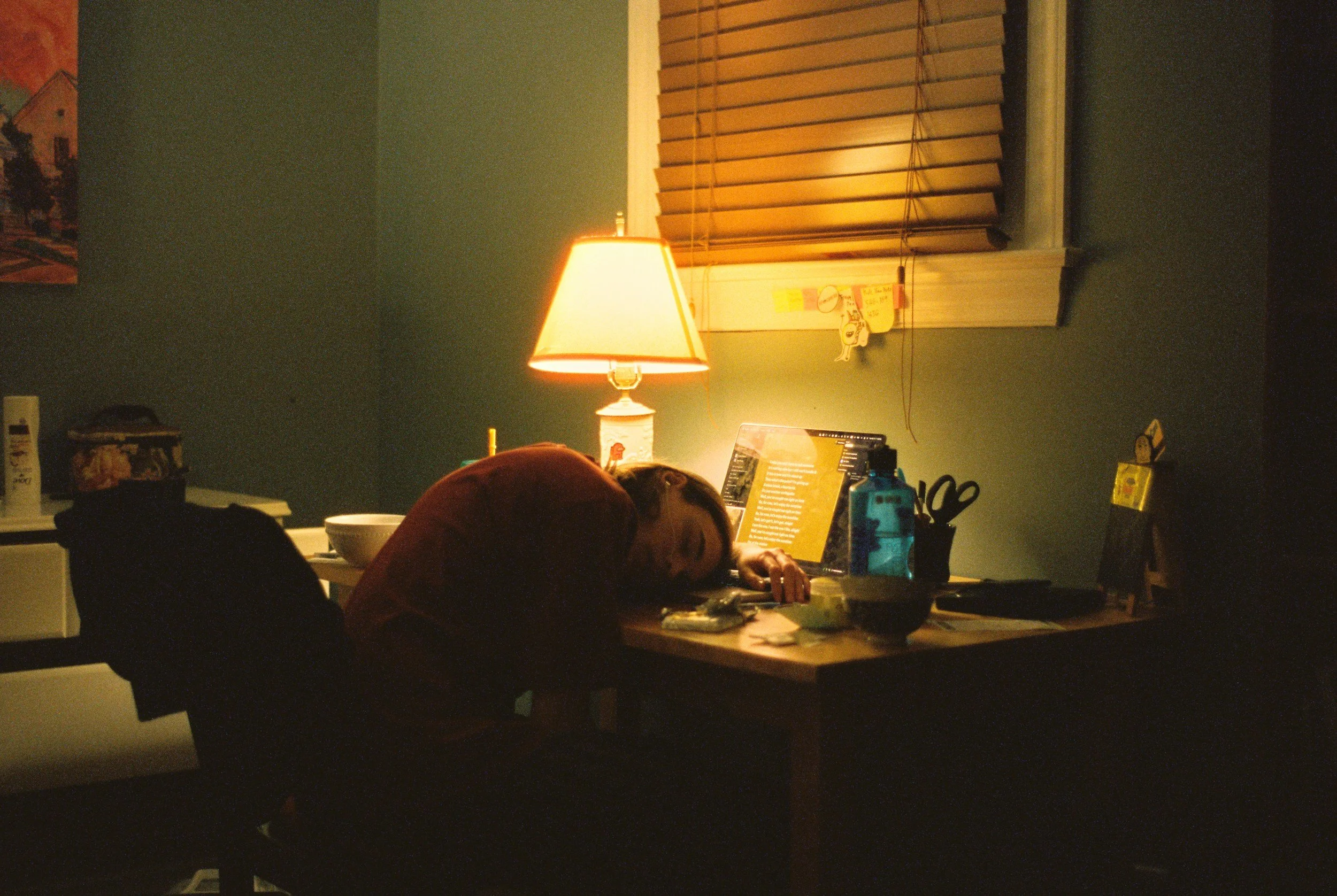
Overwork, loneliness and burnout: social connection helps us combat all of these.
Is work masking loneliness? What drives us to overwork, and what can we do to ensure we derive our self-identity outside of our work lives, too?
The latest episode of Live+Work More Human is an incredibly timely conversation between your hosts Alexis and Sally that delves into the complex relationship between loneliness and work identity, exploring how societal pressures and personal experiences shape our connection to work and each other.
Sharing personal experience as well as data and expertise, Sally and Alexis discuss the impact of technology on social interactions, the challenges of forming adult friendships, and the responsibility of organizations to foster a sense of belonging.
We share candid personal anecdotes and practical strategies for combating loneliness that will resonate for everyone, emphasizing the importance of community engagement and meaningful connections.
Key insights include:
How loneliness is increasingly recognized as a societal issue.
Why work can become a primary source of identity, leading to over-investment in professional roles.
The ways creating belonging in organizations is essential for employee well-being.
How personal experiences of loneliness can inform our understanding of workplace dynamics.
The role of technology in facilitating connections (but why it shouldn't replace in-person interactions!).
How engaging in community activities can foster deeper connections.
Real talk: adult friendships are hard.
Why we feel organizations have a responsibility to address employee loneliness.
The ways in which courageous acts of connection can have a ripple effect.
Why for all of us, finding meaning beyond work is crucial for mental health.
Listen wherever you get your podcasts, or watch right now:
Chapters & Transcript
00:00 Exploring Loneliness and Work
13:39 Personal Experiences of Loneliness
24:58 The Role of Technology in Connection
33:55 Organizational Responsibility in Combating Loneliness
Sally Clarke (00:08)
Welcome to Live and Work More Human. We have another conversation for you today that's really off the back of something that struck us, that kept us up for nights thinking about what it means for us as individuals, but also for all of us in our work and in our lives beyond. Lex, can you give us a little bit of context for what our conversation today is going to explore?
Alexis Zahner (00:33)
Before we dive into the full episode, here's a quick message from our podcast partners.
Alexis Zahner (00:38)
What if every organization could deeply understand and optimize the potential of its greatest asset, its people?
Sally Clarke (she/her) (00:45)
Humanico blends cutting edge insight with powerful organisational intelligence to give leaders a single clear map of their people and how they thrive.
Alexis Zahner (00:54)
Cut through the noise of disconnected tools and surveys. Humanico brings it all together into one dynamic, intuitive platform, empowering better decisions, wiser strategies, and stronger teams, so humans and organizations flourish.
Sally Clarke (she/her) (01:09)
Humanico, putting people first at every level. To learn more, visit humanico.co forward slash live and work more human. That's H-U-M-A-N-I-C-O dot co forward slash live and work more human.
Alexis (01:24)
Yeah, it's an interesting one. So so this is an article that came across our desk that was published on Fast Company by Jared Linsen. And the article was titled, single people are more apt to work on Sundays. Now, I'll admit, when I saw this title, I my first reaction was like, Hmm, what exactly does he mean by that? So I'll just give you a quick statistic that was from sort of the opening paragraphs of this article, and then we can dive in from there. So
Jared said in his article in a recent survey of a thousand singles by dating.com, 52 % of those without a romantic partner said they spend most Sundays alone and 65 % say it's the loneliest day of their week. To cope, 74 % of those people say they've turned to work to keep themselves busy and 40 % of them do so often. So.
There's a bit for us to unpack in this article cell. think there's a bit around loneliness. There's a bit around sort of identity and work. What was your take from the article? What are your thoughts on this?
Sally Clarke (02:32)
It definitely got me thinking Lex because I do, you we've spoken a lot about the concept of work as being the sole defining component of our self identity and the dangers of this when we start to become enmeshed in our work and we don't sort of readily have other aspects of our identity that we can go to just sort of feel a sense of self and feel a sense of perhaps purpose and meaning and importance. Work can easily become sort of just a go to fix.
And I think particularly, you know, these days with our phones with us ubiquitously and email and sort of constant pinging, it's really easy to get caught up in it. And it's also easy to think on a Sunday, well, I'll just work through a couple of hours of emails so I don't have to address those tomorrow. But you're right. This really is an issue that has quite a few aspects to it because I think it's almost a chicken and egg thing. It's like, are we lonely because we're working so much? Are we working so much because we're lonely? What's your take?
Alexis (03:25)
Yeah,
it's an interesting one. And I think sort of on a more global or macro perspective, you know, in 2023, the US surgeon general, Vivek Murthy came out and actually said that we were in a loneliness epidemic. So I think this is something that societally is impacting us, especially in Western cultures, more prevalently in recent years than ever before. And I think it is an interesting piece, because when I reflect on myself,
Sally Clarke (03:40)
Mm.
Alexis (03:55)
Personally, I don't know the answer to that, the chicken or a because I feel like because of work and because of the cost of living pressures that I experienced as a 34 year old, ⁓ I need to go to work and I need to make money. And so there's part of me that has to do that. And the sacrifice of that means other things in my life. You know, there's there's a cost there. ⁓
So I, it's, you know, it's such a tough one. think maybe a more pressing question to answer is this idea of loneliness that seems to be on the rise in our communities. Whose problem is that to solve? What is the relevance of this question in a workplace context in your opinion?
Sally Clarke (04:42)
I think there's a couple of different angles that we can take. And I think if any of us are feeling lonely, which is actually a really healthy psychological response to a social, you know, lacking of social contact, it's not something we should be feeling ashamed of. It's something that we can take action on. And I think waiting for our organizations to solve it for us is probably ill informed. But I think there is also sometimes, you know, there's real opportunities that leaders and organizations have to address loneliness and to see it as something that will impact.
their bottom line sooner or later. So I kind of think, you know, we need to kind of leaders need to be thinking about how we can create belonging and a sense of connection in our organisations. But I think to my mind, and also from sort of an anti burnout perspective, I think we as individuals need to be quite radical in our thinking of not expecting work to fulfil all of these needs that we have, and seeing if we can diversify the portfolio as it were, to be making sure that we, you know, have other aspects of our self identity and making sure that we're
have really focusing on and prioritizing our social connections outside of work so that we get that sense of, I'm important to someone, I have meaning in someone's life beyond just the scope of work. Because I think that's sometimes where we get a little, we can sort of end up a little bit addicted to work. If it becomes the sole space in our lives where we feel important, we feel like we're achieving or we feel like we're needed.
it starts to meet this kind of basic psychological need that we have. And if that's the only way that we're meeting it, we're putting ourselves at grave risk of burnout. What's your thoughts? Take me down at your leisure.
Alexis (06:18)
No, I concur with that opinion, Sal. And it's interesting because the articles obviously ⁓ speak specifically about single people and single people ⁓ working more often on Sundays than anyone else. And so it does speak to this idea that when a lot of our identity is wrapped up in work and if we don't have a significant other or children or people who are reliant on us for caring or for needs,
Sally Clarke (06:31)
Mm.
Alexis (06:44)
To me, it then makes sense that we would over-invest ourselves in our work to feel that sense of contribution or connection. And I think it kind of takes me into this point you mentioned around workplaces creating a space where people feel belonging. But I think it's something deeper than that. And I think it goes to Zach Bacurio's work around mattering as well. Because I think when we feel like we are contributing to the world around us in a positive way, then it
feels like we matter, we matter to other people. And I think the easiest way for us to matter to other people ⁓ is through what we do at work. Often it's the place we spend most of our time. So I do see how we can naturally find ourselves in the situation where we're over-indexed in our identity at work, we're over-indexed in work being very central to how we spend our time and energy. ⁓
And as you mentioned, I do think that leaves us in a fragile position as an individual. Because if something occurs at work, perhaps we lose a job or made redundant or work isn't going well for us. When our entire identity is very centralized around who I am at work, that becomes very fragile. So I do think it's both a personal and a professional or an organizational problem. And I think there
there needs to be some onus on the workplace, absolutely. But I do think individuals, all of us need to also consider the other ways in which we matter outside of work. And if it's not a significant other, ⁓ who are you in your community? Who are you in your sporting teams or writers groups, whatever it is that you enjoy doing? ⁓ I think we need to be making sure we're investing some of our time and energy.
into that side of things as well.
Sally Clarke (08:43)
I love that Lex and I have to ask a little bit of a personal question because I think it's really important for us to double down a bit on the prevalence of loneliness. And I've certainly had really quite painful moments of loneliness in my life. I can think of a couple professionally and personally. Is there one that comes to mind for you perhaps in the context of your work life that feels resonant? Like when you read this article, what came to your heart?
Alexis (09:04)
Definitely very personal for me. And I know you and I have had these conversations around loneliness as well, because we've also both worked in hybrid and remote teams. So I think for me, one of the loneliest periods in my life was actually quite recently when I was working fully remotely. ⁓ So I was part of a team. had fantastic colleagues and ⁓ clients, but they were disparate. They were spread out between Australia, UK, Singapore, India. And so for the most part of my day, eight hours of my day, I was sat in this little
mint-colored office at my house, all by myself, working ⁓ entirely autonomously, basically. ⁓ And for me, as someone who would consider themselves a natural ambivert, it wasn't fulfilling the social needs that I have from work. So what I came to uncover is that whilst I was getting paid a really good salary and I was doing what felt like meaningful work, I was really missing elements of collaboration, of connection, and just...
general human bonding that I used to get in a team environment. So I've sort of come to learn that for me personally, the best fit is a hybrid environment. I really need to have moments of shared play and joy and collaboration and problem solving, you know, getting into the weeds of challenges together with a team. And I need to do some of those things in person. But then there are elements ⁓ of my role that I like to do autonomously, quietly, remotely. So
That's sort of been my experience in the last six years or so being basically fully remotely working. And I wonder, so have you had an experience of loneliness? Have you had one in the work context or was it more sort of personal experience for you?
Sally Clarke (10:47)
Yeah, thanks for sharing Lex and I appreciate the question. And just before I go there, I would like to just double click on this term that you used, Ambervert, because I think it is, I love it, I use it too. We talk a lot about this kind of binary idea of extroverts and introverts, but all of us, I think, are somewhere on the spectrum. Even if we're 90 % extrovert, we're probably going to also find it helpful to occasionally have times at work where we can delve into some deep focus. And equally, if we think we're mainly introvert, we're also going to really benefit at times.
Alexis (10:56)
Love it.
Sally Clarke (11:15)
from having quite social situations in our work context in order to ideate and have this kind of free flow. So I think it's a really important concept for all of us to perhaps to reflect on. Maybe I'm somewhere in that middle space of ambivert. How can I make sure that I'm getting enough of both? So I really appreciate you going there. I think that's a really important one for us. Also as leaders to be thinking about how can we can be meeting that sort of non-binary ⁓ sort of spectrum, if you will, for our entire teams. ⁓
For me, think probably one of the loneliest moments in my life was quite different. It was in the years that I was living in London, really long story about how I got to this point of deep loneliness, but a relationship had just ended. I was working in temporary roles in Canary Wharf in sort of major investment banks. And at the time I was getting paid by the hour. So this meant...
you know, I just wanted to be there all the time so that I could just see my bank account grow and with my relationship ended and very few sort of social connections in London at the time, I just threw myself in the deep end and I was for a while feeling incredibly sort of comforted. I think it was almost like a comfort blanket of this just endless work, you know, wake up, go to the gym, go straight to work, work through to the end of the day and just continuing on that ride. But eventually it really wore me down and I really started to feel
you know, just in intense isolation. What helped there was my brother actually visited around that time. you know, as tends to happen when Andrew's in the country, I have some kind of intense realisation because my brother just sees through me and sees these things. ⁓ But that was a moment where I realised I'm working all these hours. I'm not fulfilled. This and I realised actually that London wasn't the place for me. And it was, I think, also that kind of realisation of in part that I was doing work.
that really wasn't fully aligned with who I was, but I was also feeling very disconnected from sort of social environment around me. So I think that was probably professionally the most lonely moment of my life. And it's interesting that I was so easily able to just sort of flow into this overwork situation. But then eventually I didn't fully burn out at that point in my career, but I certainly was starting to show probably early signs of burnout.
just that sense of just deep, deep aloneness, which I think many people are actually experiencing right now.
Alexis (13:37)
Yeah, couldn't agree with you more Sally and I think the challenge is is at a societal level there is this very pervasive narrative that to be successful we need to have title we need to have status we need to like you know the Instagram flood is flooded daily with beautiful homes and people in fancy clothes and fancy cars and so we are.
that narrative is being forced on us at a velocity now that is superseding even what it was five, 10 years ago. So I think this capitalist narrative is becoming ever more intense on a day-to-day basis. And so I understand why we strive to work more. it's interesting because I, I, ⁓ you know, the article speaks about single people, what's interesting is that, you know, I'm in a long-term relationship.
But when I'm working, I kind of feel this tension, this guilt of wanting to spend time with my loved ones. But I also, and this is almost an awful thing to say when they're away, it makes my guilt go away that I can just get my work done. Like I have this deep, deep need to be constantly productive. But what productive means to me is getting stuff done, getting work done more, more, more, more, more. And so there's this guilt.
that I should be spending time with my family, with my loved ones, but I have all this work to get done. But when they're not there, when they're on holiday or away or doing their own thing, I can sort of lock into my work even more and get it done without that guilt. So it's kind of interesting thing. think if you're in a relationship or not, it doesn't really matter. We all kind of feel this compulsion to be productive all the time right now. Definitely. You're taking me back to a very specific point.
Sally Clarke (15:24)
Definitely, you're taking me back to a very specific memory that I have
when I was a lawyer and I went to Venezuela with my partner at the time we went to a wedding was this amazing, amazing trip. He stayed an extra week to stay on with friends. And I remember viscerally the relief of getting to go home and go back to work and not have to worry about boundaries. Yeah. Wild, crazy. And yet.
Alexis (15:42)
spending time. I know. I know. Like how, but that's,
that's just conditioning, isn't it? Like we've been conditioned to be like, I take, remove the barriers for me getting things done. But actually what, what that is, is you removing the joy, the playfulness, the relationships, the connection, all the things that make life rich and beautiful in pursuit of constant productivity. And that is where we find ourselves sick.
Sally Clarke (16:09)
And this brings me back to the beautiful book by Bronnie Ware, you the top five regrets of the dying and the second one being, I wish I hadn't worked so much. And we all know those memes that say, you know, in the sort of, you know, on the gravestone, or, you know, worked 80 hours a week and had ex salary. You know, I think none of us looking back at that point will really want our lives to have been just, you know, completely work. I also understand for a lot of people it's, know, with
Alexis (16:13)
Hmm.
Yeah.
Sally Clarke (16:36)
responsibilities with the cost of living crisis that there can be a real, a very compelling argument to work a lot to sort of think, well, I have to provide for my family, therefore I really need to work. And I think there's some tension there as well that it's sometimes it doesn't feel completely like a choice. But I think where we do have even some semblance of agency, and I know some of the work we do is around locus of control, maybe looking
quite clearly at the locus of control, where can I shift the lever here so that I'm spending time and my energy and my life in the way that feels authentic and right for me? And where am I sort of slipping into that just compulsively working and perhaps just earning more money just in case rather than really having that intentionality around it?
Alexis (17:20)
Yeah, I think that's a really sensible approach, And we've sort of prefaced this with, is this a chicken and egg problem? So maybe let's dive into the chicken side of it first, if we'll call it that, the individual side of things. Because I think there is a large individual component, as you've just mentioned, we do have a lot of agency over this situation. Sometimes we're not always sure where that agency lies. Can you help me understand, Sal,
If I'm someone who's finding myself feeling lonely right now and potentially overworking, what would you recommend I do to start managing that?
Sally Clarke (17:54)
think what we need to do, know, a couple of things we can do quite immediately is reach out to connections and schedule something that is ideally in real life and something event related. So whether you're to go for a swim together or a walk together, maybe watch a TV episode together. I've seen really cool trend with people doing admin sprints together. So you get together at someone's house, make a big pot of tea, and then you just all get your admin done socially. So creating some kind of event where you, you know, get together and spend time.
Alexis (18:17)
Yeah
Sally Clarke (18:22)
with people in a sort of a semi-structured way, I think is a really great place to start. I also love the work around Esther Perel has done around the importance of talking to strangers. And this is something that we've sort of lost sight of in our society. But one thing that I've loved about moving back to country Australia is simply the daily basis on which I have quite lovely conversations with strangers, whether it's a woman at the post office, whether it's in the queue at the supermarket.
These little interactions actually viscerally build a sense of connection and belonging for me in my community. And I think it's also important for us to think about the delineation and I'd love to hear your thoughts on this between deep social and shallow social. So this is sort of referring to socializing when it's shallow, it might be quite sort of superficial online interactions. Sharing memes is great, but I think we do need to perhaps opt a little more courageously.
for the deep social experiences that we can have with other people where it really is sharing time and effort perhaps to a shared goal or perhaps, you know, being outdoors together that actually does give rise more readily to deep conversations, to feeling seen, heard and valued by each other that I think is a really powerful tool for us to use in the war, if you will, against loneliness. ⁓ Those are just a few to come to mind.
me, what would you add? What would you challenge? What would you, how would you build on that?
Alexis (19:44)
I mean, there's so much in that. And I think I'm going to start at the end there because your thoughts around this idea of deep versus shallow connections is something that I've explored a lot of in the last few years, in particular around the research for my book, which really does look at social media's impact on us as individuals, but our actual fundamental identity. And something that I found to be the case, especially for younger generations who have grown up.
more tech native is that real in-person interactions and relationships requires a level of interpersonal risk that is entirely mediated through a screen. So when we are just using screens to send our friends memes or message there and things like that, these shallow forms of engagement, it's not actually meeting those deeper bonding.
feelings that we have, it's not giving us the oxytocin release that we require, because it doesn't actually require us to have any interpersonal risk whatsoever. And what I mean by that is in-person connection requires inconvenience and vulnerability. Those things can make us feel a little bit of discomfort, and so we avoid them. ⁓ And we continue to avoid them because we can sort of pseudo replicate them.
with our screen connection. But anyone who's laid on a couch and doom scrolled and sent their buddies thousands of memes for an hour or two will know exactly the feeling of sort of shallowness, yeah, and loneliness, and then sort of self-flagellation and frustration that comes as a result of that as well. Knowing that deep down, you know what you actually wanted in that moment was a cup of tea with a friend or a chat with a neighbor, but you chose the easy way out to sort of do what was right in front of you.
I do think that many of us have come to sort of use these easily ⁓ instantly gratified forms of communication to replace the deep connections that we need. And so I do urge people to push themselves a little bit. You might be tired after work, you might be time poor, but just that five minutes of chatting with your neighbor or as you said,
Putting the phone down while you're having your coffee at your favorite coffee spot and just chatting to the person next to you in the morning, whatever it may be, it really does go a long way, I think, ⁓ in helping us just bridge those little moments of connection rather than turn away from them.
Sally Clarke (22:16)
And it's interesting, like I love all of these points. I think it's so important, really valuable insights into what's really at the core there, I think, which is that we, it's a risk and it can feel scary. And it's interesting that the research we referred to from Fast Company article was done by a dating website, because I think there's a little bit of correlation here too. The risk when we're swiping on a dating app feels so much lower than when we, if we walk up to someone at a bar and say, can I buy you a drink or.
ask a question of some other ilk. And I think that's really key here. And as someone, know, Gen X, I remember the days when that was more normal. And I do think there is as much as it's scary in that moment, that feeling of, I might be rejected. There's two things that happen for me there. One is you might not get rejected. But one that I've experienced is even if I am, my sense of self is stronger because I've taken a risk and it didn't come out. The outcome wasn't what I want, what I wanted.
But I survived, it means I can take another risk and know that I'll continue to survive and it will hurt a little bit for a moment, but the risk is worth it.
Alexis (23:23)
Absolutely. And I think we are becoming increasingly rejection sensitive again, because I do think apps and screens make it really easy for us to not have to take these interpersonal risks. To be honest, the most awkward experience I've had as an adult is not dating. It's trying to make friends as an adult. Can we just talk about how freaking weird that feels as an adult? When like I've met friends at the gym, you know, I've
Sally Clarke (23:46)
Let's go there. Let's go there.
Alexis (23:50)
only in recent years moved to a new town as well. And I've had awkward moments of like, okay, well, what is the person that I train at the gym with? When do I know them enough to say, shall we grab a coffee after or, know, it's, it's awkward. get it. And so I also think going back to the conversation about work specifically, this gives us sort of a guise to not have to admit these things to ourselves. Like I would like more friends. I would like more connection. I would like more.
professionals ⁓ to bounce ideas off of whatever it is you feel like you're lacking. We can mask those feelings of loneliness or mask the fear that we have around putting ourselves out there ⁓ by just working more and forgetting about it. It really is about suppressing our emotions, avoiding our emotions. And I think work and screens is just another way that we can do that.
really we have to at some point to resolve these issues, acknowledge what it is we feel is deficient in us and take the right steps to nourish ourselves in the way we need.
Sally Clarke (24:58)
It's such a great point, like, so I actually had a call this week from a friend, a distant friend, actually more of an acquaintance who had texted first and said, I'm feeling really lonely. Uh, and she's like, and her circumstances are sort of similar to some that I was going through a few years ago. She, know, can we have a call? And it was, I realized at the end of the call, like I was so grateful to her for having reached out to me. She's sort of a tangential friend, friend of a friend. Um, but I realized through this call, like absolutely.
like fire sense of humor. Like we actually are really good candidates to become friends ourselves. And I feel like it's, that was a really vulnerable step for her to sort of reach out to me, to someone who's sort of, knows tangentially, but it worked out so beautifully. And I think that's also, you know, inspired me to be a bit more courageous in reaching out to others as well. Just to very briefly circle back to your point about making friends as adults, man, it is like, it is hard. It is like,
first day at school vibes every freaking day. it is, it's woof.
Alexis (25:53)
You're the greatest.
It is weird. ⁓ It is weird because I think it firstly takes the acknowledgement to say I would like to be this person's friend. ⁓ I don't know why it's so weird, but it really, it really is, isn't it?
Sally Clarke (26:15)
Yeah, think it's probably I mean, wonder if it even goes back to the fact that, historically, we all sort of stayed in the same town, we had friends that we'd had since the dawn of time. Our social circles were pretty much set by the time we were teenagers almost. So this modern day where people are moving a lot more and changing careers a lot more, and we sort of open to new social circles much more, sort of creates this inherently sort of new phase, I think we're in and then add digital technology into the mix. And it makes it kind of I think,
Alexis (26:22)
Yeah. Yeah.
Sally Clarke (26:45)
some unprecedented times to that extent as well. Would you agree with that?
Alexis (26:50)
Definitely. And it's interesting because it's sort of, even as you were speaking, them had me rethink the role of technology and all this, because I do think, like so hilarious, but for example, the friend I'm referring to at the gym, kind of the next phase in our friendship was like following each other on Instagram. So it was like, and then the next phase was like a gentle DM, like, you training tomorrow. And so I do feel like technology can actually give us a more gentler.
in to ask those conversations, but we still need to be courageous enough to ask the question. it might, if it's not about necessarily, I, I'm, feel a little embarrassed to ask them upfront, which I would always encourage you do, but you can use an app to like broker that first step, but it's still the in-person stuff that we really, really are needing when it comes to sort of resolving the feelings of loneliness, I think.
Sally Clarke (27:46)
That's a great way to frame it. Like, so it's almost like the kind of the meme sharing the app communication is a foil. That's a conduit. It's a tool, but it cannot be the end game. Like we have to be using that as in order to get to the in-person communication. So I'd love to maybe just, I've just got a couple of things that I'm thinking that have sort of resonated for me recently in terms of feeling connected. Perhaps if we can, if you'd like to share a couple as well, I'd love to hear them. One was for me, so I had a video call with my friend. No, I had a.
phone call with my friends last week, we accidentally hit video call and we ended up video calling. So friends of mine who live on the other side of the world. And I realized at the end of that conversation, I felt more connected to them because I'd seen their faces, I'd seen their dog, I'd seen their apartment. That for me was a nice sort of shift in terms of feeling more connected to each other is being able to see faces. So where we can using the video technology to augment a call that we're having with someone. And I think also recently I've got, I've become obsessed with the show, Heated Rivalry.
this is a safe space and full disclosure, I adore this show. So what I did recently was a friend of mine ⁓ and we're very new friends. She too was very into the show and we actually, our first sort of social engagement together was watching a couple of the episodes together. And that was a really nice way of sort of shifting from what had been sort of a see you at the coworking space into come back to my place and let's do something together. So I think.
Alexis (28:46)
All of us have. All of us have.
Hmm.
Sally Clarke (29:14)
Finding those connection points and then translating them into an IRL meetup can be really profound. It certainly was for me. Anything that you'd add to the list.
Alexis (29:22)
Yeah.
Well, I just want to sort of like even summarize on what you've just said there, because what I've heard you say is that the first one was about a well-established relationship you already had and utilizing technology to keep that bond strong. So that is already a really well-established link. And so I think technology can be a fantastic way for us to keep bonds strong when we already have that established relationship.
But what you also then said is that there was someone you were connected to that you wanted to establish an in relationship with and you use technology to kind of bridge that gap. So I think it does the two things for well established relationships. can help us maintain the bonds for new relationships. It can help us kind of be less awkward about asking that person for a first friendship date or a first date or whatever it might be. That is hopefully then an IRL situation, you know, watching a film together, whatever it may be. So
I feel like technology is so wonderful at creating these opportunities for us when we're really clear around, again, the first step of what it is that I'm needing. Like if I'm really missing a good friend overseas, it's fantastic. But if I'm really chasing more friends in person to do stuff with, how do I use the technology to help me actually do that? ⁓ So I love those two examples. I think for me,
one of the biggest things that I found or I do continue to find really valuable in my life is committing to community organizations that really align with things I'm passionate about. I'm a surfer and I have a deep connection with the ocean and surfing is a hobby that's been in my life for, you know, going on 30 years now. And so I really found
For me, when I first moved to the region I'm living in now, I knew absolutely no one. So the easiest way for me to connect with other people that shared my hobby was actually to sign up for the local board writers community. And we meet once a month, we all go surfing together, but it's really helped me to establish friendships ⁓ of all age groups, of all backgrounds, but with that shared commonality, that shared point of interest. So it's also something that I now volunteer to help run the sessions once a month.
⁓ And I find it really gives me that sense of contribution and the sense of community that I've come to realize is sort of a bit of a core value for me. I really love to feel like what I'm doing can uplift other people and be meaningful in the lives of other people. And when I get to see that sort of back every month with, you know, junior members surfing for the first time, one of our senior members who's 76 years old, had never surfed before, learned to surf for the first time.
you can really see and feel how your contribution connects to people. And it's just such a lovely thing. So I think we've sort of a little bit become very insular in our modern lives. And I think lost the art of participating in community, whether it's volunteering or, you know, church groups used to be a big part of people's lives, not so much here in Australia anymore. But these are the kinds of things where I think we can really feel like a sense of connection, a sense of
you know, like mindedness ⁓ and be around people who share something that we love, whether it's heated rivalry, surfing, whatever it might be. ⁓ Find people who love what you love. Yeah, find people who love what you love and awkward message them to hang out.
Sally Clarke (32:34)
All the important things.
Words to live by and I think also what in hearing lakes is it's to some extent, it may also be just an outcome of pursuing what matters to us. So for example, I'm also volunteering at a nursing home this year. That was one of my new year's intentions. I'm also doing a course to be able to work to rescue wildlife here in Australia. So when there's an injured animal that I can rescue.
Alexis (33:01)
Then...
Sally Clarke (33:04)
And so think for me, I'm seeing these things as they may potentially have social outcomes for me, but they're led by my own sort of values. That's where it's starting from. And I think when we start to know, activities in our lives that are really sort of imbued with our values and we inherently are likely to meet people that we're gonna connect with.
Alexis (33:19)
Thanks.
Definitely. And I think you get out of your own head when you make it about contribution and someone else. I do think in our sort of rugged individualistic cultures, there's so much emphasis put on our own success and our own purpose and our own ⁓ passion and all this sort of thing. think when we actually look at, how can I be of contribution to others? It gives us that sense of joy and it gives us that sense of connection without centralizing who I am to the whole equation. And I think
I think we need a little bit more of that in our modern lives as well.
Sally Clarke (33:55)
could not agree more, Lex. Is there any sort of final thoughts that you have on the topic of work, learnliness, how to combat it?
Alexis (34:02)
No.
Yeah, one thing I did want us to touch on before I wrap here, because I do think it is important that we consider the role of an organization in this and how there are healthy ways that managers and organizations can support potentially employees who are having these experiences of loneliness. ⁓ If you need the business case for this, you know, it's pretty clear. We know that when people are lonely, it causes things like stress, causes things like anxiety, sadness, and we know that people aren't
working at their best, they aren't contributing at their best when they're not feeling their best. So without elaborating, we know there is a business case for organizations to take loneliness seriously. And I think some of the things they can do, and again, I'll speak firstly around hybrid and remote work. I think it's really important that organizations consider how they facilitate good quality connection touch points for their team members. So
If you are working with a disparate team that is spread all over the world in all different time zones, whatever it may be, what are the important moments when your people need to come together to work together and why? And what do you want them to get out of that? think we've had conversations with brilliant thought leaders recently who have really challenged us to think about things like meetings. And one of the things we've learned is that people should be doing together what they can't do apart. So what is that? Is it?
being innovative, being creative, working on challenges that can't be put on a Trello card. So there's some beautiful opportunity, I think, for leaders to really consider how to bring people together to do work that's creative, problem solving, challenging, innovative. The other thing I will say is that one of the most important relationships we have in our lives, it's because we spend so much time with these individuals. But it's that with our direct supervisor.
So if you have people in your care as a leader, how are you creating touch points to make sure that that person knows they matter, that there is a solid relationship there and they're not sort of left out in the wilderness, whether it's remote hybrid or in office, because we can feel completely alone even though we're surrounded by people. So how can you as an individual make sure you're creating good quality touch points with the people in your care to let them know that they matter because you're asking questions?
⁓ you're showing that you care and you're showing up for them every week. So what do you have to add on that side of things?
Sally Clarke (36:32)
The only build that I would add, like, because those are really great points is that in that particular instance, if you're managing people, I would really encourage you to commit to a one on one every week and to not just push that if you sort of feel like it's not a priority this week, it's like, we're good to push for another week. Because I think if we see this, not just as sort of catching up on where we're at in our work lives, but also connecting with one another in terms of life more broadly, really prioritizing that says to the person
you matter to me as a human. And even if we don't have anything super urgent to discuss in terms of to-dos or projects we're working on, I do just want to check in with you. And maybe it wraps 10 minutes early if it's really straightforward. But I think just continuing to see that that is really important because I think it can be something that, if that sort of starts to disappear or it starts to be deprioritized, that is a subtle but pertinent message to that individual that they don't matter anymore. And to your point about Zach McUrio's work,
know, mattering is such a key aspect of our work lives and one that leaders can quite simple interventions really work easily to build.
Alexis (37:35)
think such an important point. So because I think there's a fine line between empowering people and giving them autonomy, and not having them feel like they're just out in the wilderness on their own, and they don't actually matter to the organization. And I think cancelling on people, ⁓ not valuing those small moments is exactly when we let people know, actually, I don't have time for you. Because what you do doesn't really matter. So it is so important that we keep a regular cadence of those things. So people, as you said, really feel like they matter.
Sally Clarke (38:03)
Absolutely love it. Like, so this has been a really beautiful connective conversation for me. I feel very seen, heard and valued by you. I really appreciate it. I think it's an ongoing conversation. As you said, there's a lot of evidence right now about sort of the prevalence of loneliness, but I think if all of us right now can start to take just a couple of courageous acts every day to help ourselves perhaps feel less lonely. We may also be having a ripple effect for other people through reaching out and through connecting with those other people around us, even.
Alexis (38:10)
Hahaha
Sally Clarke (38:33)
if it is a stranger on the street, it really does matter. I really encourage all of us to take a couple of steps in that direction today, this week, these coming weeks.
Alexis (38:43)
A very, very powerful call to action, Sally. And that brings us to the close of this conversation on live and work more human podcast. Thank you so much for joining us and we will see you all for the next episode.
Sally Clarke (she/her) (38:57)
Thanks so much for being with us at Live and Work More Human. You can learn more in our show notes or visit liveandworkmorehuman.com. We'll see you next time.