Escape Survival Mode for a Thriving Life and Career with Jon Rosemberg
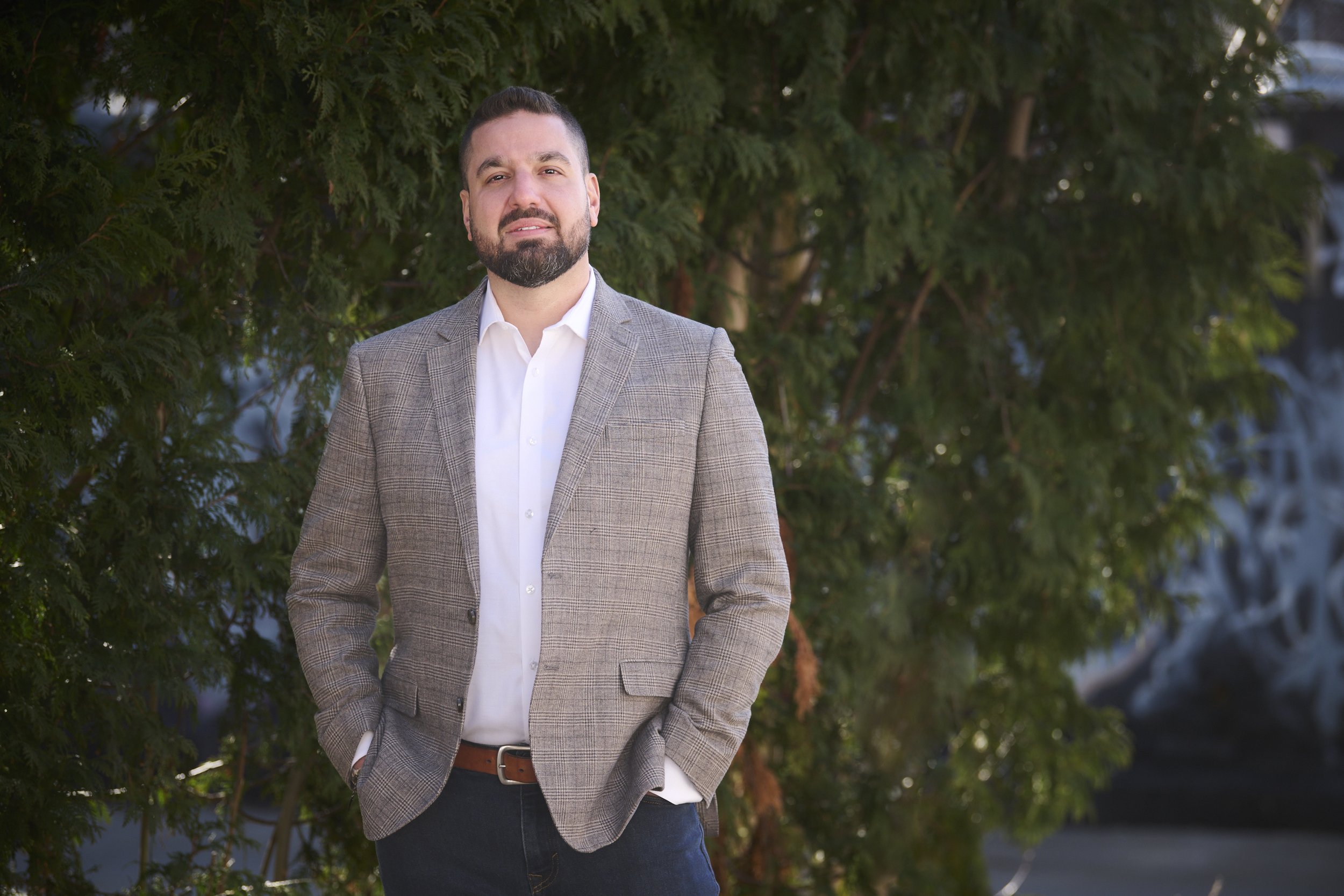
Jon Rosemberg
Jon Rosemberg empowers leaders and organizations to break free from survival mode and step boldly into thriving. With over two decades coaching Fortune 500 executives and global teams through deep transformations, Jon is currently CEO of Strongpoint Group and Founding Partner of Anther, a firm dedicated to helping people thrive. Jon is author of the brilliant new book, A Guide to Thriving: The Science Behind Breaking Old Patterns, Reclaiming Your Agency and Finding Meaning.
Feeling stuck, unmotivated or powerless in your career (or life)? Are you overwhelmed, just barely coping with relentless demands? If this resonates, this conversation is for YOU.
In today's episode of Live+Work More Human, Alexis and Sally sit down with CEO and author Jon Rosemberg to discuss what it means to shift from survive, to thrive. And the impact this has for our careers and lives.
We explore the concept of survival mode as an evolutionary mechanism that many people find themselves in today. And, Jon generously shares his personal journey from survival to thriving, emphasizing the importance of agency, social connection, and intrinsic worth.
This warm, open and impactful discussion explores the distinction between thriving and success, the significance of psychological flexibility, and the development of a map to guide individuals towards a thriving life. Jon encourages listeners to recognize their intrinsic value and practice agency in their daily lives, ultimately fostering a ripple effect of positive change in their communities.
Key takeaways:
That survival mode is a natural evolutionary response.
How we can recognize when we are in survival mode.
The reasons thriving is about agency, meaning, and social connection.
Why success is often defined by external factors like money and status.
The reasons agency is the ability to make intentional choices that matter.
How psychological flexibility allows us to adapt and find new paths.
Reasons our identities should be complex and not solely tied to our work.
That intrinsic worth exists beyond our productivity and achievements.
How small moments of agency can lead to significant change over time.
That the journey to thriving is personal and requires self-exploration.
Learn more about Jon, order his book and explore his incredible work at his website here.
Watch the episode right now on YouTube:
Chapters & Transcript
00:00 Understanding Survival Mode
06:05 The Shift to Thriving
12:45 Defining Thriving vs. Success
18:24 The Importance of Agency
23:34 Mapping the Journey to Thriving
25:31 The Power of Beliefs
29:49 Developing Agency Through AIR
31:21 The Importance of Psychological Flexibility
36:19 Identity and Intrinsic Worth
42:56 Embracing Agency for Personal Growth
Alexis (00:01.614)
Okay. Hello and welcome to We Are Human Leaders. John, it's such a pleasure to have you here with us today. And we'd love to dive straight into it if we can with a question on surviving. So your new book is all about thriving, but we want to start with understanding a little bit more around why so many of us feel like we might be stuck in survival mode right now rather than thriving.
fmmqvy49mx (00:27.678)
Yes. Survival mode is an evolutionary mechanism. It's incredibly helpful in situations where we need to survive. So if 15,000 years ago you were walking in the savanna and you heard rustle in the bushes, you wanted to be kicked into survival mode right away because it would protect you. It was a very useful way to protect ourselves. And for people who still live in dangerous places or where
There's physical threats around them. Survival mode can be very helpful. I grew up in Caracas, Venezuela and spent most of my childhood and early adulthood there. And Venezuela was a country at the time that was descending into chaos and anarchy and violence. And survival mode was a really good way for me to navigate my life. When I moved to Canada 16 years ago, I realized, huh, maybe there's something a little bit better.
And that's what got me really interested into thriving.
Alexis (01:27.632)
Thank you so much for that John. And so when we talk about survival mode in a modern sense, what are some of the things that some of us who are stuck in survival mode might be doing? How can we recognize if we're stuck in that mode right now?
fmmqvy49mx (01:40.791)
So there's many ways to explore that. Most people that I ask this question to, and I've asked this question out of hundreds, if not thousands of people, have you ever felt like you're in survival mode? Exactly phrased that way, we'll say yes. So we tend to be really good at recognizing when we're in survival mode. Our focus narrows, our muscles might tense, our breath might get shallow.
We start seeing no options in front of us. We say, I don't have a choice here. Those are all signs of survival.
Sally Clarke (she/her) (02:14.883)
And I think it's something that I'm immediately having this sort of visceral response to John, because I think, you know, we've all had that experience of feeling stuck and overwhelmed. But even I think sometimes at the time, it can almost be difficult to observe because of that stress state, we kind of, you know, we narrow our perspective, we become kind of very focused on what is stressing us and we lose a little bit of that objectivity. Is that how you characterize survival mode as well?
fmmqvy49mx (02:40.833)
Yeah, think that's a really good way to put it, Sally. And it's this general notion that our world shrinks specifically to whatever we need to do next in order to survive. So overthinking is a really good symptom of survival mode, right? Anxiety, good symptom of survival mode. So all of these little things that a lot of us are experiencing on a daily basis are symptoms of survival mode.
Sally Clarke (she/her) (03:09.378)
you say in your book, and I love how you put it, no amount of success alleviated the hum of anxiety, no raise or promotion or raise the exhaustion of always being in survival mode. And when I read that, I just felt like, that's exactly that takes me to a very specific place in a memory that I have of having that experience in my life. Can you tell us a little bit about your experience of sort of acknowledging survival mode in your own life and how that's shaped your thinking around thriving?
fmmqvy49mx (03:38.167)
Yeah, for sure. So I was in the corporate world for two and a half decades and I was climbing through the ladder and doing whatever I had to do to get my next promotion, my next race, a bigger team. And a lot of us who are in the corporate world can identify with this climb. And finally I got a job at a startup, which I thought was my dream job. You know, was COO, I had a huge team, I had...
you know, this great title and my dream job by all definitions. About 10 months into it, by the way, we raised a Series B round of $150 million. The business was growing at double digits every month. So we were crushing it, as the young ones used to say. And I was one of the oldest people in the team and I'm not that old. But anyway, it was a very young team.
We went to LA to buy a couple of facilities for our expansion. And when I got back, I got COVID and I was on a technical call with the technical experts as they be. And the call got really heated really, really quickly. So I shut off my laptop and I turned off my phone and I was in this really, really trigger state and I heard my kids playing in the basement. They must've been nine and six at the time. I have two boys and they were sitting in the floor playing with Legos.
So I sat on the floor and I started playing with them and I spent about an hour playing with them and I realized how much I was missing out of their lives. I was physically present, like they would see me at breakfast or at dinner and I would say, hey, how was your day? And then not listen to whatever they had to say. And it was a big moment for me. So later that day I was sitting in my favorite chair and Adriana, my wife approaches me and she says, hey John,
Are you okay? And I kind of covered my face with my hands and I looked at her and I said, I think I'm done. Two weeks later, I had left the job. I started my own consulting firm, eventually went back to school, got a master's in applied positive psychology and ended up writing a book. But that moment of sitting on the floor playing with my kids was a glimmer of thriving in a moment in which I was
fmmqvy49mx (06:02.929)
experiencing survival mode on a daily basis, 24 hours a day, seven days a week. So that's kind of how my shift kind of started.
Alexis (06:12.046)
It's such a potent story, John, and one that I'm sure many of our community can relate to. I know Sally's got her own story like this, and certainly I do as a young consultant. I still recall sort of a tipping point moment in my career as well, where I had been in a job for about two years. There were some signs there that it wasn't working. know, I was feeling, I could be.
triggered off an email or any of these sorts of things where I'd feel myself getting hot, anxious, my skin would glow red all the time. And I remember one morning getting into the shower and had already checked my phone, had already got emails, was already in an elevated state and just getting into the shower and just crying and realizing like, my goodness, I actually don't know for how much longer my body and my brain can handle being in this constant state of stress and anxiety. And it's interesting how so many of us
have to come to that tipping point before we put a line in the sand and say, that's it, I'm ready to step over this towards thriving. And I wonder, John, if you could help us sort of explore this next phase now, we're perhaps noticing some of these signs and symptoms of being in survival mode ourselves, what does thriving feel like? What does it feel like when we make that conscious decision and start moving towards this new mode of being?
Jon: Thanks for the question, Alexis. So, I think the first thing that we need to do is separate success from thriving, as they're not the same thing. Success, as we define it, has a lot to do with money, power, and status. These things that we know. If you have a big house and a nice car and you wear a nice watch and...
You have all the accolades and the titles and you can walk into a restaurant and get them to get you a table really quickly. Those are all the signs that you're successful. And by the way, success is great. I think we all want success in our lives and the system that we live in is built for success. It's designed for us to achieve success. So those are very important extrinsic motivators and I think it's okay to want them and it's okay to chase them.
What I'm arguing in the book, the thesis is, that success may not be enough to have a meaningful life and a whole life and to have wellbeing. And that's where thriving comes in. And I would say if success is money, power and status, thriving is agency, meaning and social connection, which are intrinsic motivators. Agency, meaning and social connections are things that we have a lot of control over. You may not...
Control is a big word, but I'm gonna use it just for the purposes of this conversation, because what do we actually control? But let's not get too philosophical about it. But the point that I'm trying to make is that when it comes to agency and making meaning and social connection, our locus of control, it stays within our locus of control. So these are things that we can actually practice, that we can actually learn, and we can implement in our lives. And by the way, there is research over the last three decades
Alexis (11:30.768)
Really.
fmmqvy49mx (11:33.52)
more than ever before, that tells us, number one, how to do this. What are the ways that work for a lot of people, which by the way, they may not be the way that works for you, but it can give us some good ideas and some good kind of stepping stones to figuring out how to get more agency, more meaning, and more social connection. And it tells us that once we get agency, meaning, and social connection, our wellbeing increases, which means that we have a fuller life.
So that's the argument that I'm trying to make in a guide to thriving.
Alexis (12:08.226)
It's so important, John. And I think a few words that come to mind for me here as someone who did very much chase success and status and accolade in especially more junior in my career without this focus on thriving and wellbeing is that I felt like I could achieve those things, but there was a sense of nothingness underneath them almost like a sense of discontent of ill-ease. And so I think
fmmqvy49mx (12:31.995)
Hmm.
Alexis (12:35.66)
It's that marriage between things looking right on the outside and feeling well and contented and right on the inside. That's so crucial. And I think for me personally, when I focus on the internal, the external starts to attract itself to me more naturally than when I just go on a goal pursuit of those external things. And I wonder, has that sort of been the flip that's happened for you as well?
fmmqvy49mx (12:52.772)
Hmm.
fmmqvy49mx (12:59.857)
That's beautiful. Well, here we get into this whole notion of does correlation, does causation imply, or does correlation imply causation, right? I'm not sure. I'm not sure if we start on the inside and then the outside shifts or the outside shifts. You know, like, I think it's unclear how the causality occurs. And we do know that this has a tremendous
impact on our well-being. Social connection, for example. Imagine there was a drug out there that would increase your survival by 50 % and reduce your risk of cardiovascular disease by 29%, risk of stroke, reduce it by 32%, reduce your risk of dementia, increase your well-being. If there was a drug that did all of that, we would all be lining up outside the doctor's office and being like, can I please have a prescription?
That's what social connection does for us. There are longitudinal studies that suggest that there's probably...
nothing as important in our life as humans. Well, I mean, there's food and air and of course, but I'm talking things that we have a real impact in that can impact our wellbeing as social connection can.
Sally Clarke (she/her) (14:20.308)
Such a profound point, and I think in a society which is so individualized and focused on sort of splintering us, think, through social media. And I think there's this pervasive narrative in the States, but really around the world of this idea of we have to be self-made, we can't rely on anyone else. And I think it's so important for us to constantly be reminding ourselves how fundamental social connection is to
our own wellbeing as individuals, but also as a community, I would argue, as a species. So really glad that you shared those statistics with us. And yes, we would all line up for that drug if that was how it was characterized. And I also love what you say about agency. And it really takes me back to my own experience when I was a corporate finance lawyer and I collapsed at an airport and was burnt out. I remember speaking with a therapist a few weeks after that incident happened and
She said to me, you know, know now if you want to leave the firm or not. And it was the first time that I realized, and this sounds very silly to say, but it was the first time that I realized that I had a choice because I just been sort of living this life. It seemed very successful. I didn't feel like it was a choice. It seemed like it was just what I should do because it was this incredible opportunity. And there was all of the status power and, um, and accolades associated with it. And I think that switch happens for a lot of people where we have that moment of like suddenly realizing.
This is our one precious life. And we have the agency to make a choice and take our lives in a very different direction. So I think that the agency component of it is a really important one. Was that sort of something, a similar sort of realization that you had yourself?
fmmqvy49mx (15:56.056)
Yes, and I love your story, Sally, because this illustrates agency in such a beautiful way. This idea of I have no choice, which a lot of us experience often, this is a common experience. If you feel this way, there are lots of people who feel the same way. Like, this is a very common occurrence, is us surrendering our agency. So let's define agency.
Agency is the capacity to make intentional choices supported by the belief that those choices actually matter and have an impact in the world. That is the definition of agency that I use in the book to operationalize it and to talk about it. Of course, there'll be people who disagree with me and I hope that we can talk about it because I'm sure it's not a fully comprehensive definition, but this one works for this. So I would argue there's very low agency, which is this
sense of helplessness that I cannot have an impact on my life. Nothing that I do will change my life. And a lot of us feel this, especially if we're really successful, we can be trapped by that success and say, well, but I like the lifestyle and I like the paycheck and I like the fact that I get to work and everybody knows I'm the boss and I really enjoy all of these things. So I don't really have a choice. I can't really walk away from this job. That's what I would call really low agency.
then you can move a little bit higher on the agency spectrum the moment that you say, okay, I have a choice to stay and have all of these amazing things, or I have a choice to walk away from the job and be unemployed, right? Which is how most of us experience that glimmer of agency initially. So that would be kind of like the black and white version of agency.
really high agency is when we don't just see the black and white, but we see a rainbow of alternatives in front of us. So that could be, I can stay and I can have a smaller portfolio or I can, you know, I can work less hours or, you know, whatever that looks like if there's accommodation available, or I can leave and I can rest or I can start a new business or I can, you know, whatever that may look like. so I think
fmmqvy49mx (18:15.681)
Agency is a uniquely human capacity and we are surrendering it so often because we're in the state of survival mode. So what I suggest is that the way to go from survival mode to thriving is to practice agency. And agency is not this innate thing that everybody has. I see it as a skill, as something that is learned and that we can actually work on through the process of our lives.
Alexis (18:42.906)
John, it's really interesting on this idea of agency because similar to Sally's experience, I've been in a position where I wasn't even cognizant of my privileged position to make a choice. And I think sometimes a low locus of control or a low sense of agency can be a little hard to identify at least initially. think it can.
sort of present itself in some insidious different ways that makes it hard to recognize. And one for me in particular, I think was a victim mentality. I, for a really long time, felt like I was a victim of my circumstance, a victim of my workplace culture, a victim of injustices in the world, things that were going wrong, felt like they were happening to me. And I just wonder, have you worked with or have you had any of those experiences where
perhaps agency's a bit a little harder to recognize in ourselves and some of those behaviors that might indicate we actually do have a low sense of agency.
fmmqvy49mx (19:48.142)
Yeah, that's a beautiful question, Alexis. And I think what I would say is you're right. The systems and the environments around us have a huge influence in how we navigate the world. Wherever you were born, whatever, you know, what family, your race, your gender, like all of these things have an impact in our ability to access our agency. So...
It is true, well, I don't like to use the word true, but for most of us, it's very real that we have all this compression coming from our environment. And it is also the case that we have this agentic capacity to make change in our space and that those changes that we make can ripple out in a way that we can often not imagine. And
The example that I'd like to use to explain this, it's one of my teachers and one of the most powerful ideas that behind this book, it doesn't come from me, by the way, a lot of the things that I put in the book are things that people have been talking about for thousands of years. It's just number one, now there's research to support it, and number two, how do we translate it to the modern world? That was the intention. But I was gonna talk about Viktor Frankl.
And he's the creator of logotherapy and and he wrote a book called man's search for meaning and Victor Frankel was in You know, he was in the Holocaust He was in a concentration camp and he saw people die around him and he was dehumanized and it probably the worst conditions that any human being can experience in the history of humanity and He argued that we could still within those all of those constraints
we could still find meaning. And what he found is that the people who survived were not the people who were strongest. It's not about how strong, how much muscle you had or how aggressive you were or how smart you were even. It was about finding meaning. This notion that you found a way to it coherent, to make sense of the experience that you were inhabiting.
fmmqvy49mx (22:10.387)
in a way that's served you and that served your well-being. And I think that's a really powerful idea.
Sally Clarke (she/her) (22:16.662)
It's interesting that you say that, John, because reading your book, I was thinking a lot of Victor Frankl's work and particularly, think also the notion that it also wasn't just optimism that got people through sort of pure unmitigated optimism is also not an answer to this. So there has to be this kind of balance, I think of, you know, I call myself a realistic optimist and it's that kind of balance of kind of seeing things as they genuinely are and then integrating them or interpreting them in a way that has that sort of
potentially a positive impact. know, can this be as like sort of alluded to, how can this be for me, not to me? And I think that's really, that story is so powerful in sort of helping all of us really understand how, no matter what our circumstances are, if Victor Frankl was capable of, you know, defining the sense of agency and capacity to find agency in that situation, then surely we can do it in our own lives too.
I feel that you're, you know, the beautiful map that you've created that you unpack in your book is, really encourage every listener to grab the book and delve in deep, but I would like to take the opportunity while we have you to sort of explore a little bit without going into too much detail because I feel like we could have like a 10 hour conversation around it. But can you tell us a little bit about how you came to shaping this map towards thriving that really sort of helps people?
on this journey to get very practical and very sort of action oriented around shifting from survival mode to thriving. And if there's a particular aspect of the map that you'd like to sort of delve into and explain for us right now, we'd love to hear it.
fmmqvy49mx (23:53.568)
Yeah. So the map has nine elements, and if I start naming them, we're all going to fall asleep together here. So what I will say is... So my mom is a psychologist, and she's a behavior therapist who studied with Joseph Walpy, who was one of the great minds of behaviorism. And when I grew up, I always grew up with behavior as the main point of growth. So...
The argument was that if you changed your behavior, everything else would follow. And we see this a lot in the self-help industry and we see it in many places. just change your habits or change your behavior and then you shall be successful and reach the Shangri-La. That's how I grew up. And as I started getting older, I was like, huh, it's not just about behavior. On top of my behavior, I have thoughts. So then I said, okay, so the answer is
in my thoughts and my behavior. If I can work with my thoughts and I can work with my behavior, I'll reach the Shangri-La. Then I got a little bit older and suddenly I realized that I had more emotions than just happy or angry. I actually had this whole wide world of emotions available to me. I could be sad, I could feel grief, I could feel excited, I could, you know, feel... There's a world of emotions. So I said, okay, so now...
It's thoughts, emotions, and behavior. And as I kept digging in, I was like, no, there's more here. There's transcendence or spirituality, right? Which is our connection to something beyond ourselves. And then I said, well, we have to situate this in time. So past, present, and future. Like, what happened in our past? What are we prospecting towards? What is it that we want in our future? So as I kept going, I found all of these elements. And I said, okay, this is a solid map.
I'm sure five years from now, look back at it and I say, my God, that was so simple. And somebody will come to me and say, well, what about this and this and this and this? But to me, it's been really helpful. And the interesting thing is that all of those elements that I discuss in the map, there's been research behind it. So we can actually use empirical evidence to suggest how we can think differently about the way in which we engage with our thoughts or our emotions or whatever it is within the map.
fmmqvy49mx (26:19.059)
Now we can pick one, which is at the center of it, which is beliefs. I think beliefs are really, really important and often underestimated. I would describe beliefs as a pair of glasses, call them sunglasses or whatever color they are, that filter the world for us. And most of our beliefs are unconscious. These are not things that we're often thinking about. And they create this mental model that allows us to navigate the world.
Alexis (26:23.627)
Hmm.
Alexis (26:27.438)
Yeah.
fmmqvy49mx (26:48.052)
But at some point, beliefs that might have served us a lot in the past stopped serving us. So in order to change the belief, we have to kind of bring it into the light and explore it. I don't know, does that help?
Alexis (26:54.128)
Yeah.
Alexis (27:00.324)
Hmm. Yeah, it resonates, John. And for those who aren't seeing us, if you're just listening right now, you wouldn't have seen Sally and I get a bit of a giggle midway through that explanation, John, because when we work with leadership teams, we explain beliefs in exactly the same way we use out Sally and I's love language, we always say is means. And so we use meme that is a person wearing like 10 different pairs of sunglasses. And we use that to help illustrate this idea that
sort of the different layers of beliefs, so like a different lens through which we see the world. And when we have multiple pairs of those glasses on at once, often we're filtering the world in such a complex intersectional way that we're not able to see it. So I'm so glad that you explained it with the same analogy.
Sally Clarke (she/her) (27:45.486)
I just explained it with the same analogy.
fmmqvy49mx (27:48.393)
Well, I'd love for you to send me that meme, because that sounds awesome.
Alexis (27:51.013)
Yeah, it's a good one. It immediately resonates with people because you realize how unhelpful it would be to wear 15 different pairs of colored glasses all at once. And so it's an interesting analogy to help sort of just illustrate this idea in a way that also feels quite visceral. And you realize, that would be really quite annoying and quite complex to try and see through all of these different lenses at the same time. But that's in fact what we're doing on a daily basis when we filter information as an individual.
Sally Clarke (she/her) (27:51.534)
You
fmmqvy49mx (28:20.136)
Yeah. And the interesting thing is that a lot of these beliefs can contradict each other. So it's not like you have a belief and then you can hold onto it for dear life because different situations may trigger different beliefs. it's just a fascinating field of study. And I cite some of the latest research on beliefs and what the researchers are doing to bring this to life. It's just
Alexis (28:25.902)
Yeah.
fmmqvy49mx (28:48.554)
It's beautiful and it shows the tremendous impact that it can have on our wellbeing.
Alexis (28:54.55)
Absolutely. And I love this idea when you mentioned we can have sort of multiple being operating in the background at once, because I think sometimes, and I'll speak just anecdotally here, some of the times where I felt the most internal strife has been a conflict in some of those beliefs as well.
fmmqvy49mx (29:13.351)
Yeah, so how do we bring those beliefs to life? That's a powerful question. So what I suggest in the book is that in order to go from survival mode to thriving, of course you have to develop your agency, but how do we develop agency? So I suggest, and by the way, it's interesting because I argued with several publishers about the tone of the book because they wanted me to be more...
Alexis (29:16.719)
Yeah.
Alexis (29:29.565)
you
Alexis (29:37.732)
Yeah.
fmmqvy49mx (29:39.177)
They kept telling me you have to make it more prescriptive. And I said, but I'm talking about agency. If I make it prescriptive, I'm telling people what to do. That's the whole point is that you will grab the book and it will help you develop your agency. Not that I'm telling you how to live your life. Cause by the way, I wouldn't know where to start. So, as I started diving into the research, I found that there were three common topics that kept coming up. And I summarized them into an acronym, AIR.
Sally Clarke (she/her) (29:40.43)
Hmm.
Alexis (29:55.394)
Yeah.
fmmqvy49mx (30:09.5)
The A stands for awareness, the I starts for inquiry, and the R starts for reframing. And when we practice AIR, we start developing our agency and we create this practice and it allows us to pull into our agency whenever we need it most. So when we feel we're in survival mode and we identify it, we can then lean into AIR.
Alexis (30:16.57)
Mm.
Alexis (30:32.048)
Mmm.
Sally Clarke (she/her) (30:32.714)
It's so beautiful how you use air in the book, John. And I think this is often this thing back in the day, used to not even aware of it, but I used to buy books and really want them to be the answer. I wanted them to tell me what was missing in my life and very prescriptive, like seeking that kind of like easy fix really. And what I love about your book is it really invites the reader in to go on a journey. A lot of beautiful reflections and sort of, know, it's I think acknowledging as you said, it's like,
No one can tell us really what to do. That's a journey. That's the work that we have to do ourselves. And I think it also requires, and this is something that you bring up in the book, that we tap into our psychological flexibility as well and really understand that. I think that was a point that really stood out to me in the book. Can you tell us a little bit about why that's an important part of this work?
fmmqvy49mx (31:19.087)
Yes. Let me first start with a story that I tell in the book. There was this dome in Arizona that they created and the idea was inside this dome, they wanted to create an ecosystem and see how it would survive, right? I think it had to do something with Mars or with space. I don't know the full details.
But what they ended up finding out is that they would plant trees and after the trees got to a certain size, they would just fall over. And they would just kept, they kept falling over and they were saying, well, why aren't the trees, you know, they seem like sturdy trees, why are the trees falling over? What they found is that because it was a dome, there was no wind. So there was no resistance for the trees when they were growing.
So that meant that the roots didn't grow deep enough and it meant that the trees would just fall. I think psychological flexibility, you know, we talk a lot about strength, right? How do you build strength? And I think strength can be really useful, but strength is only useful if you have flexibility attached to it. And psychological flexibility is the capacity to see different roads, different opportunities, right? Like imagine you're driving through
a city and suddenly you encounter gridlock, right? And you say, well, this is my route and I take it every morning. I'm going to take the same route no matter what. You may never get to wherever you are going, right? Psychological flexibility saying, well, let me try a new street. I got to try a different route because the route that I'm using right now will not serve me today. And I think that's a vital concept and it requires a tremendous amount of agency.
Because you have to see the other street in order to make a different choice. If you don't see another street, that's going to be really hard.
Alexis (33:10.16)
That's such a powerful point, John. And again, sort of to reflect on my own career, I think so many of us hang our entire identity hat on some of this status and power things that we pursue in our career and oftentimes become so attached to what that successful look like will look like in a very rigid way that we don't develop the psychological flexibility to deal with setbacks or roadblocks or an opportunity for a new way of getting to the same success. And
It keeps us feeling again, it removes our agency because when we only want to take that one path forward and we're unwilling to see any other way, we don't even see how we are the roadblock in that instance.
fmmqvy49mx (33:53.114)
Yeah. I love that you brought up the word identity here. I just published an article in Psychology Today about identity and about the importance of having a flexible identity. I define identity as a bundle of beliefs. If you take all of those beliefs that you have and you put them together, that becomes an identity. So, if we're going to be flexible about our beliefs...
Alexis (33:57.26)
yeah.
Alexis (34:05.7)
Love it.
Sally Clarke (she/her) (34:06.135)
Hmm.
Alexis (34:10.608)
Hmm.
fmmqvy49mx (34:20.878)
we must be flexible about our identities. And by the way, there's research on self-complexity that talks about how people who actually define themselves as multiple things, because if I say, well, I am an executive, I am an executive, I am an executive, and I make that my identity, and one day I lose my job, it's gonna be really hard for me to bounce back from that. If I say, I'm an executive, and I'm a father, and I'm a friend, and I'm a good neighbor,
Alexis (34:43.322)
Yeah. Yeah.
fmmqvy49mx (34:50.765)
And if I have all of these, like this complexity around my identity, then when one of those goes away, and by the way, for most of us, our identities will shift tremendously throughout our lifetime, whether we like it or not, they will. One day we'll be married, the next day we'll be divorced, one day we'll have kids, maybe we won't, people lose their children. Like these are things that life throws at us.
Alexis (35:04.463)
Yeah.
Sally Clarke (she/her) (35:04.654)
Mmm.
fmmqvy49mx (35:14.755)
So being able to hold our identity lightly, which is something that we're not doing in our modern society, could be a really powerful unlock for personal and societal growth.
Sally Clarke (she/her) (35:14.851)
Yeah.
Sally Clarke (she/her) (35:26.156)
You know, I love that you say that, John, because when people ask me, I've done a lot of research into burnout and written books about burnout. And people ask me, know, what is the one thing that we can do to avoid going through a burnout, particularly in the work context? My answer is generally ensure that you derive your sense of self-identity from an array of different arenas of your life. Because if you're putting everything on work, when that starts to become troubled, it will become very difficult for you to navigate that. And that chronic stress becomes very quickly sort of shifts into burnout.
So it really is about ensuring that we derive our sense of self from as many different arenas of life as possible. So I really love that you've shared that with us. I think it's a really powerful reminder for all of us. And it's a little bit counter-cultural, I think, as well at the moment, because there is a lot of sort of push to be in a hustle culture and to very much identify with our status, with our title, with our salary, with our possessions. So I think it really takes some courage. And I think
this work, particularly the map that you've drawn us and your book is such a beautiful way for us to start to explore that and perhaps find ourselves playing Lego with our kids a bit more often and building that into our identity rather than it being just something that happens very incidentally.
fmmqvy49mx (36:39.875)
Yeah, and when we're holding onto our identity so tightly, it's very likely that we're in survival mode. It's a survival mode response. We are doing it because we feel like if we let go, we will not survive. And so let me just, for us, just to ground ourselves. In the history of humanity, we have never done better as a species. We are in the golden age of humanity by all standards.
Alexis (36:47.727)
Yeah.
fmmqvy49mx (37:08.549)
By the way, I don't want to say that there aren't people suffering and that there aren't things that we need to address. Because there are. There's still a lot of work for us to do. But if you look at access to food, access to water, access to health, education, longevity, know, a hundred years ago, we may not be having this conversation because life expectancy was 32. Today it's more than double that. So we are in the golden age of humanity and yet...
we feel like we need to protect our survival for dear life. And not because there are physical threats around us, but because there are psychological threats around us, because people are challenging our beliefs, or because people are challenging what we believe to be true, quote unquote. So I think it's really important to have a little bit of perspective in terms of where we are at as a species in this like doomsday, doom-scrolling,
everything is wrong and you know we tend to grab one little video and say this is the state of the world today and and empirically speaking that's just not the case.
Alexis (38:18.448)
John, something else I just want to touch on quickly here is there's a lot of rhetoric in the leadership and workplace development space right now around this idea that work should be a purpose or should have purpose. And I think this gets people into a little bit of trouble when we talk about the identity piece as well, because I think there's a confusion for a lot of people that our work should be our sole purpose or what we feel most passionate about should translate into our career.
versus the idea that our work should feel purposeful. That is, we should go to work every day and feel like what we're doing contributes in some way to making the world a better place. And so I just wanted to sort of pause and get your take on this in terms of the identity piece as well, because I've had a lot of leaders that I've spoken to that hang their whole hat on identity and say, what I do for work is my purpose in life.
And this sort of centralization of everything that I do, all of my investment in energy and time goes into this. And as we've just discussed, when it goes wrong, that can leave us feeling really vulnerable and exposed when we're lacking that complexity. And so I just wanted to get your thoughts on this idea of the connection between identity, purpose and work as well. Cause I think there is a little bit of nuance there to be explored.
fmmqvy49mx (39:37.313)
Absolutely.
It's interesting because the system that we're inhabiting was created with productivity in mind.
Alexis (39:48.132)
Yeah.
Sally Clarke (she/her) (39:48.64)
Mm.
fmmqvy49mx (39:50.083)
And we've all been taught since we were little that as long as you're productive, you're good to the world.
And this is a really, really powerful belief that's been deeply embedded in us. And for me to take the time of quote unquote productive paid work to write a book, which by the way isn't gonna make me any money, because I don't know if, you know, we can talk about the publishing industry. At first I started calling it a passion project, now I call it a meaning project because it's so much more than passion.
Sally Clarke (she/her) (40:19.82)
You
Alexis (40:24.932)
Yes. Yeah.
Sally Clarke (she/her) (40:25.41)
Yes.
fmmqvy49mx (40:25.443)
So it's one of the most meaningful things I've done in my life. And I'm really grateful that I did it, but I struggle with it deeply because I said, my goodness, I am leaving on the table this billable hours and all these clients that I could be working with. It feels the system is built on this idea of productivity. And by the way.
Capitalism is by far the best system known to humanity. It's given us science and research and so many great things and the buildings that we're in and the fact that we're talking on this app from thousands of miles. And it's really like miraculous what it has done for humanity. And at some point we have to sit down and question, at what point is it too much? At what point, and Sally, I think you used the word balance earlier,
At what point is the balance off when we have soon to be trillionaires walking around the world? like, how do we justify the wealth inequality? And I don't want to sound like a socialist because I grew up in Venezuela and I saw what socialism did to my country. So I'm definitely not advocating for that, but I'm advocating for a world where we prioritize.
Alexis (41:35.31)
Yeah.
fmmqvy49mx (41:44.832)
human worth, not as part of the equation, the productivity equation. Where human worth... And by the way, this is the hardest question when I'm talking with a lot of my clients, which are mostly really successful people. The hardest question for them to answer is if you suddenly stop producing, what would be your value? And it's tumpus. We don't know how to answer that question.
Sally Clarke (she/her) (42:10.124)
And this is such a profound point, John. I'm so glad you took us here because I think it's something that we talk about a lot at Human Leaders and it's a lot of almost our philosophy really, because I think what we're getting wrong to some extent is we're not understanding that we as humans have intrinsic worth. And because in this capitalist system, we talk about humans as capital, I think there's a disconnect there because humans...
do have intrinsic value, you know, and we do need to sort of be able to honor that, but that's very difficult to do in the context of the system in which we're working. So I think it's beautiful to be able to have these kinds of conversations where we explore what that looks like and we start to challenge ourselves really deeply. Can I consider myself to have intrinsic value? Is it contingent on something? Is it on my output, my productivity, my contribution to society, the title, all these other things that we measure ourselves by? And I think it's, you know,
really important. feel like we could also talk about this for many, hours. But I would love to round out our conversation today, John, just by if you could share with us to those who are listening, who are very inspired to shift, to really take on this thriving life very consciously. What would you like them to know right now about the journey?
fmmqvy49mx (43:25.494)
want to touch on the intrinsic worth question first and then let me jump on this because I want to say something.
Sally Clarke (she/her) (43:30.519)
Absolutely.
fmmqvy49mx (43:33.824)
A lot of us need evidence in order to believe in something, to shift our belief. What more evidence do you need that the fact that you're walking on this earth?
We're talking about two trillion galaxies like ours, and there is, I don't know, how many billion planets in every galaxy, and we haven't yet found life. And even in this planet, the Earth is four billion years old, and you get to be here for what, 100 years? This is like a magical, life is in itself, how can there not be value in the fact that you are alive?
This is the evidence-based perspective, which I would call it also a transcendental perspective. And what I would like to encourage your listeners to is exploring their capacity for agency in however small, however it's accessible to them, exploring how you can make intentional choices in places where before...
you believed that you couldn't make any choices. Just starting to practice that, even in small little increments, by the way, in my coaching practice, when I first started doing this, I was like, I want my clients to have these major breakthroughs. And the reality is that it rarely happens like that, if ever. There are all tiny, tiny little small increments that accumulate over time. And that's a really powerful way to go at it.
Alexis (45:02.405)
Yeah.
fmmqvy49mx (45:11.497)
And if you can find small moments of agency, you're already starting to build the muscle. It's like going to the gym. It's the exact same thing. So try and find ways in which you can lean into your agency a little bit more. And if you're not doing it for you, do it for the people around you. Because when we lean into our agency, that has a ripple effect. And it affects our family, our friends, our community, our city, and yes, the entire world. It has a tremendous impact.
So that would be the message. Yeah. Or send me an email and tell me that I don't know what I'm talking about and I'm happy to have a conversation too. I'm also game for that.
Alexis (45:49.584)
I love that and John, such a potent call to action to leave our community with. Thank you so much. It has been such a pleasure to sit down and discuss thriving with you today.
fmmqvy49mx (46:02.048)
Thank you for the invitation and for offering me your space and the attention. I know attention is in short supply these days, so I am very grateful for a fantastic conversation.
Alexis (46:13.061)
thank you.
Sally Clarke (she/her) (46:13.486)
Thank you.