Compulsively Productive? How Busyness is Burning you Out!
We are, frankly, over the word ‘productivity’. And in this conversation, we get really explicit and personal about the damaging effects that over-identifying with productivity can have for us, our workplaces and our society.
In this straight-talking and animated conversation, your co-hosts (and subject matter experts) Alexis Zahner and Sally Clarke explore the complex relationship between productivity, rest, and burnout. We discuss personal experiences with productivity pressures, the societal expectations that contribute to burnout, and the importance of understanding different forms of rest.
This open and insightful dialogue emphasizes the need for self-compassion, the role of therapy and coaching, and practical strategies for preventing burnout while fostering a healthier work-life experience for all of us.
Key insights include:
Why the struggle with productivity and rest is common among high achievers.
How rest should not be viewed as a reward for productivity but as a necessity.
The ways societal pressures often dictate our sense of worth based on productivity.
Why burnout can occur in both organizational and personal contexts.
The power of understanding different types of rest can help in recovery and prevention of burnout.
Why therapy and coaching can provide valuable support in managing stress and burnout.
The reasons we see self-assessment as crucial in recognizing burnout symptoms.
How creating boundaries around work can enhance productivity and well-being.
The key reasons finding joy and play in life is essential for mental health.
Why, now more than ever, it's important to connect with others and share experiences to combat feelings of isolation.
Learn more about the 7 Kinds of Rest you need in our conversation with Dr. Saundra Dalton-Smith right here.
FACT CHECK:
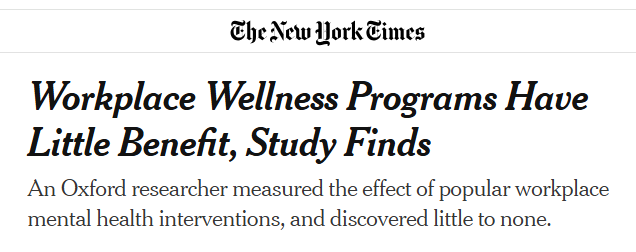
In this conversation Alexis mentions a systematic review by Oxford on workplace resilience, stress and wellness programs. She states that this study shows subjective wellbeing can actually worsen as a result of such interventions. This is untrue. The study showed that these program have little to no measurable benefit when compared to employees who didn’t engage in these programs at all.
Please read the full study for yourself here: Employee well-being outcomes from individual-level mental health interventions: Cross-sectional evidence from the United Kingdom.
And see articles on the topic, such as the New Your Times below.
Watch the episode right here:
Chapters and Transcript
00:00 Introduction to Chaos and Productivity
02:50 The Struggle with Productivity and Rest
05:59 The Impact of Childhood on Productivity Mindset
09:00 Understanding Different Types of Rest
11:55 Navigating Faux Productivity
14:55 The Connection Between Worth and Productivity
17:59 Societal Pressures and Personal Value
20:56 The Pervasiveness of Burnout and Its Consequences
24:29 Understanding Burnout: Personal Experiences and Definitions
30:09 The Role of Therapy and Coaching in Managing Burnout
36:09 Practical Strategies for Preventing Burnout
40:56 Finding Joy and Play in Life Despite Challenges
Alexis Zahner (00:00.077)
Yeah.
Sally Clarke (00:02.758)
Welcome to Live and Work More Human. Although Lex, we've just had this quite hilarious discussion about how that might not be the right title for this kind of conversation that we're about to have. Can you elaborate?
Alexis Zahner (00:18.294)
Yeah, so it is 2026, exciting times in the live and work more human camp and we are trialling something a little new where we sort of deep dive into challenges or topics or things that are front of mind for us. And we have been pondering, haven't we Sal, maybe if this particular segment or style of conversation needs its own title. Answers have ranged from
unhinged through to, chaotic at best I suppose. Chaotic. Yeah so what we do want to do, shout out to our community. If you have any thoughts around what we should call a segment where Sally and I unpack our challenges, our problems, our latest thinking, do let us know in the comments I suppose. Yes.
Sally Clarke (00:49.636)
Chaotic was honestly the best we came up with and yeah, downhill from there.
Sally Clarke (01:11.084)
Input welcome, very welcome. Please save us from our own chaos.
Alexis Zahner (01:14.868)
Absolutely. But what we are doing today is unpacking exactly that. Something that's been in front of mind for us over the holiday season. So what are we talking about today?
Sally Clarke (01:27.044)
It's been a really big issue, I think, for both of us very prevalently in the last few weeks, but honestly, for years at this point, we've touched on the topic a number of times in the podcast with guests in our own sort of sidebar conversations. And we're going to unpack this concept of productivity or even hyper productivity and rest and the struggle that so many of us have perhaps with the latter because of the former.
Alexis Zahner (01:46.882)
Hmm.
Sally Clarke (01:53.67)
Lex, can you sort of kick us off with your sort of journey in this sort of productivity challenge?
Alexis Zahner (02:01.057)
Yeah, it's an interesting one. This has been super prevalent for me lately. And I think over the Christmas period, it became I became really aware of it again. And that is because, you know, I came back to work. 5th of January, 2026, just tired, just exhausted, not ready for the year ahead.
And I think the reason why that is the case for me is because I, even though I study this, even though I know this, even though I consult in this space, I do not know how to rest, truly rest. And when I say truly rest, I mean not have productive rest. Not, you know, I found myself at the beach over the holidays constantly needing to have either a podcast on or a self-help book on, or the days where I was
supposed to be just having downtime in the house. There's always like a bedroom to clean or clutter to unclutter, whatever it may be. But I suspect this is a problem many of our community have. And I know this is probably something you've experienced a lot of, Sal, in your burnout journey. So this is what we want to deep dive into today.
Sally Clarke (03:15.854)
Yeah, absolutely. I think I came to sort of a real loathing personally of the word productivity a number of years ago, because it felt weighted for me with this burden of, I have to be doing something, I should be doing something. And it sort of carries over, I think, from some fairly deep core beliefs that I have. But it really came to the fore when I was doing the research for my books around burnout and sort of understanding how normalised the word is. Like I've got to this day, got friends who get down on themselves if they feel like they've had an unproductive day. And that contingency on
sense of worth being that we have to be quote unquote productive. And that makes it so hard for us not to want to sort of optimize our rest time as well. It's a really pervasive one. And I think it's quite uncomfortable as well. Like, I don't know about you, but when I do actually try to adopt forms of rest that are genuinely restful, that are not me trying to like hack more out of my 30 minute walk by also listening to a podcast while also texting a friend, it's really uncomfortable just doing one or no things. How's that for you?
Alexis Zahner (04:07.081)
Yeah.
Alexis Zahner (04:15.788)
100 % the case for me as well. I think resting has such a guilt attached to it for me, especially if you are someone who, you know, is a high achiever and has a lot of things on their agenda. There's always something you can be ticking off the list at any given point in the day. And so what I know to be true is that list never actually ends, but the list is also a fictional thing. It's something that we've created. However, it is the reason that
you know, even for an, I might lay down and read my book for an hour or something like that. And then I have the sort of signal to say to myself, okay, wrap it up. That's like enough rest. Now we need to get back to that tick list.
Sally Clarke (04:56.972)
Now that little voice that comes in at that point, can you connect that back to something earlier in your life? Like does that come from somewhere?
Alexis Zahner (05:04.511)
Totally does. Like for me personally, you know, I grew up in a household where achievement, accomplishment, you know, being a good girl, which meant getting all the things done was really, really highly rewarded in my household. My mum has this saying and you know, it's a catch 22 because this has really helped me a lot through my career as well. But my mum always used to say to us as kids, don't put off till tomorrow what you can do today. And I'm sure I'm not the only person who's heard that.
And my mom is a brilliant woman in that she's so organized. know, as kids, we did a thousand sports, we had a thousand things going on and mom coordinated the whole thing seamlessly while working, while doing everything else. there is merit to discipline and motivation and organization. And then there is a tipping point where that becomes for me personally, pathological productivity and absolutely no downtime. So yeah, let's go there.
Sally Clarke (06:01.466)
And I think...
Look, and thanks so much for sharing that because I'm sure that story resonates for a lot of us who have that sort of sense of putting the hard yards first, rest later, but later never actually comes. And for me, it feels a little bit like the delineation and it's so tough to see this in terms of healthy stress and non-healthy stress, because we need stress in order to grow, we need stress in order to evolve, to thrive exactly as human beings. However, it is this very nebulous space where it can tip into chronic stress.
Alexis Zahner (06:03.243)
Cut.
Alexis Zahner (06:09.022)
Yes.
Yep.
Alexis Zahner (06:20.425)
Yeah.
Alexis Zahner (06:24.67)
Do anything. Yep.
Sally Clarke (06:32.422)
that becomes very dangerous for us and starts to wear away the very systems we rely on. And it's really hard, I think in both cases, to be objective about it. Like I've got a pretty powerful narrative of telling myself, just one more thing, while you're doing that, you may as well do that. And that can take hours. And then I'm too exhausted to do the kind of unwinding exercise that I was going to do, or however I was going to spend my evening, and I crash.
Alexis Zahner (06:57.003)
100%. And you know what's interesting in the last 12 months through researching my new book that will be coming out this year is, yeah, woo, talk about that another time. Part of the reason I'm so stressed is this idea of the things we do to avoid feelings, right? And for me, what I've really come to recognize through this year, because I feel like there have been previous years where I hadn't put so much pressure on myself and I got better at managing this. But in the last year, I've had
Sally Clarke (07:03.526)
Hoo-hoo!
you
Sally Clarke (07:24.102)
Hmm.
Alexis Zahner (07:25.914)
so many avoidance goals, like I don't want to be a failure, I don't want to not write an excellent book, I don't want to be undisciplined or be unfit or any of these things, that a lot of my cognitive sort of mindset has been around trying to get away from things versus moving towards things. And I think that has very much flipped the switch for me when it comes to rest as well. So rather than seeing rest as something I do to recoup and relax, it's something I do to avoid.
Sally Clarke (07:41.434)
Mm.
Alexis Zahner (07:54.366)
burning out, something I do to avoid stress. So it's become part of things to avoid.
Sally Clarke (08:01.19)
Absolutely. And I think this is where it ties into that amazing conversation we had, we'll pop the link in the show notes, but our conversation with Sandra Dalton Smith about her work around the different forms of rest. And I have to say, when I first heard of the concept of like the seven different types of rest you need, I immediately felt like, Whoa, my to do list is already this long. And now you're adding seven different kinds of rest. That's kind of aggressive. But it's obviously, it's a brilliant book and it really highlights to us, I think a couple of things. One is rest is not, in fact, rest is not
Alexis Zahner (08:11.934)
Yep.
Alexis Zahner (08:20.756)
Yep. Yep.
Sally Clarke (08:30.574)
Netflixing and chilling. It's seven different ways of using our body, mind and...
resting and restoring our soul that have nothing to do with screens that have nothing to do with us, you know, just being horizontal on the couch. I think it's kind of empowering for us to think about rest in these different ways. But I think there's also a fine line for those of us who are a little bit Taipei who end up just going well, you know, again, I'll listen to my favorite podcast while I'm walking and I'm resting like this is nothing to see here is that I love the the avoidance concept that you're using there because I think if we're using
Alexis Zahner (08:56.2)
Yes.
Sally Clarke (09:02.96)
when we're characterizing our rest as just another thing to get through in the day, that's probably a strong signal that there's something wrong.
Alexis Zahner (09:09.994)
100%. And you know, what's so ironic about Dr. Saundra Dalton Smith's conversation with us and her framework around rest is for me, that started as a really healthy framework to use. It actually started as a way for me to identify which of those I needed to rest from. But being me, being that typical type A person, it's now become a problem to solve. So for me, it's now become
what rest specifically do I need and what is the fastest way to get that rest so that I can be more productive. So it becomes this web, doesn't it? And I'm sure there are people listening to this thinking, my gosh, thankfully someone is saying this, like you are not losing your mind or going crazy. But sometimes that's how I feel. I'm like, everything feels like a problem to solve and rest has.
Sally Clarke (09:42.437)
Hahaha
Yeah.
Alexis Zahner (09:58.685)
become another problem for me to solve. And I've started to obsessively use that framework to be like, which of the seven types of rest is it? How do I do it? How do I optimize it and get back onto the doing the tools, you know?
Sally Clarke (10:10.502)
So so on point legs. And I think it comes for me back to this really the underlying motivation, which again, can be really hard for us to surface, it can be really uncomfortable to acknowledge the truth that we are sort of basically trying to exploit ourselves or hack our own systems. But where is that genuine motivation coming from? And it's something that I spoke about in my second book on burnout about how, if you if you're doing all these practices in order to hack your systems, you will still burn out like burnout will outsmart you it is insidious. However, if the
Alexis Zahner (10:17.8)
Yeah.
Sally Clarke (10:40.326)
genuine motivation is because you love yourself, you care about yourself and you are not beholden to the timelines that you have arbitrarily fixed for yourself, it really does create a bit more of a different energy in what we're doing.
Alexis Zahner (10:52.189)
Yeah, totally. And I want to ask you a question. So, you know, if you were to coach someone like me through this, someone who is disciplined, I don't like discipline, I don't lack motivation, I don't like striving. But how would you help me or what advice do you have for me to help find that balance between what's the right amount of discipline and striving and where is the rest? So how does that fit into that picture?
Sally Clarke (11:03.812)
Mm.
Sally Clarke (11:15.822)
Yeah, I think there's a few things you can do Lex and I love the question. I think one is getting really granular for ourselves on what genuinely constitutes rest for us because it can be quite different from one person to the next and that can actually take quite a bit of digging. We might want to go back to like what did I do as a kid? What forms of play do I enjoy?
Alexis Zahner (11:23.208)
Mmm.
Sally Clarke (11:32.12)
what outside of being on a screen really nourishes my body, mind and soul, identifying those things. And I think there's a couple of exercises we can do. One I know you do often, which is the kind of mapping your ideal day, looking at what your ideal day looks like, because no one's ideal day is 12 hours of faux productivity. So, you know, we're going to want to build those things in and then map that day to our habits so that we're starting to see some more alignment there.
Alexis Zahner (11:44.54)
Yeah.
Alexis Zahner (11:50.022)
Yes.
Sally Clarke (11:57.862)
The final one I'd say is also maybe do a visualisation about where you want to be in five years, because do you want to be sort of burnt out with no relationships around you? Or do you want to have a nourished and balanced life? Having achieved your goals, yes, but also having those other aspects of your life being very much fulfilled. And that can help us sometimes then map back the sort of behaviours that we want to see in the interim and prioritise what's genuinely restful for us so that we can sort of build in the sustainability that we need to get to that point without being completely fried.
Alexis Zahner (12:17.564)
Mmm.
Sally Clarke (12:28.393)
Alexis Zahner (12:29.255)
just want to double click on a word before we move on there, Sal, because this is one that comes up for us actually in many conversations. In the last year, we've had what, 52 odd conversations with global thought leaders and experts from a myriad of different sort of backgrounds and topics. But this idea of pseudo productivity or faux productivity is one that kind of keeps coming back to us. And I just want to take pause on that for a minute because...
Sally Clarke (12:49.399)
Mm-hmm.
Alexis Zahner (12:53.287)
You and I talk about this a lot, especially in our consultancy work. What are the things we need to really focus on and how do we make sure we're not wasting time, you know, doing the things that we don't. How do you discern between what is faux productivity and something that's actually productive when it comes to sort of your own burnout journey and things like that?
Sally Clarke (13:14.574)
It's a really tough one, like, I think it's because we...
We lack objectivity even when we're at our healthiest point. But when we start to be on the path to burnout, we're experiencing the chronic stress and the kind of stress that you alluded to earlier, our vision becomes even more narrowed, we get even worse at actually making objective and healthy decisions for ourselves. So I really encourage everyone like if you're feeling vaguely healthy, now is the time to start to look at those things, set those parameters. For me, it's taken me years to kind of notice this. But it's about when I start to shift from actually
Alexis Zahner (13:28.144)
Yeah.
Sally Clarke (13:44.664)
doing the tasks that I've set myself to kind of fluffing, know, fluffing around on the computer or just clearing out my inbox, can almost, it's taken time to develop that skill of saying, this is actually, this wasn't on my to do list and I don't need to do this today. I can step away. I'm to go for a walk or do something else that nourishes me. It's a really fine line though. And I think working with, you know, having conversations about it, working with a coach can be really helpful. I would love to hear if you have anything to sort of build on that.
Alexis Zahner (14:00.795)
Yeah.
Alexis Zahner (14:10.342)
Yeah, it's an interesting one because I think faffing is what I call it. When you're just faffing around, you're doing things, but you're not actually sure whether or not they're the most meaningful things to be doing. I mean, as a very, very typical Taipei person, I'm a big, I'm big into my lists. But what I've learned is that lists can be as long as a piece of string if we're not careful with them. So I try and just every day really look at what the three priorities are for that day. What is it I need to
Sally Clarke (14:13.632)
Yeah.
Mm.
Sally Clarke (14:33.445)
Mm.
Sally Clarke (14:39.088)
Mm-hmm.
Alexis Zahner (14:40.13)
actually get done today. Not what's nice to do or what might be nice to get done, but if I can do nothing else today, what is just the three things that actually must get done because they are, well, in theory, going to contribute to what it is I need to achieve down the track. I really try and keep myself to that. And then it's so hard for me. But when I've done those things,
Sally Clarke (14:57.423)
Mm. Mm.
Alexis Zahner (15:04.728)
I really do try and turn my screen off, go and read a book, go for a walk, go to the gym, whatever it might be. Otherwise, I do find myself like, I'll just tackle the rest of the emails in the inbox, or I'll just do that, or I'll just do this. And then suddenly, you know, six o'clock, seven o'clock rolls by and you're still chained to your desk.
Sally Clarke (15:10.47)
Mm.
Sally Clarke (15:23.922)
And I love that because I think sometimes we have to be a little bit, I'd use the term fiercely self-compassionate with ourselves in those moments because we kind of have to be a little bit disciplined in the sense of, hey, it's 5.30, you could push through to 6, you could push through forever. But right now, you you're done, close the computer, close it down, maybe do a little ritual around it.
Alexis Zahner (15:31.395)
Yeah.
Sally Clarke (15:44.47)
shift to the next phase and leave it be. And I think this kind of connects into what was going to be my next question, because I do think for me, there's kind of a deeper sort of, I don't know if dirty is the right word, but a little bit, there's some, there's some often some old core beliefs going on when it comes to feeling like our worth or our value as a human being is contingent on our productivity. For me, it's been really rewarding to
unpack that and really try and disconnect that so that I really firmly believe that I have intrinsic worth just as I am just for existing as a human being and it's not contingent on all those KPIs, all those, you know, goals that I set myself. But it's easier said than done. It's been years of work and frankly, it's ongoing. I'm curious if that tracks for you and if so, sort of how your journey has been in those terms.
Alexis Zahner (16:34.778)
Yeah, it's so interesting. You know, I think for me, maybe the biggest wake up call was when I asked some of my friends, you know, if I could only choose one word to describe me, what would it be? And none of them really had a single word, but the overwhelming sentence was like, she's she gets shit done. Like, she's the person you go to if things need to get done. That's the person you go to. And for me. Whilst that feels like.
Sally Clarke (16:58.534)
Mm.
Alexis Zahner (17:04.556)
it signals other things like reliability and accountability and discipline. It also made me realize that the bigger pervasive narrative underneath all of this for me is just a quest to be eternally useful. If I'm not useful, what good am I? And for me, that's still a painful narrative that I have to grapple with every day. And it's one that does come, you know, it's a long since rooted in childhood.
Sally Clarke (17:18.349)
Mmm, yep.
Alexis Zahner (17:32.517)
But for me, that's the biggest thing that I've had to work through is continually tell myself that doing doesn't always equal usefulness. And usefulness, in fact, isn't an indicator of worth in any way, shape or form. So that's something I still struggle with. I don't know if that's been the case for you too.
Sally Clarke (17:40.025)
Mm-hmm.
Sally Clarke (17:49.498)
look, 100 % lifelong journey, I feel. There's a lot of stuff that's really deeply rooted in really early stuff for me. So I just, kind of trying to bring some gentle self-compassion to notice and almost laugh at myself sometimes when I catch myself in those behaviors or that kind of like conditionality and competitiveness and all of that. It's like, there we go again. But I think it's, thanks a lot for sharing. Cause I do think that's a really, it's a really common thing that a lot of us grapple with. And I think it comes often from very well-intended messages.
Alexis Zahner (17:51.822)
Yeah.
Alexis Zahner (18:03.407)
Yep. Yep.
Alexis Zahner (18:08.537)
Yep.
Sally Clarke (18:19.432)
I from caregivers, from parents about getting good grades and accomplishments because obviously they want us to be successful and secure. But I think this sort of journey that is a really important part of living and working more human is to really identify what matters to us, not what matters to our parents, our peers, society, anything else out there in the ether. It's really about that sort of genuine sense of what matters for me.
Because that then aligned with some determination, some goal setting can lead to really beautiful and brilliant things without burning out. I think it's so often when we're in pursuit of society, what society's dictated for us with all of that incredible tenacity and determination that burnout can so often arise because of that misalignment. Does that track?
Alexis Zahner (18:50.766)
Yeah.
Alexis Zahner (19:00.771)
Yeah. 100 % and you know, it is really important that at this point of the conversation, we do acknowledge that societal pressure. And I know this is really relevant in your burnout research, these different layers of pressure that we then internalize from the society from the organizations we work in. But you know, in the research from my new book as well around social media and its impact on our identity, certainly we have internalized a lot of messaging around
what is a valuable person in today's society? What is a successful person in today's society? And if you don't align or don't at least present a personal brand that aligns with those things, you are not a useful or not a worthy person. And that is, you know, the myriad of bio hacks that are thrown in our face every day. You know, I'm out at 5am staring at the sunlight, drinking my coffee five minutes past five in the morning.
Sally Clarke (19:29.765)
Yeah.
Sally Clarke (19:38.542)
Yes. Yeah.
Alexis Zahner (19:56.472)
doing approximately however many kilometers lap around the block at this pace, coming back, eating this specific food at this time. These messages are in front of us all of the time. Seldom are we getting optimization and life hack messages around joy and connection and slowing down. It feels like there's this massive counterbalance to be had. We're either all on or we're all off.
Sally Clarke (20:14.918)
Ease.
Alexis Zahner (20:24.077)
full send and then do a Bali retreat. And I just feel like there's no real sustainability or longevity in that. because there is this ability with our capitalist society to modify rest and make a lot of money off that with things like retreats and stuff like that, it works really well to sell this narrative that be super successful, run yourself to near death and then just retreat like a...
Sally Clarke (20:26.533)
Yeah
Alexis Zahner (20:48.386)
you know, yogi and Bali for a month and that will fix all of your problems. So that's how I've managed rest for a really long time. I fell prey to that narrative. And I know that that's the case for a lot of people as well.
Sally Clarke (20:59.992)
It absolutely is pervasive. Like, so again, thanks for sharing. I do think there's this kind of the way that that operates. It's obviously very beneficial for the corporations who are fleecing us for all of these products and experiences that we're doing to try and hack our systems to increase longevity. There's also starting to be some research emerging to show that a lot of those practices are actually counterproductive. And certainly when they're layered together can actually harm our immune system and harm our chances of living longer. So I have to admit a small amount.
Alexis Zahner (21:10.306)
Yeah.
Sally Clarke (21:29.906)
of sort of Schadenfreude when I see that because I'm like it does feel crazy it does feel crazy
Alexis Zahner (21:32.609)
Yeah, 100%. There was the systematic review that came out of Oxford last year looking at meditation resilience and stress practices in organizations and then being prescribed by consultants and organizations alike and how that actually lowered subjective well-being because when you've got super busy people
who have 100 hours of work to do in a 40-hour work week and you just tell them to meditate, it just adds another thing to the list that they know they have to do to rest. They know they have to pack that to be more productive, but there's no actual time or space in the week to do that. And then it just exacerbates the chronic stress that we're already experiencing. So it is interesting that we know better and yet...
societal level, organisational level, and at an individual level, we're still not quite connecting the dots for how to put the right practices and, you know, white space in place to actually do this.
Sally Clarke (22:34.232)
It's such a powerful point, like, and I know the work that both of us do is really around in certain cases, you know, is talking with leaders about unpacking these kinds of insights and looking at ways that we can start to even just seed these concepts into organisations. And I think it really does start with the understanding of how crucial that is. I know for myself, having lived, you know, left a large law firm and worked for myself for years, it's been a really...
Alexis Zahner (22:47.232)
Yeah.
Sally Clarke (22:58.426)
That autonomy has been very important and very, you know, that's a big privilege that I have as well to be able to determine my workload. And despite that, I came close to a second burnout because of this exact, that sort of, you know, that productivity and lack of meaningful rest question. One thing that I'm finding this year is, I don't know if it's just cause I'm getting old or lazy or tired or just over it, but I've just, I feel like I've reached a point where I'm like, nah, I'm not playing that game anymore. I'm dropping that.
Alexis Zahner (23:00.8)
Yeah.
Alexis Zahner (23:21.984)
Huh!
Alexis Zahner (23:26.616)
Yeah.
Sally Clarke (23:28.38)
that's very, feels really powerful and intentional. And it obviously has to be followed by actions, including, you know, things like changing my use of social media, I can't wait to read your book to learn more about exactly how I can optimally do that. But also things like just really blocking time. So when I'm working, this is deep work, I have meetings here. And then as soon as that time is over, computer closed and go for a walk. And often I have to give myself a little talking to.
But I've found already like that is something that is that's serving me. And what I'm also finding is the work flows better when I give myself that sort of time limit, when I'm sort of boxed in by that structure, rather than just boundless, you know, 12 hours, 12 hours at the screen, it actually gives rise to better work on my part in part because I'm sleeping better all those other things that I'm doing outside of it. So I've found I'm curious to see how that tracks this year, but I've already found that quite a profound sort of mindset shift for me.
What's your, what are you taking into 2026 in those terms coming off of the holiday season that you just had? What are you, what are you going to experiment with?
Alexis Zahner (24:23.905)
100%.
Alexis Zahner (24:33.153)
I mean, the first thing that comes to mind is do less, do way less. But what's interesting, just before we move into that more so, if you wouldn't mind, you said something that I found really interesting. And I think it's something that most people in our community will find interesting too. And that is that you experienced a burnout as part of an organization. And we know that burnout is a workplace phenomena.
Sally Clarke (24:38.31)
Yeah.
Sally Clarke (24:43.238)
Mmm.
Sally Clarke (25:00.582)
Mm-hmm.
Alexis Zahner (25:01.055)
And then you just mentioned that you also experienced it outside of that workplace and at your own hand, would you say? Like when you were working autonomously as an entrepreneur. So before we move on, can we just get a little discerning around this? Because I want to help people understand what burnout specifically is and where there might be space for us to get a little more discernment around other things that we might be experiencing and where we can get support for those. So can you give me bit of insight? What exactly is burnout?
Sally Clarke (25:08.763)
Yep.
Alexis Zahner (25:31.006)
And how do you think that was different then when you went outside of an organizational structure into entrepreneurship? What do you think your experience was then that was driving you towards burnout?
Sally Clarke (25:41.862)
Thanks Lex, I really appreciate the question. I think, you know, a lot of us think of burnout occurring in an organisational context. And certainly when I collapsed at an airport, working as a corporate finance lawyer, it was a direct result of being in that environment. Now, then I went through this process of doing a lot of work on myself, identifying the kind of work that I wanted to do and started my journey as an entrepreneur. And what I found probably about five years ago was I was reaching the point where
I was experiencing quite a lot of chronic stress, finances weren't so great, relationship was sort of in tatters and I was having to move countries again unexpectedly. Now burnout, I've kind of moved on a little bit from the World Health Organization definition of burnout, which feels like a fairly arrogant thing to say, but I describe it really as it's really a cataclysmic existential crisis in the context of work. It is a...
It's a syndrome, but it really just affects our physical, physiological, and I would argue, mental, emotional, and spiritual beings. Now, we can often, we sort of bandy the term around, I'm really burnt out on tacos, I'm really burnt out this week. I think the actual true experience of burnout is, it's a very serious one, it can take years to recover from, and there are instances where people don't recover. So I think we really need to take it seriously. That said, there's no...
playing down the fact that having high levels of anxiety or feeling very, very, very stressed, perhaps not burnt out, but feeling chronically stressed in the context of work, it's also a horrible experience. So when it came to me that sort of second time and I was able to sort of catch myself, I think, just in time, and I'd put in enough practices and mechanisms and also things like a coach and a therapist to be able to help myself, you know, sort of track away from the full burnout experience.
Alexis Zahner (27:20.287)
Mm.
Sally Clarke (27:24.016)
thankfully, and sort of shift to a recovery space. But I've heard it from many, I know many people in the burnout sort of world who have had more than one burnout. know, it's something that is really difficult for us to catch. But sort of to build on that a little bit, I'd love if you could perhaps share for us, like you've been through, I think what you described is something close to a burnout.
of thinking it would have been those terms, like how would you contextualise what you're experiencing at the time now? How do you look back on that? Was it burnout? Was it perhaps something else going on for you?
Alexis Zahner (27:58.584)
It's a really good question. And what I came to realize is that in previous jobs for me when I was working in organizations, I did get to a point where I felt very close to burnout. felt the symptoms that you describe in your research, the cynicism, for me, it was like an existential questioning of like, I cannot sustain this and I'm unhappy. I had symptoms of sort of like emotional
dissociation and numbness. I just couldn't feel good about anything or bad about anything. There was just a numbness to my day to day. I struggled to find any kind of excitement in anything, even, you know, whether it be big career wins, just felt like just another thing that I had to get done. Personal things as well, just felt like there was monotony and like gray scale across my life.
What I then did was remove myself from that situation. In fact, remove myself from professional settings for about a year. I took a year off in my late twenties, went traveling and then found that when I went back into a professional setting, that it was a very different organization, very different setting, but I had the tendencies to want to work myself to death again. So what I found is that I was co-contributing to the system of the workplace I was in.
and actually moving myself towards burnout unknowingly. So I think it's really important for people to recognize that there are systems that want to extract and capitalize on us as human capital, as a human resource, and that can push us towards burnout. But there are a lot of things that we can also be doing to exacerbate that. And for me, through working with a therapist and a career coach, I came to realize that I had a very high functioning level of anxiety.
to the point where I had no capacity to switch off. And this is something that I've spent the best part of a decade now working on. And in the last five or six years, then going out into my own entrepreneurial journey, have, I've realized is very much true for me. It is actually, I, you know, I am the problem.
Sally Clarke (30:10.822)
Mm.
Alexis Zahner (30:15.132)
But in a, you know, I say that with loving kindness towards myself. I am the problem because I've been conditioned to want to perform in this way. I've conditioned to my worth being contingent on my success. And so I'm having to constantly unlearn and relearn how to help myself manage that. But in the last year, here we are again. It's 2026 and I'm at the point again where I'm having to learn this lesson. I very ambitiously set so many goals in 2025.
of which I achieved most of at the cost of my happiness, my joy and frankly borderline sanity at this point. Which I'm laughing about now because if you didn't like it, you'd
Sally Clarke (30:53.062)
Yeah, it's lol. Yeah, yeah. So true. And I think it, thank you for sharing that. Like I think brings me back to in my first book, how I delineated the causes of burnout, because yes, there's organisational, but there's also societal and internalised. And it takes I reckon, even the most vigilant of us, even the most vigilant of us, the most aware and vigilant of us will struggle.
Alexis Zahner (31:06.595)
Yeah. Yep. Yep. Yep.
Sally Clarke (31:18.604)
we have to work really hard to keep those societal but also the internalised toxicity that we have at bay and really under wraps and it's only I think and I hate this kind of perhaps extremist thinking but it feels like it's just getting harder and harder.
Alexis Zahner (31:23.793)
Yep. Yep.
Alexis Zahner (31:35.452)
It is. And I think what's really tough about it is it masquerades as discipline, it masquerades as motivation, it masquerades as high performance. And I'm all of those things. I am someone who does get shit done. I am someone who, by my own standard, is successful in what I want to do. But that isn't also sustainable at the level that I've been pushing. And without rest integrated in,
But no other reason than I, it is a birthright that we deserve rest and we fundamentally need rest as human beings. That's been off balance for me. And I don't even like it, you know how we both feel about the word balance, but the scales have been heavily on the get shit done side for the last 12 months and it's worked. I've got a lot done and I'm now realizing that there must be quite a drastic counterbalance swing for me because it is actually not sustainable at this point.
Sally Clarke (32:03.163)
Yep.
Sally Clarke (32:16.422)
Yeah.
Sally Clarke (32:28.538)
So absolutely no pressure live on air with all of our listeners tuning in as we speak. Lex, I'd love to hear any ideas that you have, any kind of, know, it's early January now. What do you want to be putting in place? How are you going to really fiercely, self-compassionately protect yourself from going closer to burnout?
Alexis Zahner (32:31.323)
Ha ha ha!
Alexis Zahner (32:48.262)
Yeah, it's a really good point. on a very practical level for me, I'm deciding to use my rule of three for life this year and really scale back on my areas of focus. And for a lot of reasons, I think when we over commit to a lot of things, we think that we're going to get them all done. The reality is we actually fail ourselves. And I don't like saying yes to things that I don't have follow through with. That's deeply painful for me. And I also don't like half-assing things. I like to commit to things and do them well.
Sally Clarke (33:15.611)
Mm-hmm.
Alexis Zahner (33:17.605)
My focus this year is to scale back on the myriad of things that I've over committed to. But primarily, I'm focused on publishing a book. I'm focused on the editing process at this point, which will then later in the year be a focus on, you know, speaking and taking that where it needs to be. I'm focused on doing less work. Show it out. I'm focused on doing less work, but better work.
Sally Clarke (33:37.858)
New York Times bestsellers, hello.
Alexis Zahner (33:46.097)
Really, that's the call for me. And I'm also putting a big emphasis for myself this year on finding joy and play in things again, because that's something that I think sometimes when you lock in, and I love that, for me in 2025, I was super, super locked in, but it shouldn't be at the expense of having a bit of fun with it. We can die at any time. This cannot be a drag all the time. It's just not worth it.
Sally Clarke (34:02.202)
Mm.
Sally Clarke (34:08.89)
Yeah. It is, I think it's a really profound message. It's something I definitely noticed over the Christmas break. spent years with a bunch of friends and their kids and I was, I found myself like laughing until my stomach hurt so many times and I'm like, I don't remember yet the last time that I did this. So I think that's a really brilliant intention for all of us. intentionally work less and sort of being really, I think, you know, fiercely compassionate with ourselves in setting.
Alexis Zahner (34:23.046)
Have good.
Yep.
Yep.
Sally Clarke (34:36.71)
setting those boundaries and saying no where we can so that we can really enjoy because I think there's there's going to be some really bloody amazing moments ahead for you this year like so I really want you to be able to be present to them and enjoy them because that's something we also can't do when we're under chronic stress.
Alexis Zahner (34:36.933)
Yeah.
Alexis Zahner (34:51.194)
Yeah, 100 % and that's exactly how I found so. I found like publishing a book which should be the most monumental and exciting part of my life felt like overwhelmed and nothing but overwhelmed. I finished it and the feeling was one of relief and I was like, wow, that is not how I wanted this to go. I'm grateful that I've realized midway through like I'm just going into the editing process with my publishers now so that
Sally Clarke (35:02.82)
Yeah. Yeah.
Alexis Zahner (35:19.036)
I can actually enjoy that part of it because to be honest, the writing of it felt like pulling every last strand of hair out. Like was so awful for me personally. And then I've had conversations with my mentors who are authors and they're like, oh, it's so fun. I loved it. And I was like, what are you talking about? This was the hardest thing. I'd rather run a marathon every day of the week for the next 365 days of the year than write another fricking book. That's the honest truth. So where is everyone else finding this joy?
Sally Clarke (35:21.807)
Yeah.
Sally Clarke (35:35.493)
What?
Sally Clarke (35:43.462)
Right, well and that I think is the gift there that you've been able to have that insight midway where you can go, let's pivot because I can ride this one out differently because the last thing that you'd...
Alexis Zahner (35:54.991)
We can salvage. Yeah.
Sally Clarke (35:56.67)
Yeah, exactly. Because it should be something that should be a celebration, something that feels really great. And of course, there's probably quite a bit of external validation that we'll be a part of that, but also just the fulfilment of having achieved this huge goal that you've had since you can remember. it's a massive thing and it should be celebrated with some play. I don't know, some like poppers. What do we do? Like champagne? Let's like get amongst it.
Alexis Zahner (36:08.528)
Yes.
Alexis Zahner (36:12.133)
Yeah.
Yeah, thank you.
Alexis Zahner (36:19.931)
100%. You know, so something I do want to speak about next is, is for people listening if they are having this experience, because what I have found is that you and I are, quote unquote, know, thought leaders and experts in this space, in that we consult some of Australia's biggest organizations around well-being, stress, burnout. And yet here we are having a conversation about how we are being impacted by this. So all of the knowledge in the world sometimes
still fails to get us where we need to be. So let's go into a little bit more. If someone feels like they might be having this experience, what would your advice be? How can you start to do a bit of a, whether it's, I don't know, is it a self assessment? How do you start looking at where you're at and understanding if there's some changes needed to be made around your productivity and rest and things like that?
Sally Clarke (37:11.248)
love it. Look, as you know, I developed the BRNT framework for burnout prevention. So breathe, rest, nourish, talk, these practices that we can use to really embed in our lives in order to the extent possible, avoid going through a burnout. The one that I want to highlight here is tea for talk.
This is the most important component of it. And so I'd advise people like, look at this at three levels really. First is just make sure that you are chatting ideally face to face in person without devices with people that you know and love who know and love you. And it doesn't always have to be super deep. Some superficial conversations are awesome, but building and fostering these connections in an ongoing way so that when things are hard, when the shit hits the fan, we've got someone to go to. And even if you're wondering if you're burnt out, can start it with something like listen to a podcast at
Alexis Zahner (37:27.62)
Yes.
Sally Clarke (37:57.508)
about stress and productivity and burnout, man I felt seen. How are you doing with that? Start the conversation, open it up because we have this basic psychological need as humans to go through this life with others and we can really help each other here and so many people are feeling like they're struggling with this alone. You're absolutely not and having that conversation with a safe person is really important. The second thing I'd say is if it is feasible for you, work with a coach and or a therapist because having a trained professional in this space can
Alexis Zahner (38:16.089)
Yes.
Alexis Zahner (38:25.092)
Yep.
Sally Clarke (38:27.368)
can be absolutely transformative. know it was for me, I've worked with coaches, I'm actually about to start a new round of therapy, love that for me. But I think it's just being able to sort of connect with people who are fully trained in this stuff to help us get the objectivity that in those moments we often just can't access. Those would actually be my two go-to's. How about you Alex, what would you add to that?
Alexis Zahner (38:40.675)
Yep.
Alexis Zahner (38:50.361)
absolutely love that. And I would probably start with the therapy and or coach side of it as well. And I think because sometimes if you're someone who is prone to over intellectualizing everything, raise my hand for all of these problems. Exactly. Sometimes we feel like we can think our way out of these challenges. And what we actually just need is to slow down and have a mirror held up to us. And for me, that was the biggest benefit of therapy. wasn't
Sally Clarke (38:55.91)
Mm.
Sally Clarke (39:10.854)
Mmm.
Alexis Zahner (39:17.545)
the decades of experience and psychological knowledge that person had, but it was just the safe space to be still and to just reflect on my own experience. Because a lot of the time I do think intuitively what we need to do, we already know the answer to. We just don't create the space to allow it to come to the fore. And then having that licensed professional to help you put some systems in place to move through that for me,
Sally Clarke (39:29.424)
Yep.
Sally Clarke (39:36.005)
Yep.
Alexis Zahner (39:46.809)
It felt like liberation really. It felt like, I've kind of unlocked this gilded cage that I'm in. Because it can feel like that when you are on the surface successful, a great job, a great relationship, what should feel good isn't feeling good. You can feel like you're living in this golden cage and that's certainly how it's felt for me. It's like, why do I feel so shit when everything I've wanted I quite literally have?
Sally Clarke (39:54.043)
Yeah.
Sally Clarke (40:02.522)
Mm-hmm.
Sally Clarke (40:11.878)
Exactly. I would so relate to that Lex and I think it's this kind of that withdrawal that you speaking about earlier, which is kind of a reflection of the cynicism component of burnout. We pull back, we feel like we're living through glass. We feel like it's not really our life anymore. We're going through the motions. It's a big signal. And I think, you know, being able to have someone help us identify that. And for me, I reckon up until like minutes before I collapsed at the airport, if someone had said, how are you doing? I would have said, I'm fine through gritted teeth. Like that's how much I would have
Alexis Zahner (40:19.831)
Yeah.
Alexis Zahner (40:39.033)
Amazing, yep, yes.
Sally Clarke (40:41.858)
persisted with that narrative. So having that safe space, like you said, a trained professional, to that point, sometimes it's even better to talk to a trained professional because often our loved ones have a vested interest in us being okay, they're gonna get upset if we're upset. someone who's seen this a bunch of times before and can just be really compassionate, but also direct with this can be absolute magic.
Alexis Zahner (40:51.641)
Totally. Yeah.
Alexis Zahner (41:01.817)
100%. And like, will also say, like, if you are the partner of someone who's having this experience, it's also really difficult to watch your partner experience this, because whether we would like to admit it or not, it does impact on our own life. So we do want to solve their problems because they impact us. I do say that sort of just removing the subjectivity is really helpful and therapists do that. One other thing I will say, a question that I've started asking myself when I make any decision, you on my days off or rest is,
Sally Clarke (41:13.925)
massively.
Alexis Zahner (41:31.648)
you know, when are the times I feel like I can just be so it's not about what rest is going to fast track recovery or what, you know, if you're using the framework to look at the seven types of rest, which I would encourage because I do think it helps you get clear on, you know, where you might be over indexed. But, you know, if no one's watching and you just got to choose the thing that you've always wanted to do today,
Sally Clarke (41:36.034)
Hmm.
Alexis Zahner (41:58.296)
what would that be? For me, a lot of the time it's just laying on the couch with a fantasy book and just escaping into that for three or four hours guilt-free. It's that simple. Sometimes it is like, I want to take a trip or I want to hang out with my friends, whatever it might be. Play with my children, just play Lego for a few hours with the kids, like whatever it might be. It's that question. What would allow me to just feel like I can just be in this moment?
Sally Clarke (42:16.614)
Mm.
Sally Clarke (42:26.744)
Amazing. I think it's a really profound question to leave everyone with as well. It's one that we'll be asking ourselves and each other through this year, I'm sure. Thanks for the chat. Like, whatever we end up calling these new formats, I reckon we're on a winner.
Alexis Zahner (42:40.92)
It's been such a pleasure, and welcome everyone back in to live and work, or human, for the 2026 season. This has been so much fun and we really look forward to bringing you more conversations like this one.
Sally Clarke (42:55.494)
We'll see you next time.